- Email: info@melbournecarremoval.com.au
- 25-27 Nicole Way,Dandenong South 3175
- Area of Operation: Melbourne-wide, VIC
07th November, 2026
You can sell a car for scrap in Victoria even if it’s non-running, unregistered or written off. How to recycle an old car in Victoria depends on choosing a suitable disposal option, arranging removal and completing the handover correctly. The amount you receive depends on factors such as the vehicle’s size, weight and saleable parts.
An old car doesn’t have to end up abandoned or sent straight to landfill. Recycling starts with removing fluids, the battery and tyres, then recovering usable parts and processing the remaining metal. This guide explains four ways to dispose of an old car, what can affect its value, the key steps for a Victorian handover and how vehicle recycling works. You’ll also learn what to prepare before removal, so you can move from an unwanted car to a clear next step without unnecessary hassle.
If you’re deciding how to recycle an old car in Victoria, consider whether it may be dismantled or processed for its recyclable materials. A car can be sold even if it’s not running, unregistered or written off. Melbourne Car Removal purchases unwanted vehicles in any condition, including cars that are damaged or no longer roadworthy, and responsibly recycles vehicle components.
Licensed scrap and metal buyers, vehicle recyclers and auto wreckers operate in Victoria. The relevant operator depends on whether the vehicle is being dismantled for parts or processed mainly for scrap metal. Licensed scrap and metal buyers must record valid photo identification for transactions, so have photo ID and proof of ownership ready for the sale.
Before agreeing to scrap a vehicle, check the Personal Property Securities Register (PPSR) for money owing. If a car is under finance, clarify the outstanding finance arrangements before arranging its disposal. Give buyers an accurate description of the make, model, condition and missing components. Clear photos can help show damage and whether the vehicle is complete. These details help a buyer assess its value based on factors such as size, weight and recoverable parts. The offer depends on those vehicle details and is provided after a quote request.
A practical way to work out how to recycle an old car in Victoria is to arrange a legitimate sale and ensure the vehicle reaches an appropriate recycling facility. Don’t sell to an unlicensed wrecker or leave the car on public land. Abandoning a vehicle on a public road, nature strip or another person’s private property is illegal in Victoria. An old, rusty car left on a property can also create an injury risk. Before collection, remove personal belongings and disclose access restrictions that could affect removal.
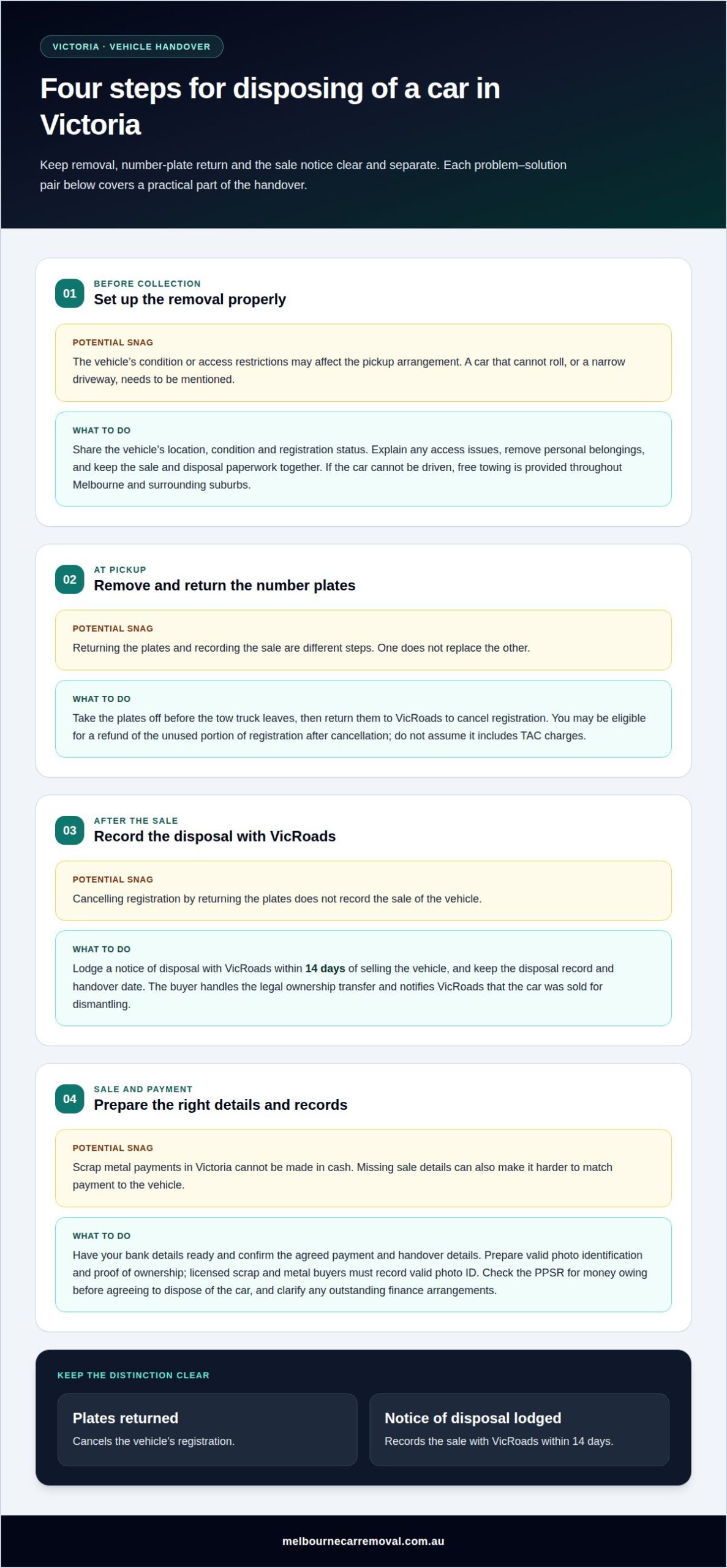
Knowing how to recycle an old car in Victoria starts with arranging suitable removal and completing the handover. If the car can’t be driven, Melbourne Car Removal provides free towing throughout Melbourne and surrounding suburbs. Share the vehicle’s location, condition and any access restrictions when arranging collection. Remove personal belongings beforehand, and keep the sale and disposal paperwork together.
For a clear answer to how to recycle an old car in Victoria, treat collection, plate return and the notice of disposal as separate steps. Returning the plates cancels registration, while lodging a notice of disposal records the sale. Melbourne Car Removal handles the paperwork for the vehicle handover. Keep your records accessible after collection for reference.
For a scrap car in Melbourne, removal usually starts with a quote and pickup arrangement. Tell the buyer where the vehicle is, whether it can move, and whether the driveway or parking area limits towing access. Professional car removal services may complete handover and payment in less than 24 hours after you accept a quote. Same-day pickup is also often available, depending on the arrangement.
Payment for scrap metal and vehicle parts cannot be made in cash in Victoria. This prohibition has applied since 2018. Scrap car payments are therefore handled without physical cash, and payment requires bank details. Have the account information ready for the handover, and make sure the agreed payment details are clear before the vehicle is collected.
Keep the quote, payment arrangement and vehicle handover connected. Confirm which vehicle the offer covers, its condition, and any details that affect removal or dismantling. If the car is damaged or missing components, describe that accurately. Changes between the quoted condition and the vehicle at pickup may affect the assessment. A clear record also helps you match the payment to the correct sale.
Removal is more than towing a vehicle away. The car may be taken to a scrap metal yard for dismantling, compaction and recycling. Recovering scrap metal and reusable parts helps keep vehicle materials in circulation rather than treating the whole car as general waste. In Melbourne, provide accurate access details so the removal team can plan the vehicle handover efficiently. Clear the car of personal belongings before collection, and keep your disposal paperwork after it leaves. The payment method and collection timing are separate parts of the arrangement: confirm both when accepting the quote, then make sure the agreed handover details match the vehicle being removed.
Recycling an unwanted car starts with depollution at an EPA-licensed facility. Before dismantling, workers drain and responsibly handle vehicle fluids. This step separates hazardous liquids from materials that can be recovered. A car that no longer runs still contains fluids, a battery, tyres and metal. Each needs its own handling before the vehicle can be processed further.
Next, workers remove the battery and tyres. These components are separated from the body rather than left in the metal shell. The vehicle is then dismantled to recover saleable parts. For example, a usable component can be removed for recovery while damaged or worn material continues through the recycling process. This sorting makes it easier to direct each material to the appropriate next step.
After parts recovery, the remaining metal shell is processed for recycling. A scrap metal yard can compact multiple unwanted cars together. Compaction reduces the vehicle shells into material that can move through metal recycling. The sequence matters: fluids, batteries, tyres and saleable parts are removed first, then the remaining shell is handled as scrap metal.
So, recycling is more than crushing a car. Depollution and dismantling come first, followed by component recovery and metal processing. Each stage separates materials before the next one begins. Sending a vehicle to a recycling facility gives its recoverable parts and metal a route back into use, instead of treating the whole car as waste. If your unwanted vehicle is ready to leave the driveway, arrange its collection for recycling and ensure its destination is a facility that depollutes vehicles before further processing.
Melbourne Car Removal helps owners move from an unwanted vehicle to a practical disposal option. Turn to the team when your car is ready for removal and you want a buyer to assess it for disposal rather than keep it sitting unused. The business offers Cash for Cars, Cash for 4WDs, Cash for SUVs and Cash for Vans.
A useful next step is to have the vehicle’s condition and ownership details ready when you get in touch. This helps establish what vehicle is being disposed of and supports a clear handover process. Whether your car is damaged, no longer running or simply no longer needed, Melbourne Car Removal can provide a vehicle disposal option suited to the vehicle category.
Contact Melbourne Car Removal to discuss disposing of your old car.
Choosing how to recycle an old car in Victoria is also a chance to reclaim the space it occupies. An unused vehicle can take up room on a driveway or property long after it has stopped serving a purpose. When you’re ready to move on, share the vehicle’s details with Melbourne Car Removal to arrange its removal in Melbourne.
Melbourne Car Removal can help turn that decision into a straightforward vehicle disposal arrangement. Get in touch when you’re ready to discuss your old car and arrange free removal across Melbourne and surrounding suburbs. No repairs are needed, and payment is instant on the spot once the vehicle is approved.
Contact Melbourne Car Removal to discuss your vehicle. Take the next step when you’re ready, and make space for what comes next.
The amount depends on the vehicle’s size, weight, condition and recoverable parts. A quote request gives you an assessment for your specific car, rather than a figure based only on its age or registration status. Include details such as missing components, major damage and whether the vehicle is complete. These factors help explain how its scrap and parts value is assessed.
A recycled car is processed for its recoverable materials rather than restored for road use. Vehicle components are handled separately and responsibly recycled. Melbourne Car Removal accepts cars in any condition, whether they’re running, damaged or unregistered, and arranges their removal in Melbourne and surrounding suburbs.
Arrange a vehicle assessment and removal through Melbourne Car Removal. The company offers Cash for Cars, free towing and help with the paperwork for vehicle disposal. This suits owners who want to sell without arranging transport themselves. Share the vehicle’s location and condition when arranging removal so the handover can be planned.
Arrange for the vehicle to go to a recycler or scrap metal yard that handles vehicle dismantling. Don’t leave it on a road, nature strip or someone else’s property. Before handover, decide whether you’re selling it for dismantling and keep the transaction records together. A clear disposal route helps ensure the car is processed as a vehicle, rather than left as abandoned waste.
Choose a removal service and provide the details needed to assess and collect the car. In Melbourne, professional car removal services often offer same-day pickup, and handover and payment may be completed in less than 24 hours after accepting a quote. Share access restrictions and whether the car can roll or start. That helps avoid preventable delays in arranging towing.
For a car that’s no longer needed, arranging removal for recycling is a straightforward option. It avoids organising transport to a dismantling facility yourself. Have the vehicle’s location, condition and ownership information ready for the handover. Once the car is collected, retain the disposal paperwork and complete any remaining registration steps with VicRoads. This keeps the practical handover and your records organised.