- Email: info@melbournecarremoval.com.au
- 25-27 Nicole Way,Dandenong South 3175
- Area of Operation: Melbourne-wide, VIC
13th November, 2026
A car’s asking price isn’t the same as its value. For a hassle-free car selling experience, start with a valuation based on your vehicle’s details, condition and current market value, then weigh that offer against the time and effort of advertising it yourself.
Selling privately can mean managing enquiries, arranging inspections and negotiating a price. You’ll also need to understand what happens to the vehicle’s registration, insurance and paperwork after the sale.
This guide explains the factors that shape a valuation and how an Instant Offer differs from a private sale. You’ll also learn what to consider when setting a price, and the practical steps to take with your registration, insurance and vehicle paperwork. The aim is to help you choose a straightforward way to sell, with the key decisions clear before you proceed.
To estimate a car’s value in Australia, compare its details and condition with similar vehicles. An online estimate is a useful starting point, while an assessment based on the vehicle’s actual condition can help you evaluate an offer.
An online instant valuation uses details you enter, such as the vehicle’s make, model, year, kilometres and condition, to estimate its value. Describe damage, missing features and service history accurately, since these details influence the assessment. Treat the result as a guide rather than a confirmed offer. An expert inspection can assess details that a form or photos may not capture.
A free online estimate can give you an initial indication of your car’s value. Enter the requested details carefully and note whether the figure is indicative or a firm offer. If the assessment changes after the vehicle’s condition is considered, ask which details affected it. This helps you compare the offer with other selling options.
A direct offer can simplify the sale. With a private listing, you create the advert, respond to enquiries and arrange inspections. Include accurate details and clear photos to help potential buyers assess the car. A private sale may bring a higher price than a trade-in, but it also requires more time and involvement.
Set an asking price using live market data for comparable models and their selling prices, rather than advertised prices alone. Traditional private sales can take 4 or more weeks, while the average used car in Australia takes about 50 days to sell privately. Sellers may receive offers 40% below their asking price during the first two weeks. For a hassle-free car selling experience, weigh the likely return against the time and steps involved. A hassle-free car selling experience begins with comparing a realistic estimate against the work of finding a private buyer.
Gather the vehicle documents, disclose known issues and any finance owing, and agree on the price and payment method before handing over the car. After the sale, notify the relevant authority and contact your insurer about changing or ending your cover.
Make the handover clear. Confirm the agreed amount, payment method and collection arrangements with the buyer in writing. Keep a record of the sale and payment, and don’t hand over the keys until the agreed payment has arrived. This gives both parties a clear history of what was agreed and helps reduce stress if questions arise later.
Payment timing varies by arrangement. Customer accounts describe funds transferred on the same day an offer was accepted, in an account dated January 12, 2024. Another account, dated December 2, 2025, described payment arriving in a bank account overnight after the price was agreed. These are individual experiences, not a payment timetable. Confirm when funds will be sent and how you’ll know they’ve cleared before completing the handover.
Gather your registration certificate, insurance papers and other vehicle documents before finalising the sale. Disclose known faults and any finance owing. If finance remains, explain the payout amount and agree how it will be handled as part of the sale. Accurate information helps prevent misunderstandings and creates a useful record for both parties.
In Victoria, CTP insurance is linked to the vehicle, not the owner, and transfers to the new owner when the vehicle is sold. Other insurance may work differently. Contact your insurer after the sale to discuss ending or adjusting your cover and any policy requirements for the handover.
For a clear sale, record the agreed price, payment method and collection details. Confirm the agreed payment has arrived before handing over the keys, then keep your sale records and complete the relevant notification steps.
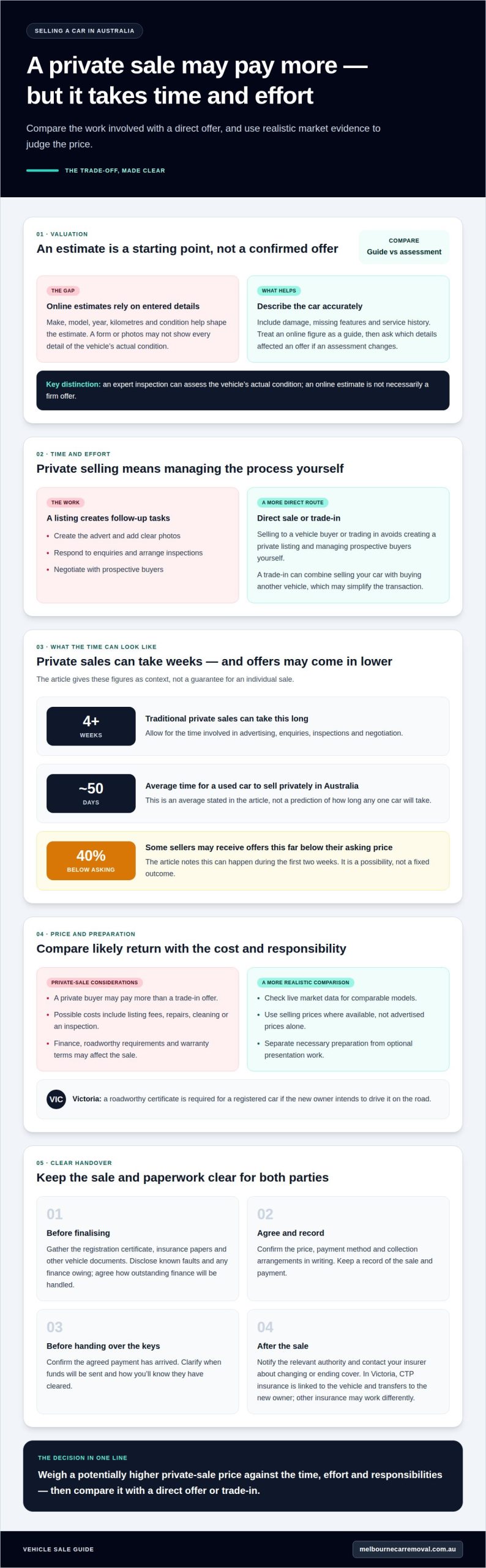
A private sale may bring a higher price than a trade-in, but it takes time and effort. The right option depends on whether you prioritise a potentially higher return or a more direct sale. Advertising and preparation can involve costs, while finance, roadworthy requirements and warranty terms may affect the process.
A private buyer may pay more than a trade-in offer, but you’ll manage the advert, enquiries, inspections and negotiations. Compare similar vehicles using their selling prices where available, not just asking prices. A trade-in combines selling your car with buying another vehicle, which can simplify the transaction. Weigh each offer against the time and responsibilities involved.
You can sell without advertising privately by arranging a direct sale to a vehicle buyer or trading in your car when buying another. This avoids creating a listing and managing prospective buyers yourself. Provide accurate details about the vehicle’s condition, kilometres and history so the buyer can assess it and you can understand the offer.
If you’re asking, “How do I sell my car with less hassle?”, a direct sale or trade-in avoids private-sale advertising. If you choose to sell privately, use a car-selling platform or social media, add clear photos and respond promptly to enquiries. Compare the likely effort with the offer you receive.
Private-sale costs may include a listing fee, repairs, cleaning or an inspection. Costs depend on the platform and the vehicle’s condition, so distinguish necessary preparation from optional presentation work.
In Victoria, a roadworthy certificate is required for a registered car if the new owner intends to drive it on the road. Disclose any finance owing and agree how it will be handled before finalising the sale. Check your warranty terms for coverage and transfer conditions.
After selling a vehicle in Australia, the seller is generally responsible for notifying the relevant authority so ownership records can be updated. Treat this as a separate step from handing over the keys, whether you sell to a private buyer or a dealer.
Start by recording the sale details and keeping a copy of the paperwork connected with the vehicle. Then notify the relevant authority that ownership has changed, following its process for your state or territory. In Melbourne, this means using the Victorian process. Keeping a record of your notification helps you track what you submitted and when.
Registration arrangements can affect the next steps. In Victoria, a roadworthy certificate is required for a registered car if the new owner intends to drive it on the road. Clarify whether the sale includes registration and explain any relevant certificate requirements before the handover. This helps avoid confusion about the vehicle’s status.
Remember to update accounts linked to the car. If you use an E-Tag, contact your tag provider after selling and update its details to avoid being charged for trips made by the next owner. Remove the tag if your provider requires it, and keep confirmation of any changes with your sale records.
Use a simple close-out sequence: record the sale, submit the ownership notification, update linked accounts and file your documents. If a dealer is involved, keep the sale paperwork and notification record together. Registration and ownership records serve different purposes, so complete the notification rather than assuming the handover does it for you.
For a more direct way to sell, explore a vehicle sale option and keep the registration handover steps clear.
Melbourne Car Removal offers a direct option if you’d rather not advertise your vehicle privately or manage buyer enquiries. It provides professional vehicle disposal and competitive valuations for cars, 4WDs and SUVs across Melbourne. Cash for Cars, Cash for 4WDs, Cash for SUVs and Cash for Vans are available for owners considering a sale without a private listing.
A direct sale may suit you if you want a straightforward way to discuss your vehicle’s value without arranging a private-buyer process. Share accurate details about its make, model and condition, then weigh the offer against the time and effort of selling privately. Melbourne Car Removal buys vehicles in any condition, with free towing and paperwork handled as part of the service.
If you’re ready to discuss selling your vehicle, contact Melbourne Car Removal.
Decide how much time you want to spend managing the sale. If reaching private buyers is your priority, prepare a listing and make time for enquiries. If you prefer a direct option, consider an offer and weigh it against the convenience of avoiding a private sale. That choice is central to a hassle-free car selling experience.
Melbourne Car Removal offers Cash for Cars, Cash for 4WDs and Cash for SUVs. Have your vehicle details and a clear description of its condition ready when you discuss selling. This helps keep the conversation focused on your vehicle and what happens next.
Take the next step at your own pace. Contact Melbourne Car Removal to discuss selling your vehicle, and move forward with a plan that feels right for you.
A valuation usually reflects the vehicle’s make, model, age, kilometres and condition. Features, service history and current demand for comparable vehicles can also influence the estimate. For example, two cars of the same model may receive different assessments if one has higher kilometres or visible damage. Share accurate details, then ask how an in-person assessment may affect the figure.
Tell the buyer about any finance before agreeing to sell. Ask your lender for the current payout figure and compare it with the agreed sale amount. If the payout is higher, work out how you’ll cover the difference before proceeding. Keep the lender’s settlement details and sale records together so the amount owing and agreed arrangements are clear.
A buyer may inspect the bodywork, interior, tyres and visible features, and ask about servicing, faults or accident history. They may also want to start the engine or arrange a test drive. Answer honestly and have relevant records ready. Agree on inspection arrangements beforehand, including where the vehicle will be viewed and who will accompany any drive.
Advertised prices don’t always show what similar cars sell for, and their condition or features may differ from yours. A retail guide for a private buyer can also differ from a wholesale valuation for an outright purchase or trade-in. Review the details used for the estimate, including kilometres, condition and specifications, and ask which factors most affected the assessment.
You provide the vehicle details, receive an assessment, and decide whether to accept the offer. The buyer then arranges the agreed handover and paperwork. In Melbourne, Melbourne Car Removal provides vehicle valuations and removal, with free towing and necessary paperwork handled as part of its service. Confirm the agreed amount, collection arrangements and payment method before completing the sale.
A private sale gives you control over the asking price and buyer discussions, but you manage the listing, enquiries and appointments. A trade-in links the sale with buying another vehicle, while a direct sale offers an alternative to finding a private buyer. Consider whether you want to manage the sale yourself, simplify a vehicle changeover or reduce the steps involved.