- Email: info@melbournecarremoval.com.au
- 25-27 Nicole Way,Dandenong South 3175
- Area of Operation: Melbourne-wide, VIC
14th November, 2026
A narrow heritage lane doesn’t automatically rule out removing a rust-damaged car, but access to the vehicle and room for a collection vehicle shape the plan. For car wreckers in Williamstown, the practical answer to whether every street can be serviced depends on those conditions at the collection point. An unwanted vehicle can be assessed for removal and disposal, even when it’s no longer roadworthy.
It’s reasonable to want a clear process, an offer for your car and a straightforward answer about access before arranging removal. This guide explains how a tight street can affect collection, which vehicle details inform an offer, and what to expect when disposing of a damaged or scrap car.
You’ll also find the company’s contact details and a simple overview of the next steps, from sharing vehicle information to arranging removal. That way, you can understand what matters before deciding how to clear the car from your property or street.
Same-day cash car removal is advertised in Williamstown, but collection timing depends on access and the vehicle’s condition. Free towing is advertised for Kia cars in Williamstown.
Free towing can make scrap car removal simpler, especially when rust damage leaves a vehicle unsafe or unable to move. In Williamstown, free towing is advertised for Kia cars; the offer is specific to that vehicle make. For removal from a narrow street or heritage lane, the collection plan also needs to account for the car’s position and access for the towing vehicle.
Give the vehicle’s location and condition when arranging collection. A car parked behind a gate, for example, presents different access needs from one on a driveway. These details help the collection team plan the towing arrangements.
Cash offers and car removal can be arranged as part of the same disposal process. The vehicle’s make, model, age, condition and completeness help shape its value. Rust damage, missing parts or a car that cannot run can affect assessment, so describe these details accurately when requesting an offer.
The offer and collection plan take different factors into account. Melbourne Car Removal offers same-day pickups, with free towing throughout Melbourne and surrounding suburbs. A rust-damaged car that cannot be driven can be collected rather than driven away.
In Victoria, treat registration cancellation and number-plate return as separate administrative steps in scrapping a car. Vehicle removal handles the physical collection; it doesn’t complete those steps for you.
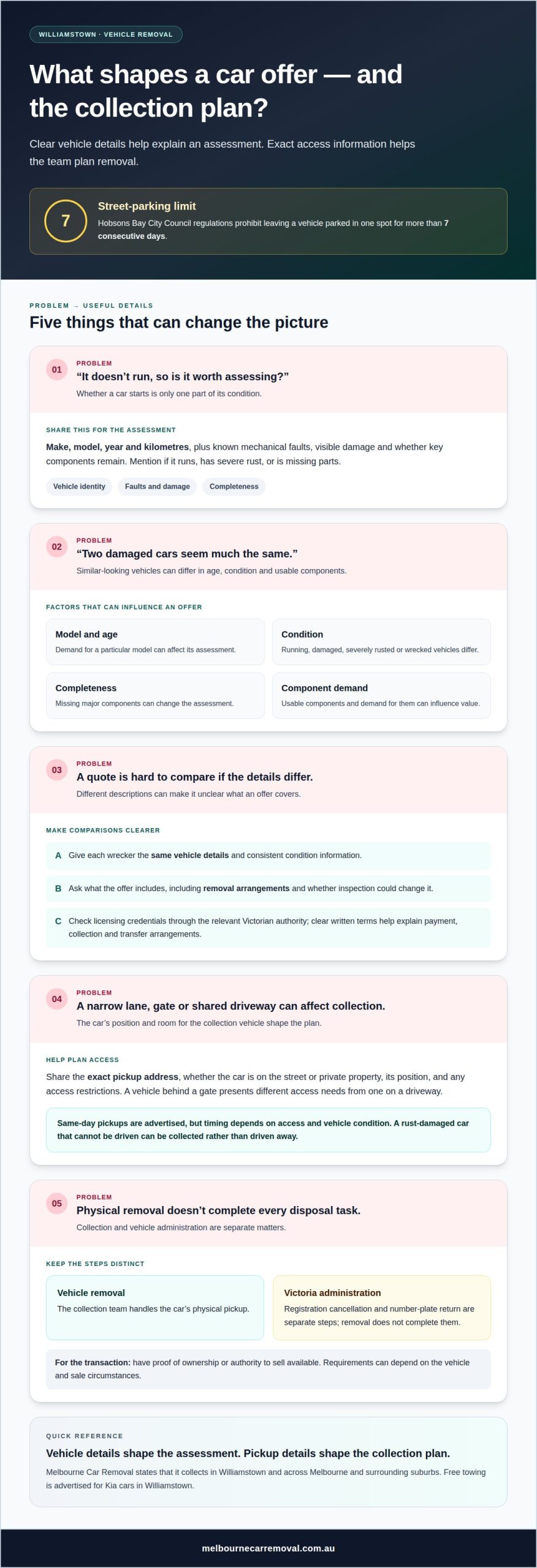
Hobsons Bay City Council regulations prohibit leaving a vehicle parked in one spot for more than 7 consecutive days. If your unwanted car is on the street, arrange removal before it remains there beyond that limit. Share its exact location and any access restrictions when organising collection.
For a straightforward vehicle removal, provide the car’s make, model, condition and pickup location, then arrange a collection plan. Clear details help the removal team assess towing needs and discuss the next step for the vehicle.
An offer for an unwanted vehicle reflects its details and condition, not simply whether it starts. Share accurate information about the car when requesting an assessment.
Melbourne Car Removal buys unwanted, damaged and scrap cars, including vehicles that are no longer roadworthy. Tell the team the make, model, year, kilometres, damage and whether key components remain. A complete car with panel damage, for example, may be assessed differently from a fire-damaged vehicle missing major components.
In Victoria, have proof of ownership or authority to sell available for the transaction. The documents and information needed can depend on the vehicle and sale circumstances, so provide identifying details when requesting an offer.
Second-hand cars may retain value as vehicles, while broken or wrecked cars are assessed according to their condition and remaining components. A car that still runs differs from one with a damaged engine or severe rust. Give a clear account of faults, damage and missing parts to support an accurate assessment.
Buying a wrecked car doesn’t mean every model or condition has the same value. Vehicle age, demand for its model and the condition of its components can all affect its assessment.
To compare quotes in Williamstown, provide each wrecker with the same vehicle details and describe its condition consistently. Ask what the offer covers, including removal arrangements and whether the figure could change after inspection. Check a wrecker’s licensing credentials through the relevant Victorian authority before agreeing to a sale.
Clear written terms help you understand the proposed payment, collection and transfer arrangements. If a quote changes, ask which vehicle detail or inspection finding led to the difference.
Model, age, condition, completeness and demand for components can all influence an offer. A popular model with usable components may be assessed differently from a severely rusted vehicle with missing parts. Accurate details help explain how the offer relates to the car being assessed.
For a more useful assessment, share the registration details, known mechanical faults and clear descriptions of visible damage. You can request a car offer using those vehicle details.
Williamstown is within Melbourne, so Melbourne Car Removal’s service covers local collections. Share the exact pickup address and access details when arranging removal.
A business address can identify an office, a yard or a collection base, but it doesn’t necessarily show every suburb where pickup is available. Melbourne Car Removal provides free removal throughout Melbourne and surrounding suburbs, including Williamstown. Give the exact collection address, whether the car is at home, work or another site.
Contact details should make it clear how to discuss your vehicle and its location. Look for a published phone number or enquiry channel, plus the business name and address. Use the exact Williamstown street address when describing the pickup point, rather than relying only on a nearby landmark.
Melbourne Car Removal collects vehicles in Williamstown and across Melbourne and surrounding suburbs. When arranging removal, share the precise pickup address, particularly if the car is in a laneway, shared driveway or restricted-access area. Clear location details help the team plan collection.
For an enquiry, have the vehicle’s make, model and condition ready, along with the pickup address. Mention whether the car is on private property or the street. These details help the team understand the location and plan removal.
Use the contact information provided by the business to explain the job in one clear message. Include your name, Williamstown address, vehicle details and preferred way to receive a reply. If the vehicle is somewhere other than your home, give that collection address instead.
Before arranging collection, explain the location, access and any relevant details. For example, mention whether a gate, narrow lane or shared entrance affects access. Clear information helps the collection team plan for your pickup point.
Responsible car disposal starts with assessing the vehicle, then matching its condition to a suitable end-of-life route. In Williamstown, a free vehicle assessment can help establish whether a rust-damaged car is suitable for wrecking, material recovery or another disposal option.
During assessment, the vehicle’s make, model, age, condition and completeness help determine its potential value. A car with a damaged engine may still contain components that can be recovered, while extensive rust or missing parts can affect what remains usable. Share known damage and missing components so the assessment reflects the vehicle’s actual state.
After assessment, the collection plan should suit the car’s condition and pickup location. A non-running vehicle needs removal rather than a drive to a disposal site. Share the vehicle details and location so the team can plan towing. Clear access information also helps prepare for collection at a Williamstown property or street.
Wrecking separates a vehicle into different material and component streams. Reusable components can be separated from material that requires processing, while fluids and other vehicle contents need appropriate handling. The exact route depends on the car’s condition and what can be recovered. This is why disposal involves more than simply moving a scrap car from a collection point.
Before handing over a vehicle, clarify the assessment outcome, removal arrangements and paperwork involved in the transfer. Melbourne Car Removal handles the necessary paperwork, including legal ownership transfer and deregistration with VicRoads. Keep a record of the agreed terms and follow the relevant Victorian registration steps.
For a rust-damaged or unwanted vehicle in Williamstown, arrange a vehicle assessment to understand the next disposal step.
Melbourne Car Removal can help Williamstown owners looking to dispose of an unwanted or damaged vehicle. Its vehicle disposal service includes cash offers for cars, 4WDs, SUVs and vans. This gives you a practical next step when a vehicle is no longer needed, rather than roadworthy or taking up space.
Share the vehicle’s make, model, condition and pickup location to begin an assessment. Details such as rust damage, whether the car runs and any missing components help describe what needs to be collected. The assessment then informs the offer and removal arrangements.
If you’re ready to discuss your vehicle, contact Melbourne Car Removal.
Choose a disposal option that suits your needs and the vehicle’s condition. If you’re considering car wreckers in Williamstown, agree on the vehicle details, collection and sale before proceeding. Melbourne Car Removal offers free towing, handles the necessary paperwork and pays instantly on the spot once the vehicle is approved.
Melbourne Car Removal offers Cash for Cars, Cash for 4WDs and Cash for SUVs. Share the vehicle details and its condition to start a conversation about your options. The right next step is the one that suits your vehicle and your plans for clearing it.
Contact Melbourne Car Removal today to discuss your vehicle and take the next step when you’re ready.
Melbourne Car Removal serves Melbourne and surrounding suburbs, including Williamstown. For a narrow heritage lane, share the exact pickup location and any access restrictions when arranging removal. Mention a tight turning area or a vehicle parked behind a shared gate, for example. This helps the collection plan account for the site, not just the suburb.
After collection, the vehicle is responsibly recycled, with materials reintegrated into the Australian economy. The process takes the vehicle and its condition into account. Even an old car with damaged panels and a non-running engine can be collected for responsible recycling, so disposal goes beyond simply moving it from your property.
Yes. Melbourne Car Removal provides free vehicle removal and towing throughout Melbourne and surrounding suburbs, including Williamstown. This suits unwanted cars that don’t run or can’t be driven safely. Provide the exact location and explain whether the vehicle is in a driveway, car park or laneway so collection can be planned around its position.
The offer depends on the vehicle and is provided after a quote request. Factors include its make, model, age, condition and completeness. A car with extensive damage may be assessed differently from a similar model with more usable components. Include accurate details about faults and missing parts when requesting a quote, so the assessment reflects the vehicle being sold.
Yes. Melbourne Car Removal accepts vehicles regardless of registration status and in any condition, including damaged and non-running cars. No repairs are needed before sale. Describe an expired registration, a mechanical fault or body damage when making an enquiry so the team can assess the vehicle and plan collection.
Have proof of ownership or authority to sell available. The documents and information needed can depend on the vehicle and sale circumstances.