- Email: info@melbournecarremoval.com.au
- 25-27 Nicole Way,Dandenong South 3175
- Area of Operation: Melbourne-wide, VIC
07th October, 2026
An unregistered car can still be sold in Melbourne, but confirming who owns it should come before arranging a sale. If you want to sell unregistered car Melbourne buyers may consider, first check the vehicle’s ownership, registration status and paperwork. A car that appears abandoned may need a different process, particularly if it’s on public land or someone else’s property.
It’s understandable to feel unsure about what you can sell, which documents to prepare and how to move a car that can’t be driven. Once you’ve established the right pathway, you can consider a private sale or vehicle removal. Melbourne Car Removal purchases vehicles in Melbourne and includes free towing and assistance with transaction documentation for vehicles that need to be collected.
This guide explains what to check before selling, which Victorian paperwork to consider and how an abandoned vehicle may involve a local council. You’ll also learn what to prepare before collection to make the handover clearer and avoid preventable problems.
An unregistered car may still be sold in Melbourne if you have authority to sell it and follow the current Victorian requirements. Start by separating two questions: is the vehicle registered, and who owns it? A lapsed registration doesn’t automatically prevent a sale, but it also doesn’t prove that the car is abandoned or yours to dispose of.
Unregistered describes a vehicle’s registration status; it does not establish who legally owns the vehicle. Confirm both before you agree to a sale or arrange removal. This distinction matters if you’re looking to sell unregistered car Melbourne buyers may consider, or if you’ve found a vehicle that appears to have been left behind.
An unregistered car is one that doesn’t currently have valid registration. Registration and ownership are separate: a vehicle can be unregistered while still belonging to its owner. Check the vehicle’s current status through VicRoads rather than relying on an old receipt, number plates or someone else’s account of its status. For background on Victorian plates, see Vehicle registration plates of Victoria. Plate information doesn’t confirm current registration or ownership.
Don’t drive an unregistered vehicle on public roads. If it needs to be moved, arrange suitable transport or check the applicable VicRoads requirements for the specific journey. Confirming its status early helps you choose a practical sale or removal option without risking an unsuitable trip.
No. Finding a car, keeping it on your property or noticing that it hasn’t moved doesn’t establish ownership or give you authority to sell it. A privately owned car that has become unwanted is different from a vehicle left on a road, council land or someone else’s property. Work out who owns it and who has authority to make decisions about it before discussing a sale.
Abandoned-vehicle questions can depend on where the car is and the circumstances. A vehicle on public land may involve the local council or another authority; one on private property can raise different issues for the property owner and the vehicle’s owner. Don’t assume expired registration alone makes a vehicle yours to sell. Follow the relevant council or authority process for that location, and resolve the ownership question before arranging collection.
Once you’ve confirmed the vehicle’s status and your authority to act, check the paperwork and compare sale options. This groundwork makes the next steps clearer, particularly when the car can’t be driven.
Before requesting an offer, gather enough information to identify the vehicle and show why you’re authorised to sell it. Registration status alone doesn’t settle that question. Registration status does not establish who has authority to sell a vehicle. If ownership is unclear or the available records don’t match the vehicle, resolve the discrepancy before agreeing to a handover.
Use this as a practical preparation list, not a complete legal checklist. The documents you need can depend on your circumstances and the type of transaction.
These details make an initial discussion more useful and reduce uncertainty before collection is planned. Be upfront if records are missing or information doesn’t match. Don’t sign or hand over the vehicle while a genuine ownership issue remains unresolved.
Follow current VicRoads guidance for the pathway that matches your situation. A private sale, disposal to a vehicle buyer and cancellation of registration may involve different steps. Confirm whether you need to complete a transfer or disposal notification, and what to do with any number plates. Don’t rely on an old form or assume one process applies to every unregistered vehicle.
For a sale, prepare a receipt recording the date and time, both parties’ names and addresses, and the vehicle’s identifying details, including its VIN or chassis number, make and model. Check the latest VicRoads instructions to confirm what applies to your transaction and how to handle any relevant notification. Keep a copy of the completed paperwork for your records.
Once ownership and the applicable steps are clear, you can move ahead with less uncertainty. If removal is the practical option, Melbourne Car Removal’s unregistered vehicle removal includes towing and assistance with transaction documentation.
Choosing how to sell an unregistered car in Melbourne comes down to its condition, how involved you want to be and how it can be transported. An unregistered vehicle shouldn’t be driven to a buyer on public roads unless the applicable legal requirements for that journey are met. Plan transport before agreeing on a handover.
| Option | Effort and suitability | Transport and paperwork |
|---|---|---|
| Private sale | May suit a vehicle a buyer wants to inspect or use. You’ll generally manage enquiries, inspection arrangements and negotiation. | Agree who will arrange transport. Both parties should clarify the required sale records and any relevant VicRoads steps. |
| Dismantling or scrap route | May suit a vehicle with little resale appeal as a complete car, depending on its condition and the route available. | The vehicle still needs lawful transport if it can’t be driven. Confirm who is responsible for paperwork and any applicable disposal steps. |
| Professional car removal | Can be a practical option for an unwanted car that’s unregistered, undrivable or difficult to sell privately. | Melbourne Car Removal purchases unregistered vehicles and includes free towing and assistance with transaction documentation. |
A private sale may work if a buyer is interested in the car’s condition and can organise transport. Describe faults accurately and provide the ownership records and vehicle details you have. You’ll also need to manage enquiries, agree on the handover and settle transport arrangements. A buyer’s interest or an agreed sale doesn’t remove the need to check the correct Victorian paperwork.
Removal can reduce the logistics involved when a car won’t start, can’t be driven or is hard to present to private buyers. Melbourne Car Removal includes free towing, so you don’t need to drive the vehicle to the buyer. Share its condition, location and access details so collection can be planned appropriately, then agree on a suitable collection time.
Whichever route you choose, keep ownership and paperwork responsibilities clear between the parties. For a private sale, you’ll coordinate directly with the buyer. With vehicle removal, documentation assistance can help make the handover more straightforward, while you remain responsible for confirming any VicRoads steps that apply to your situation.
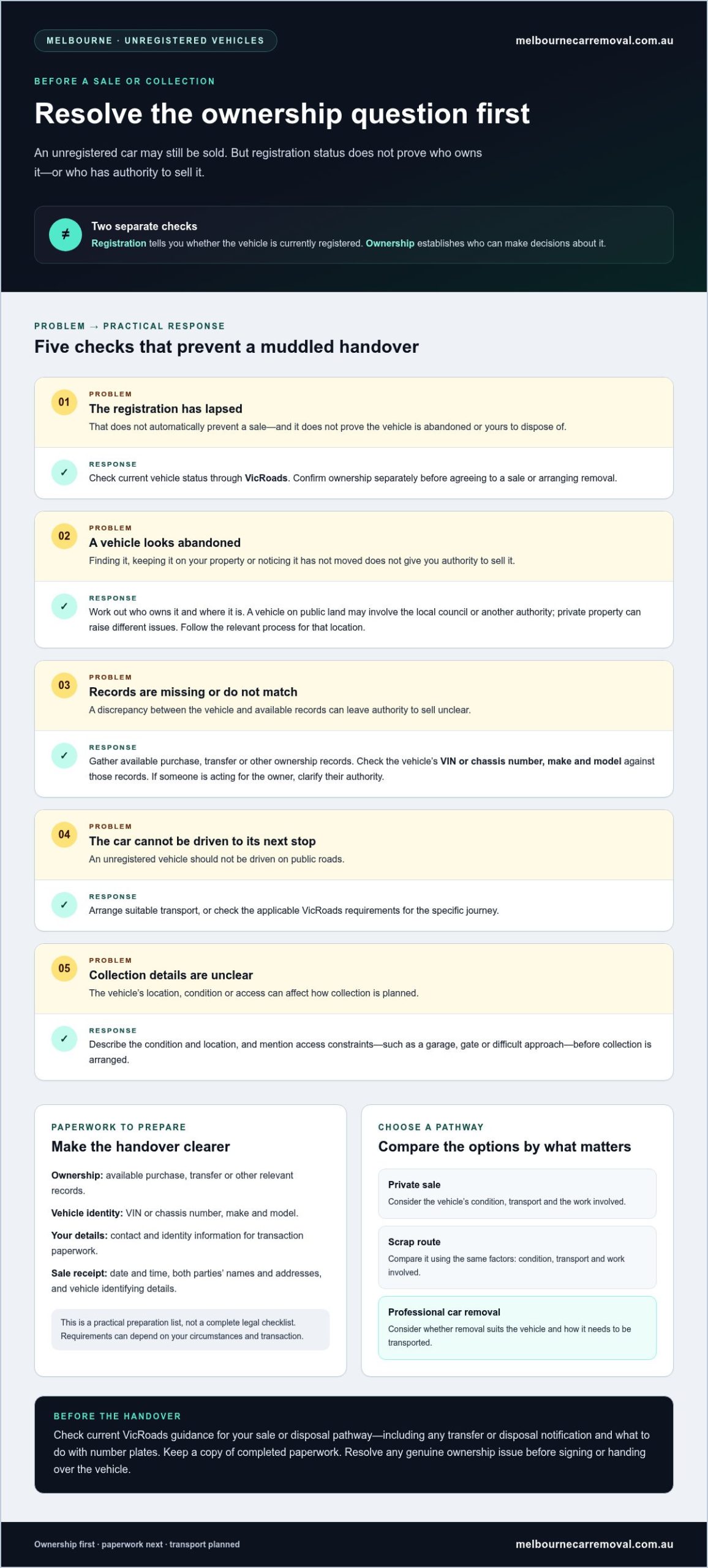
A little preparation can make collection easier and help avoid confusion at handover. Work through these steps before the vehicle is picked up:
Accurate details about the car and pickup site help organise collection and reduce avoidable delays or access problems.
Make the vehicle accessible without putting yourself at risk. If it’s parked behind a gate, explain how access works; if it’s in a shared or underground car park, describe any height or entry restrictions. Don’t try to move a vehicle that’s unsafe, stuck or difficult to control. Share the issue so the collection can be planned around it.
Be upfront about the car’s location, condition, unregistered status and any access constraints when arranging collection. For example, a car that won’t start in a narrow driveway needs different planning from one parked in an open space. If your goal is to sell unregistered car Melbourne, clear information helps plan a suitable removal and handover.
Before the vehicle leaves, confirm the agreed offer and collection arrangements match your understanding. Check that the transaction record identifies the vehicle and reflects the handover. Keep your copy somewhere safe. Then review current VicRoads guidance for any relevant disposal or notification step, rather than assuming the collection itself completes every administrative task.
Melbourne Car Removal purchases unregistered vehicles and includes free towing and assistance with transaction documentation. Arrange unregistered car removal by sharing the vehicle’s details and pickup conditions.
If the car can’t be driven or a private sale would involve too much organising, vehicle removal offers a practical alternative. Melbourne Car Removal purchases unregistered vehicles in Melbourne and includes free towing, so you don’t need to drive the car to a buyer. Share the vehicle details, receive a valuation, then arrange collection if you’re happy to proceed.
Give clear, accurate information so the vehicle can be assessed and collection needs understood. Include:
These details help the team understand the vehicle and plan suitable collection arrangements. A valuation depends on the information provided and assessment, so avoid relying on an exact offer before the car’s details have been considered.
Once you’ve received the valuation, decide whether you want to proceed and agree on the collection arrangements. Share any changes to the car’s condition or access before pickup. Free towing removes the need to drive an unregistered vehicle, while clear communication helps keep the handover organised.
Melbourne Car Removal also assists with the necessary transaction documentation. This can make the handover easier, but it doesn’t replace any official steps that apply to your situation. Check current VicRoads guidance for relevant disposal or notification requirements, and keep a record of the completed transaction.
To explore this option, request a vehicle valuation and arrange collection. Share the car’s make, model, condition, unregistered status and location to start with the right details.
Before choosing how to sell, confirm your authority to act and check the vehicle’s registration status. An unregistered car isn’t automatically abandoned, and an abandoned vehicle isn’t automatically yours to sell. Once ownership is clear, follow current VicRoads guidance for the paperwork and steps that apply to your situation.
If you’re weighing up a private sale or removal, consider the car’s condition and how it can be transported. Melbourne Car Removal purchases vehicles in Melbourne across a range of types and conditions, including unregistered cars. Free towing means you don’t need to drive the vehicle, and assistance with transaction documentation can make the handover more straightforward. You’ll still need to follow any official steps that apply.
Ready to explore your options to sell unregistered car Melbourne? Request a valuation for your unregistered car and share its condition, location and access details. With the right checks in place, you can move towards a simpler handover.
Yes, you can sell an unregistered car in Melbourne if you have authority to sell it and follow the Victorian requirements that apply. Check the vehicle’s registration status and gather ownership records before agreeing to a handover. Don’t drive it on public roads to meet a buyer. Arrange suitable transport, such as a tow truck, or check whether an Unregistered Vehicle Permit applies to the specific journey.
Not just because it’s on your property. Finding or storing a vehicle doesn’t establish that you own it or have authority to sell it. First establish who owns the car and what steps apply to its location and circumstances. If someone has left it on your property, follow the relevant local council or authority process before arranging a sale or removal. Don’t treat expired registration as proof of abandonment.
No, a roadworthy certificate isn’t required to sell an unregistered vehicle in Victoria. However, a buyer will need one to re-register the car. Be clear about the vehicle’s condition and registration status so the buyer understands what’s involved. If the car can’t be driven, arrange transport rather than driving it to the buyer. Check current VicRoads guidance for the requirements that apply to re-registration.
Check the vehicle’s current registration status through VicRoads. Use the vehicle details requested by its current online registration-check service, rather than relying on old paperwork, number plates or a previous owner’s information. A registration check tells you about registration status, not who owns the vehicle. Confirm ownership separately before you sell or authorise removal, especially if the vehicle’s history or paperwork is unclear.
Prepare available ownership records and the vehicle’s identifying details. For a sale, provide a receipt recording the date and time, the names and addresses of both parties, and the vehicle’s VIN or chassis number, make and model. This is practical guidance, not a complete checklist for every situation. Check current VicRoads instructions for any transfer, disposal notification or registration steps that apply to your transaction.
Yes. An unregistered car can be transported from your home by tow truck, which is a practical option if it can’t be driven. Melbourne Car Removal purchases unregistered vehicles in Melbourne and includes free towing. When arranging collection, share the car’s location, condition and access details, such as a narrow driveway or locked gate. Don’t try to move a vehicle yourself if it’s unsafe or difficult to control.
The correct steps depend on whether the vehicle is registered and how you sell or dispose of it. Check current VicRoads guidance to see whether a transfer, disposal notification or registration cancellation applies. If an unregistered vehicle has number plates, the current Victorian guidance says they must be returned to VicRoads. Keep your receipt and handover records, and don’t assume collection alone completes any official notification.