- Email: info@melbournecarremoval.com.au
- 25-27 Nicole Way,Dandenong South 3175
- Area of Operation: Melbourne-wide, VIC
28th October, 2026
To avoid car-selling scams in Melbourne, verify any payment in your own bank account, keep marketplace conversations on the platform and check a car-buying business’s identity and reputation before proceeding. Never refund an alleged overpayment or share verification codes with a prospective buyer. These checks can help you spot warning signs before handing over your vehicle or personal details.
Selling privately means managing enquiries, inspections and payment checks yourself. This guide explains how to make each step safer, recognise suspicious buyer behaviour and decide whether a car-buying service suits your needs. You’ll learn how to protect your payment, keep clear records and choose a selling process with confidence.
Fake PayID, overpayment and escrow scams rely on convincing messages and pressure. A buyer might send a fake bank email or receipt, then ask you to refund an alleged excess or pay shipping costs. Another might claim you need to pay to upgrade a PayID business account before receiving funds. If you’re wondering how to avoid car-selling scams in Melbourne, remember: never pay to unlock a transfer or release money.
Check your bank account directly before releasing the car. Open your banking app or contact your bank using its usual contact details. Don’t rely on screenshots, emails or messages from the buyer. A pending transfer is not confirmed payment. Hand over the vehicle only after you’ve verified that the funds have arrived and match the agreed sale price.
An overpayment scam may involve a transfer that later reverses. If a buyer says they sent too much, don’t refund the difference, even if they show you a receipt. The transfer could be reversed after you refund the excess, leaving you without the car and out of pocket. Ask your bank to verify any unexpected payment before acting.
Choose a payment method you can verify yourself. A bank transfer, Osko or PayID can work if you independently confirm the funds in your account. Avoid personal cheques, cryptocurrency, Western Union, gift cards and overseas transfers. Verify a bank cheque directly with the bank before handing over the vehicle, as a fraudulent cheque may later be dishonoured. To avoid car-selling scams in Melbourne, refuse payment methods you can’t check independently.
If accepting cash, count it at a bank and ask staff to check that it’s genuine. Never share a verification code with a buyer, as it could give them access to your accounts. Australian Payments Plus says it will never contact customers directly or ask them to send money to receive money. Report suspected scams to Scamwatch, run by the Australian Competition and Consumer Commission.
Common private-sale scams include fake payment messages, overpayment requests and buyers who make excuses to avoid meeting. Be alert to remote or overseas buyers who say a third party will collect the car, and to anyone who wants to buy without inspecting it. These tactics can appear in Melbourne listings, just as they can elsewhere in Australia.
On Gumtree or Facebook Marketplace, treat unexpected links and urgent requests as warning signs. Be cautious if someone asks you to leave the platform, share a verification code or enter bank details on a linked page. Don’t open unfamiliar links or send personal documents by text or email before meeting the buyer. Keep sale-related messages in the marketplace chat.
Before arranging an inspection, review the buyer’s profile for a photo, activity history and sensible messages. Ask which suburb they’re travelling from, when they’d like to inspect the car and whether they can speak by phone. A genuine buyer can discuss practical details and arrange their own pre-purchase inspection. Be cautious if they rush you, avoid calls or refuse to see the vehicle.
Choose a busy public place and meet during daylight. Before a test drive, check the buyer’s driver’s licence and whether your insurance covers them. Agree on a route, stay in the car and don’t hand an unfamiliar buyer the keys for a solo drive. Remove valuables, mail and personal information from the vehicle first.
A familiar scam involves someone claiming to be an Australian Defence Force member who is leaving overseas soon. They may refuse an in-person inspection or phone contact, then suggest a third party handle collection. Don’t send paperwork or pay upfront shipping, inspection or vehicle-release fees to a supposed transport company. If a buyer won’t follow reasonable steps, end the conversation and report the profile through the marketplace. If a test-drive driver doesn’t return at the agreed time, call the police.
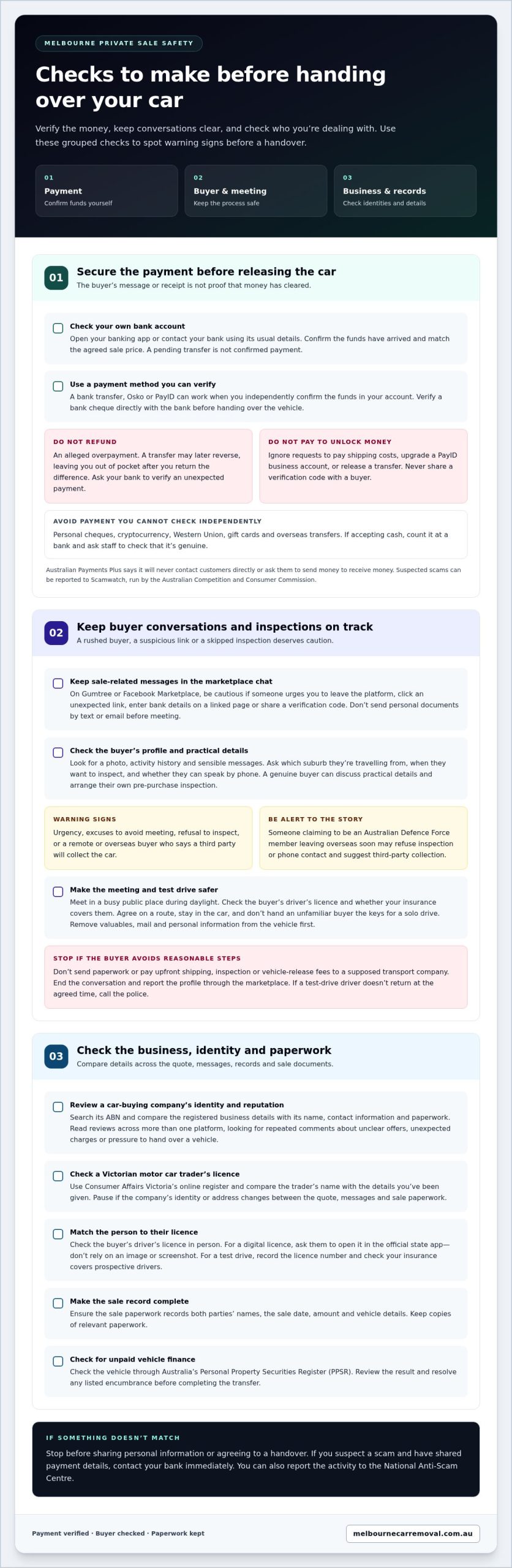
Before choosing a cash-for-car company, search its ABN and compare the registered business details with its name, contact information and paperwork. Read customer reviews across more than one platform. Look for repeated comments about unclear offers, unexpected charges or pressure to hand over a vehicle. A single review may not reveal a pattern, so consider the detail and consistency of the feedback.
For a Victorian motor car trader, check the licence through Consumer Affairs Victoria’s online register. Compare the trader’s name with the business details you’ve been given. If the company’s identity or address changes between the quote, messages and sale paperwork, pause before sharing personal information or agreeing to a handover. Consistent details make it easier to know who you’re dealing with.
How can Melbourne sellers verify a buyer’s identity and payment before handing over a car? Check the buyer’s driver’s licence in person, and have them open a digital licence in the official state app. Confirm payment independently in your bank account, then ensure the sale paperwork records both parties’ names, sale date, amount and vehicle details.
For a test drive, record the buyer’s licence number and check that your insurance covers prospective drivers. If they show a digital licence, ask them to open it in the official state app. Don’t rely on an image or screenshot. These steps help confirm that the person driving the car matches the identity they’ve presented.
Check whether the vehicle has unpaid finance through Australia’s Personal Property Securities Register (PPSR). Clearing finance can affect a sale, so review the result and resolve any listed encumbrance before completing the transfer. This check adds context to the vehicle paperwork and helps prevent confusion about who can sell the car.
These checks can reduce scam risks when selling privately or dealing with a business. Keep copies of relevant paperwork, and stop if identity details or business information don’t match. If you suspect a scam and have shared payment details, contact your bank immediately. You can also report the activity to the National Anti-Scam Centre.
Is it safer to sell a car privately, through a dealer or to a car-buying service in Melbourne? No option removes every risk. A private sale means you manage buyer messages, inspections and payment. A service can reduce those interactions, but you should still check the business and agree on the handover details.
A professional cash-for-car service may include vehicle removal and help with sale paperwork. That can simplify logistics, especially if organising inspections or meeting multiple buyers feels difficult. Before agreeing, ask for the offer and key terms in writing. Check that the vehicle description, agreed amount, collection arrangements and payment method match your understanding.
Use a clear handover process. First, confirm the company’s ABN and compare its details with its reviews and paperwork. Next, confirm the final offer and how payment will be made. Then verify the funds through your own bank before releasing the vehicle. Don’t rely on a payment screenshot or an email from the person collecting it.
Be wary of extra charges introduced at collection, or requests to pay a release or transport fee upfront. A legitimate process should make clear who is paying whom, and why. Don’t accept PayPal, a personal cheque or another method you can’t independently verify just because it seems convenient. If a bank cheque is offered, contact the bank directly to verify it before handing over the car.
Keep a copy of the completed paperwork and record the collection date, vehicle details, sale amount and business identity. Remove personal belongings and documents from the car before collection. Follow Victoria’s vehicle-transfer process and notify the relevant road authority when required.
A car-buying service suits sellers who value fewer buyer interactions and a more managed handover. A private sale may suit someone comfortable handling enquiries and inspections. To explore a car-buying service in Melbourne, compare the written offer, payment process and paperwork before committing.
Melbourne Car Removal offers Cash for Cars if you’d prefer a vehicle disposal option to managing a private sale. It also offers Cash for 4WDs, Cash for SUVs and Cash for Vans, giving Melbourne sellers options for different vehicle types.
Consider this route if you want to avoid handling private buyer messages and arranging individual inspections. Share accurate vehicle details, review the offer and sale paperwork, and verify payment before the vehicle changes hands. These steps help keep the transaction clear, whatever selling method you choose.
If you’re ready to discuss disposing of your car, contact Melbourne Car Removal.
Decide what matters most in your sale: control over the process, less coordination or a straightforward handover. That choice helps you set expectations before committing. If a proposed arrangement isn’t clear, pause and reconsider rather than letting pressure dictate your decision.
If you’re weighing how to avoid car-selling scams in Melbourne, choose a process you can understand and manage from offer to handover. Take time to make a considered decision that suits your circumstances and your vehicle.
For another option, explore a vehicle sale with Melbourne Car Removal. A calm, informed decision is a strong start to your next step.
Build a safer sale around clear records, verified payment and a buyer whose identity matches their licence. Decide how much of the process you want to manage yourself, including enquiries, meetings and paperwork. If you choose a car-buying service, check its ABN and reputation, then read the sale terms before agreeing. A deliberate process helps you make decisions without being rushed.
Pause if a buyer changes the agreed process, asks for unusual personal details or introduces new payment conditions. Keep screenshots of suspicious messages and note the profile name while the conversation is accessible. If you’ve shared bank details, contact your bank promptly. Change reused passwords if you disclosed personal information, and report suspected scam activity to Scamwatch, operated by the Australian Competition and Consumer Commission.
Show relevant vehicle paperwork in person so a buyer can review it without receiving digital copies in advance. Keep original documents in your possession, and provide only the information needed to complete the sale. Don’t send registration papers, identity documents or banking details to an unknown person by email or text. Keep a copy of the completed sale paperwork for your own records.
Keep your home address, personal documents and banking information out of the listing. Avoid posting a clear number-plate image, since plates can be copied and cloned. Use the marketplace’s messaging system at first rather than publishing your personal phone number. Check each photo before posting: documents, mail or identifying details visible inside the car can reveal information you didn’t intend to share.
Scammers use vehicle listings to seek money, account access, identity details or the car itself. A fake payment notice can pressure you to hand over the vehicle, while a request for a verification code may expose an account. Personal details can also be used for further fraud. Treat unusual requests as a reason to stop and assess the situation, rather than respond under pressure.
Yes. A buyer may send a fake transfer notification, and an overpayment may later be reversed after you refund the excess. Don’t treat a screenshot, email or text as proof of cleared funds. Open your banking app independently and confirm the full amount has arrived before handing over the keys. If a transfer looks unusual, speak to your bank before taking action.