- Email: info@melbournecarremoval.com.au
- 25-27 Nicole Way,Dandenong South 3175
- Area of Operation: Melbourne-wide, VIC
10th October, 2026
Could a hail-damaged car still be worth selling, even if the dents make it look like a write-off? Damage alone doesn’t settle that question. The type and extent of damage, your insurer’s assessment and the car’s status all affect what you can do next. If you’re searching for cash for hail damaged cars vic, start by understanding those details before choosing a sale route.
It’s understandable to feel unsure after an insurance claim or assessment. You may be weighing a private sale against an auction or a direct sale, while wondering what paperwork you’ll need, how the car will be removed and how payment is arranged. Melbourne Car Removal buys hail-damaged cars in any condition, provides a valuation that takes the vehicle’s condition into account, and includes free towing with removal.
This 2026 guide compares your options and explains the Victorian paperwork to prepare, including what to consider if the car has been assessed as a write-off or you’re retaining salvage after an insurance settlement. You’ll also learn what information helps with a straightforward valuation and how to plan the sale and vehicle removal in Melbourne.
Finding dents across your car after a storm is stressful. You may need to decide whether to claim on insurance, sell the vehicle or arrange its removal before you know the full extent of the damage. A hail-damaged car has exterior or functional damage caused by hail. The hail formation and impact can leave anything from cosmetic dents to damage that affects visibility, operation or safety.
Start by separating visible damage from issues an assessment may reveal. Dents to the bonnet or roof may be cosmetic, while damaged glass, water ingress or faults affecting operation need closer attention. Your insurer’s decision, any claim or settlement conditions, and the vehicle’s recorded status can all shape which sale route is practical. Don’t assume the car’s appearance tells you whether it is legally classified as a write-off.
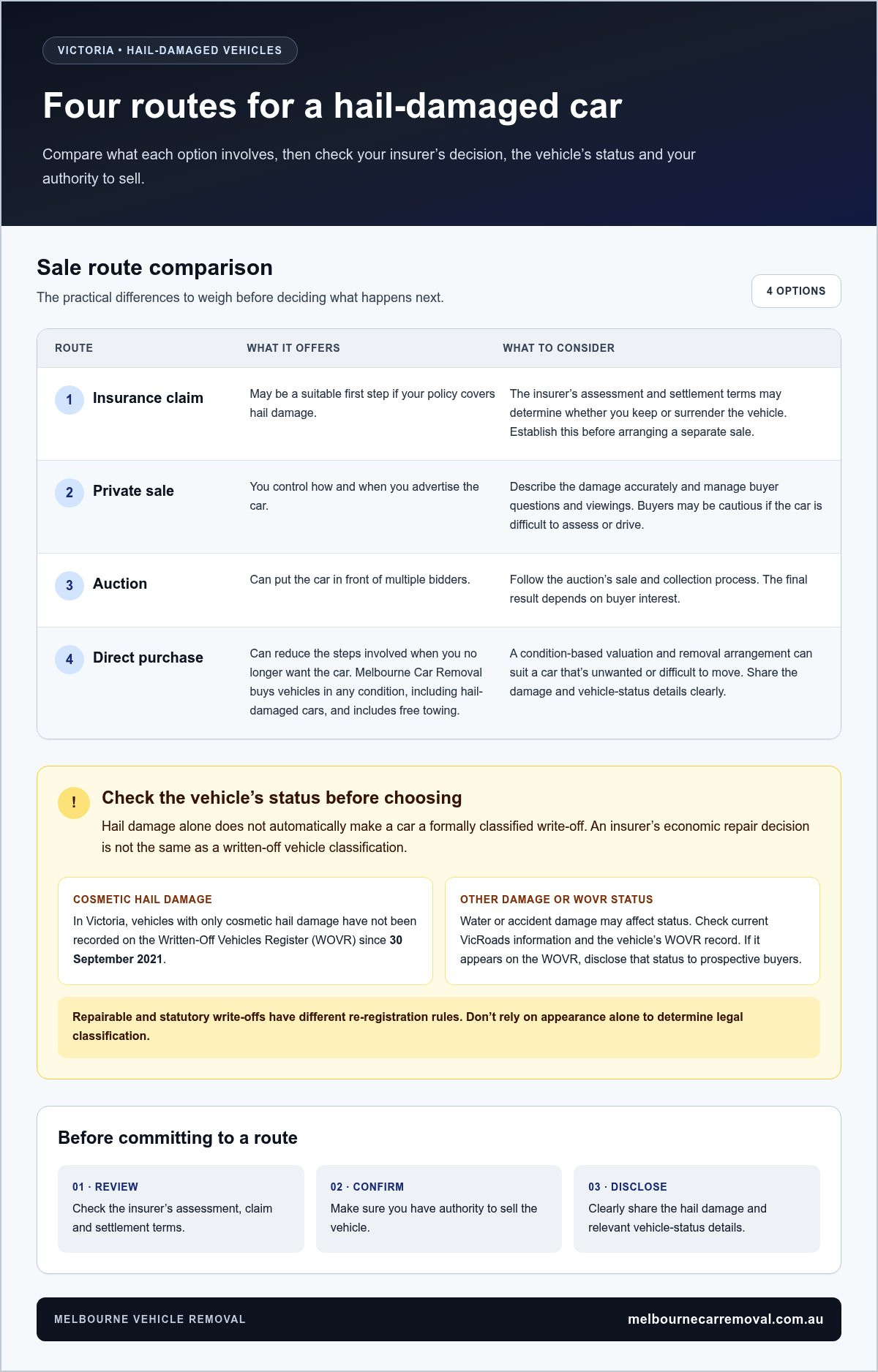
No. An insurer may decide that repairs would cost more than the vehicle’s assessed value, but that economic decision isn’t the same as a formal written-off vehicle classification. In Victoria, vehicles with only cosmetic hail damage have not been recorded on the Written-Off Vehicles Register (WOVR) since 30 September 2021. Other associated damage, such as water or accident damage, may affect that status. Check current VicRoads information and the vehicle’s WOVR record before choosing how to sell. Repairable and statutory write-offs have different re-registration rules.
Each route suits a different combination of damage, paperwork and effort. Before committing, review your insurer’s assessment and settlement terms, and confirm you have authority to sell the vehicle. If it appears on the WOVR, Victorian sellers must disclose that status to prospective buyers.
For owners comparing cash for hail damaged cars vic, the right choice depends on more than the dents. Match the route to the insurer’s decision, the vehicle’s recorded status, your willingness to manage a sale and whether you need the car removed. If you choose a direct sale, share the damage and status details clearly so the valuation and handover can be arranged on an informed basis.
A useful valuation starts with an accurate picture of the whole vehicle, not just the dents. Its make, model, year, registration details, general condition and extent of hail damage all help inform an assessment. Whether it starts and drives, and whether glass, interior areas or vehicle functions are affected, can also matter.
There’s no single figure that applies to every hail-damaged car. Two vehicles of the same model may have different damage, upkeep and operating condition. Each needs to be considered on its own circumstances, so share what you know and flag anything you’re unsure about rather than guessing.
Gather the basics before requesting a valuation. A clear description helps build an accurate picture and makes the next steps more straightforward.
Clear damage details help make a vehicle assessment more accurate. Be upfront about damage you can see, warning lights and operating problems. That gives the assessor a better basis for considering the vehicle as a whole.
An open insurance claim or settlement can affect who has authority to sell the car, particularly if the insurer has taken ownership or the settlement includes specific conditions. Read the settlement documents and resolve any questions about ownership before accepting a sale. A claim assessment alone doesn’t necessarily give you the right to transfer the vehicle.
Check that the person selling is entitled to do so, and identify any finance interest that could affect the transfer. Also check the vehicle’s recorded write-off status through current Victorian sources. The VicRoads guidelines for selling a vehicle explain the state’s sale and transfer process. Follow your insurer’s settlement conditions as well as the relevant vehicle-record requirements.
If you’re comparing cash for hail damaged cars vic, having these details ready makes the valuation discussion clearer. Melbourne Car Removal considers hail-damaged cars in any condition. Share the vehicle information for a condition-based valuation through the Melbourne car removal service, which includes free towing with removal.
The right route depends on your claim status, the car’s condition and what matters most to you: control over the sale, less administration or having the vehicle removed. Compare the practical differences before you commit. An insurer’s decision may also affect whether you can sell the car yourself, so establish that position first.
| Route | Effort and timing control | Damage disclosure | Removal arrangements |
|---|---|---|---|
| Insurer assessment | You’ll need to follow the claim and assessment process. The insurer’s steps and settlement terms shape what happens next. | Give the insurer a clear account of visible and known damage so it can assess the claim. | Ask how the vehicle is handled under the settlement. Don’t assume removal is included or that you can sell it separately. |
| Private sale | You manage the advertising, enquiries and buyer arrangements, with more control over how you present the sale. | Describe the hail damage and relevant vehicle history accurately. Buyers may want to inspect the car or ask for more detail. | You and the buyer need to agree how the vehicle will be collected, particularly if it’s not suitable to drive. |
| Auction | The auction process sets the sale structure. You’ll need to meet its requirements and follow its sale and collection arrangements. | Provide accurate damage and status information for prospective bidders. | Follow the auction’s collection instructions. Review these arrangements before choosing this route. |
| Direct vehicle purchase | A valuation and collection arrangement can bring the sale steps together, with less buyer-by-buyer coordination. | Share the known damage and vehicle details so the assessment reflects its condition. | Melbourne Car Removal buys hail-damaged cars in any condition and includes free towing. |
If you’ve lodged a claim or received a settlement offer, understand the policy decision before transferring the vehicle. Ask your insurer whether you’re authorised to sell it and whether the settlement includes salvage-retention terms. The answer can affect who owns the vehicle and what you can do with it. Don’t treat every insurance settlement as permission to arrange a separate sale.
If you’ve decided not to keep the car, a direct purchase can combine a condition-based valuation with an agreed collection arrangement. Free towing can help if hail damage makes the vehicle difficult or unsuitable to drive. This may suit owners who prefer not to manage private enquiries or auction collection steps, provided they’ve first resolved any insurer or ownership conditions.
There’s no single best route for every owner. If a straightforward valuation and removal arrangement fits your situation, get started with a Melbourne vehicle valuation. For cash for hail damaged cars vic, share the vehicle’s condition and claim position to clarify the next step.
A little preparation makes handover clearer and helps avoid last-minute surprises. Before collection, confirm you’re authorised to sell, make sure the vehicle’s condition matches the details used for its valuation, and check what Victorian transfer or registration steps apply to your situation. If an insurer is involved, resolve any conditions that affect your right to sell before arranging collection.
Work through this checklist in order, from confirming sale authority to completing the handover. It helps keep the vehicle and its history clear for everyone involved.
Transfer, registration and notification steps can depend on the vehicle and transaction. Check current VicRoads guidance before completing forms or cancelling registration, and keep copies of documents for your records. The same process may not apply to every sale or vehicle status.
Check the vehicle’s written-off status through current Victorian records. Since 30 September 2021, a vehicle with purely cosmetic hail damage is not recorded on the Written-Off Vehicles Register (WOVR); associated damage, such as water or accident damage, may affect its status. A repairable write-off and a statutory write-off also have different future-use rules. Confirm the record and any applicable inspection or re-registration requirements before agreeing to a transfer.
If you’re arranging cash for hail damaged cars vic, a clear handover plan matters as much as the valuation. Melbourne Car Removal assists with necessary transaction documentation and includes free towing. Arrange a Melbourne vehicle valuation and discuss the car’s condition and collection access as part of the process.
If you’ve decided the hail-damaged car is no longer worth keeping, the sale and collection can follow a clear sequence: make an enquiry, share the vehicle details, receive a valuation, then agree on collection if you want to proceed. Melbourne Car Removal buys cars in any condition, including hail-damaged vehicles, and includes free towing with removal.
You don’t need to drive a damaged car to a buyer. Start with accurate information: describe visible dents, broken glass, water entry and any known issues that affect how the vehicle runs. This gives the valuation a sound basis and helps avoid surprises if the car’s condition differs from the details first provided.
Share the make, model, year, registration details and a practical description of the damage. Mention whether the car starts or drives, and note anything that could affect access or loading. Photos can help show the overall condition and specific damaged areas. The valuation is based on the individual vehicle and its circumstances, not a fixed amount that applies to every hail-damaged car.
Once the details are considered, you can review the valuation and decide whether to proceed. You can understand the proposed arrangement before committing. If an insurance claim or settlement is involved, make sure you’re entitled to sell the vehicle and that any insurer conditions have been addressed before agreeing to transfer it.
If you accept the arrangement, agree on the collection details, including the vehicle’s location and access. Free towing means you don’t need to drive a car that may be unsafe or unsuitable for the road. Tell us in advance about restricted access, a tight driveway or other obstacles so collection can be planned around the site.
Before handover, remove personal belongings and have the keys and relevant vehicle documents ready. Check that the damage information remains accurate, and raise any changes since the valuation. Melbourne Car Removal assists with necessary transaction documentation. The precise paperwork and registration steps depend on the vehicle and sale, so follow current Victorian requirements and keep a record of documents exchanged.
For cash for hail damaged cars vic, a straightforward sale should leave you clear on the valuation, collection plan and handover before the vehicle is removed. Melbourne Car Removal provides a condition-based valuation and free towing for hail-damaged cars in Melbourne. Share the vehicle details and damage information to begin.
Arrange a valuation for your hail-damaged car.
A hail-damaged car can feel like one more problem to sort out, but you don’t need to decide everything at once. First, make sure you’re clear on your authority to sell and any insurer conditions. Then choose the route that best suits the vehicle and the effort you want to take on. Taking time to confirm these details can help you move forward with fewer surprises.
If a direct sale is the right fit, Melbourne Car Removal buys cars in any condition, includes free towing with removal and assists with necessary transaction documentation. Share accurate details about the car and its damage so the valuation reflects its circumstances.
For cash for hail damaged cars vic, a clear next step can turn uncertainty into a practical plan. Get a valuation for your hail-damaged car.
Possibly, but a recorded write-off can affect whether and how the vehicle may be transferred or used again. Check its status through current Victorian written-off vehicle register guidance and review any insurer conditions before agreeing to sell. The classification and circumstances matter, so don’t rely on the word “write-off” alone. Check the latest VicRoads information to understand how the record affects a proposed transfer.
A hail-damaged vehicle can still be assessed for purchase, but an offer isn’t guaranteed. The specific car’s details, condition, damage and relevant records inform its assessment. For example, distinguish hail dents from older damage or a known mechanical issue rather than describing everything as storm damage. Clear information helps set realistic expectations. If you’re comparing cash for hail damaged cars vic, treat generic online claims as estimates, not a promise for your vehicle.
It depends on your policy, claim progress, ownership and any settlement terms. Before arranging a sale or removal, follow your insurer’s instructions and confirm who has authority to transfer the vehicle. This matters if the insurer has made a settlement offer or is considering taking the vehicle. Keep relevant claim correspondence and any written settlement agreement with your records so you can refer to the conditions before handover.
Yes, give the buyer an accurate account of damage you know about. Describe visible dents, broken glass or signs of water entry, and separate confirmed issues from anything you only suspect. Don’t describe your own observations as a formal inspection result. Keeping photographs and any available assessment records can help clarify what was disclosed if questions arise later, particularly if the buyer arranges their own inspection before completing the purchase.
Yes, a damaged vehicle can be collected rather than driven to a buyer if it’s unsafe or unsuitable for the road. Melbourne Car Removal includes free towing with vehicle removal. When arranging collection in Melbourne, explain where the car is parked, whether access is restricted and what makes it difficult to move. This helps the removal arrangements account for the vehicle’s location and condition. Don’t drive it if you believe it’s unsafe.
No. Melbourne Car Removal doesn’t offer physical cash payments. The phrase “cash for cars” doesn’t mean you should expect notes or coins. Before handover, make sure you understand and agree to the payment arrangement, including how it will be recorded. Keep a record of the agreed transaction with your sale documents. Don’t assume a payment method or timing unless it has been expressly agreed as part of the sale.
Gather available ownership and registration details, vehicle keys and service or assessment records. Make a note of any open claim, settlement conditions or recorded write-off status, as these can affect the transaction. The paperwork and registration steps depend on the vehicle and sale. Check current VicRoads guidance before completing a transfer or other registration step, then keep copies of the documents exchanged during the handover.
Get a valuation for your hail-damaged car in Melbourne.