- Email: info@melbournecarremoval.com.au
- 25-27 Nicole Way,Dandenong South 3175
- Area of Operation: Melbourne-wide, VIC
06th November, 2026
A higher offer isn’t the only thing to compare when disposing of an old car. With eco-friendly car disposal in Melbourne, usable parts may be refurbished and reused, while materials such as steel, aluminium and plastic can be recovered for recycling. Hazardous fluids, including oil, coolant and brake fluid, are drained and stored safely before further processing.
It’s sensible to want a fair price and know what happens to your vehicle after collection. The disposal process can recover valuable components and materials, while careful handling of fluids and other hazardous items helps prevent pollution.
This guide explains practical considerations when arranging vehicle disposal, including sharing accurate vehicle details and understanding the handover. Melbourne Car Removal accepts all makes and models, in any condition, and handles the necessary paperwork, including ownership transfer and deregistration with VicRoads.
Car recycling separates reusable components from materials that can be processed for reuse. In Melbourne, the recovered parts and materials depend on the vehicle’s condition and what can be sorted.
After inspection, workers can remove functional parts for refurbishment and resale. The remaining materials, including steel, aluminium and plastics, can then be sorted for recycling. There isn’t one percentage that applies to every Melbourne vehicle; recovery depends on its parts, materials and condition. The available facts don’t identify which Melbourne wreckers hold licences, so a business name or customer review alone can’t establish that status.
Reusing and recycling means recovering working parts and processing materials so they can serve another purpose. For a vehicle owner, it means a car’s value can extend beyond its remaining ability to drive. Functional components may be refurbished and resold, while steel, aluminium and plastics enter material recycling. Reviews can help you spot specific descriptions of dismantling and reuse practices, rather than broad environmental claims.
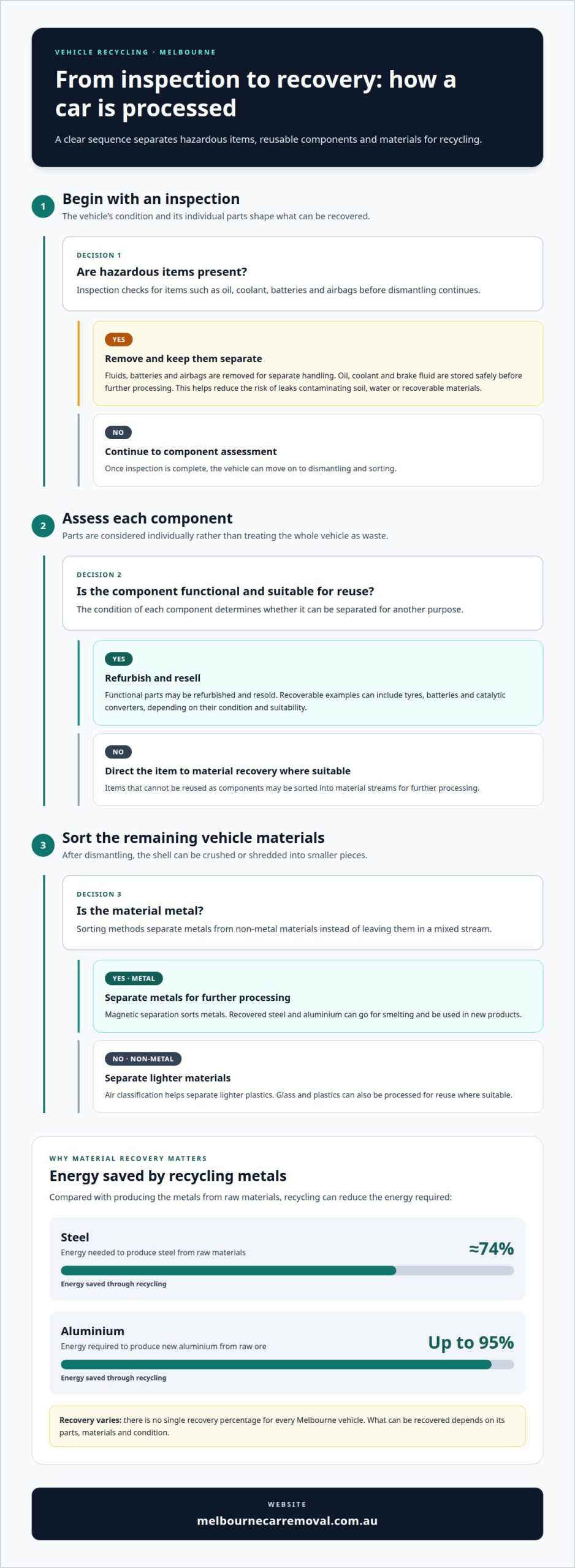
Recycling diverts usable parts and recoverable materials from landfill, reducing the waste left behind when a vehicle reaches the end of its life. It can also reduce demand for virgin materials, which require mining and extraction. Recycling steel saves approximately 74% of the energy needed to produce it from raw materials. Recycling aluminium saves up to 95% of the energy required to produce new aluminium from raw ore.
These energy savings explain why material recovery matters beyond keeping vehicle parts out of landfill. Recycled metals can supply materials for new products, while reuse gives functional components another purpose. For example, recovering a working component avoids discarding it with the vehicle shell. The environmental benefit depends on separating materials for recovery instead of treating the whole car as waste.
When assessing a disposal service, look for clear details about the handover and what happens after collection. Melbourne Car Removal provides free removal in Melbourne and surrounding suburbs and handles the necessary paperwork, making the process straightforward for vehicle owners.
Vehicle disposal involves more than collection. Melbourne Car Removal arranges free removal and responsibly recycles vehicle components, giving owners a practical way to dispose of an unwanted car, van, truck or other vehicle.
Depollution removes items that need separate handling before dismantling continues. Workers remove batteries, fluids and airbags, then prepare the vehicle for further processing. This sequence helps keep hazardous items apart from metals and other recoverable materials. It also means the shell can be processed after these components have been removed, rather than sending the whole vehicle into one mixed stream.
Component removal separates individual items from the vehicle before its frame is processed. Tyres, batteries and catalytic converters are among the parts that can be recovered. Functional components may be assessed for refurbishment and resale, while other items move into material recovery. The vehicle’s condition and the state of each component shape what can be separated for another use.
After dismantling, the remaining shell can be crushed or shredded into smaller pieces. Magnetic separation sorts metals from non-metal materials, while air classification helps separate lighter plastics. These methods produce distinct material streams instead of a mixed pile. Recovered metal can then go for smelting and be used in new products. Glass and plastics can also be processed for reuse where suitable.
For Melbourne vehicle owners, this sequence shows why responsible recycling involves several stages, not just crushing. Removing components first allows reusable items to be separated, while sorting technologies help distinguish metal from other materials. Each step supports more organised recovery and reduces the chance of different material streams becoming mixed during processing.
If you’re considering disposal, explore vehicle disposal options for your end-of-life car.
Safe vehicle processing starts by identifying hazardous materials before dismantling begins. Oil, coolant and batteries need separate handling from reusable parts and recyclable materials.
For disposal through Melbourne Car Removal, the necessary paperwork includes ownership transfer and deregistration with VicRoads. Number-plate return is a separate step, so follow VicRoads’ instructions when cancelling registration.
Inspection identifies fluids and components that need careful removal before the vehicle is dismantled. Workers assess items such as oil, coolant and batteries, then separate them from parts intended for reuse. This matters because a damaged container or battery can leak during handling. Identifying these materials early helps protect the remaining vehicle components and keeps hazardous items out of ordinary material streams.
Leaking vehicle fluids can contaminate soil and water, while damaged batteries need separate handling. For example, oil escaping from a vehicle left outdoors can spread beyond the car and affect the surrounding ground. Careful removal, storage and processing help prevent this kind of pollution. Separating hazardous items also reduces the risk of contaminating metals and other materials being recovered from the vehicle.
After removal, fluids such as oil, brake fluid and coolant are stored safely before further processing. Keeping each fluid separate helps prevent spills and makes it easier to direct materials through suitable handling routes. Batteries also remain apart from ordinary vehicle waste. These steps matter during dismantling, when parts are moved and the vehicle shell is prepared for processing.
Household hazardous waste facilities are intended for specific waste streams, so vehicle fluids and batteries should only go to a facility that accepts them. Keep containers sealed and upright during transport to reduce spill risk. In Melbourne, Victoria, use local council guidance to identify appropriate household hazardous waste arrangements. Do not pour vehicle fluids into drains or leave batteries exposed with general rubbish.
For eco-friendly car disposal in Melbourne, compare offers using the same vehicle details, not just the first figure. Make, model, condition, completeness and accessible reusable parts can affect how a vehicle is valued. The price depends on the case and is given after a quote request; factors include the vehicle’s condition, recoverable components and collection requirements.
Scrap disposal, private sale and selling parts involve different trade-offs. A private sale means preparing the car, responding to enquiries and arranging the handover. Selling parts separately involves identifying, removing and listing reusable components, then dealing with the remaining shell. The overall outcome depends on the vehicle’s condition, what can be reused and the time involved.
An unregistered or non-running vehicle can still be assessed for disposal. Whether collection is free depends on the vehicle and the quote, including its condition, location and collection requirements. Don’t treat free collection as automatic or compare an offer without clarifying what it covers.
Compare like with like. Give each service the same details, including whether the car starts, its general condition and any missing components. Then compare the quoted amount and collection arrangements together. An unusually low offer deserves caution, especially if the conditions or deductions aren’t clear. Scrap metal values can fluctuate, affecting what recyclers can offer for a vehicle.
Proper handling and reducing contamination also matter: a clear explanation of how hazardous materials are managed adds context to the offer. For eco-friendly car disposal in Melbourne, request a vehicle disposal quote and compare the terms alongside other offers.
Melbourne Car Removal helps vehicle owners arrange disposal and receive a valuation for cars, 4WDs, SUVs and vans. It’s a practical next step when a vehicle has reached the end of its useful life and you’re weighing disposal against other options.
Share accurate details about the vehicle’s make, model, condition and whether it runs. These factors help shape its valuation, along with the parts and materials that may be recoverable. You can then consider the offer alongside the disposal process and collection arrangements.
If you’re ready to discuss your vehicle, contact Melbourne Car Removal.
Choosing eco-friendly car disposal in Melbourne is also an opportunity to make a clear decision about a vehicle you no longer need. Share its details with Melbourne Car Removal to receive a vehicle-specific cash offer, then arrange free removal and a straightforward handover.
Melbourne Car Removal offers Cash for Cars, Cash for 4WDs and Cash for SUVs. Share your vehicle’s details to discuss its valuation and disposal. You can consider the offer alongside your priorities, whether that’s clearing space, moving on from a vehicle that no longer runs, or arranging its end-of-life disposal.
There’s no need to overcomplicate the decision. A straightforward conversation can help you understand your options and decide how to proceed. Contact Melbourne Car Removal today to discuss your vehicle and take the next step.
Melbourne Car Removal provides cash offers and free removal for unwanted vehicles in Melbourne and surrounding suburbs. The service suits old, damaged, unregistered and non-running vehicles, and no repairs are needed before sale. The company also handles the necessary paperwork, helping make the handover straightforward.
Choose a disposal route that prioritises recovery over abandoning or dumping the vehicle. A recycler can assess whether the car has parts suitable for reuse and materials suitable for processing. For example, a vehicle with a damaged engine may still contain reusable components. Arrange a proper handover so the car can enter a managed disposal process rather than remain on a property.
Melbourne Car Removal provides a cash offer for vehicles, with the valuation based on the specific vehicle. Make, model, condition, completeness and recoverable components can all affect the assessment. Share accurate details, including major damage or missing parts, to help the valuation reflect the car being offered. The offer is provided after a quote request, rather than through a universal scrap-car rate.
Abandoned vehicles can leak fluids and leave batteries and tyres exposed to damage, creating risks of soil and water contamination. A managed disposal process identifies hazardous items for separate handling, rather than leaving them with ordinary vehicle materials. Oil, coolant and brake fluid need safe storage after drainage. Batteries and tyres also need appropriate handling routes, not dumping or uncontrolled burning.
Match the recycler’s legal business name and licence number against the register maintained by the authority that issued the licence. Check that the details identify the same business, not a similarly named operator. For responsible disposal, look for clear information about parts reuse, material recovery and hazardous-fluid handling. Specific descriptions of these processes are more useful than a general environmental claim.
Start by sharing the vehicle’s make, model, location and condition, including whether it runs or is registered. Melbourne Car Removal can provide a valuation, arrange free removal across Melbourne and surrounding suburbs, and handle the necessary paperwork. At collection, the vehicle is handed over for responsible recycling. This route can suit owners who want a clear alternative to organising a private sale or dismantling parts themselves.