- Email: info@melbournecarremoval.com.au
- 25-27 Nicole Way,Dandenong South 3175
- Area of Operation: Melbourne-wide, VIC
06th October, 2026
Need to arrange scrap BYD EV removal in Melbourne without organising transport yourself? Start by sharing clear details about your vehicle, its condition and where it is located. This helps Melbourne Car Removal assess the BYD and plan collection.
It’s understandable to have questions about a high-voltage battery, towing and paperwork. Don’t dismantle the vehicle or handle battery components yourself. For a straightforward handover, describe the BYD as accurately as you can, including any damage, and gather the ownership details you have.
This guide explains how BYD electric vehicle removal works in Melbourne, which details help with an assessment and how to prepare for collection. You’ll also find a checklist for the handover, including keys, belongings and paperwork. Whether your BYD is unwanted, damaged or at the end of its life, these steps will help you know what to do next. Melbourne Car Removal purchases BYD EVs and includes free towing and assistance with necessary documentation.
Accident damage, repair concerns, age or simply no longer needing the car can leave a BYD EV taking up space. If it doesn’t start or isn’t roadworthy, you can still enquire about removal. Each vehicle is assessed individually, so there isn’t one set offer for every BYD.
Scrap BYD EV removal involves assessing and collecting the complete vehicle. It’s different from selling a load of scrap metal or arranging repairs. Melbourne Car Removal purchases BYD electric vehicles and provides removal throughout Melbourne, with free towing and assistance with necessary documentation.
Removal may suit a BYD that has stopped running, been accident-damaged, aged beyond your needs or become unwanted. A damaged vehicle can still be considered, but its condition and collection requirements may differ from those of a car that moves under its own power. Give an accurate description so the assessment reflects the vehicle’s actual condition.
Resale, repair and removal are different options. When deciding what to do, consider the vehicle’s condition and your plans for it. Removal lets you hand over the complete vehicle without dismantling it or arranging separate transport yourself.
Electric vehicles contain high-voltage systems. Don’t dismantle the BYD or interfere with its battery or electrical components. Electric vehicle removal means assessing and collecting the complete EV, rather than trying to strip it for parts or scrap metal yourself.
Battery condition is important to the handover. When describing the vehicle, mention any visible battery damage, unusual heat or smoke, and significant impact history. Don’t touch or try to inspect damaged high-voltage components. For background on battery materials and end-of-life considerations, read about the electric vehicle battery lifecycle.
Start with what you know about the vehicle: its condition, whether it starts or moves, and any safety concerns. This gives the individual assessment and collection plan a useful starting point. You don’t need to decide that every ageing or damaged BYD belongs in the same category.
A useful assessment starts with an accurate picture of the BYD, not assumptions based on its badge alone. The model, approximate year, condition and whether it starts or moves all help describe the vehicle. Accident damage, missing components and access details also help shape the collection plan.
Every vehicle is assessed individually. These details inform the assessment and practical arrangements, but they don’t create a fixed valuation formula or guarantee a particular offer or outcome. For scrap BYD EV removal, clear information from the outset helps avoid surprises during the handover.
Before making an enquiry, note the model, approximate year, registration status and Melbourne location. Explain whether the car starts, moves or is completely non-running. Be upfront about accident history, visible damage, warning signs, and any missing keys or components.
Photos can help show the vehicle’s condition and access, particularly when damage is difficult to describe. They support the assessment but don’t guarantee an offer. If you’re unsure about a detail, say so rather than guessing.
Visible damage and whether the BYD can roll can affect collection planning. A vehicle with a damaged wheel, blocked access or missing components may need different arrangements from one that moves freely. Describe tight driveways, low-clearance areas and other access limits so the collection requirements are clear.
EV batteries and electrical systems are high-voltage. Don’t open, remove or handle battery components, even if the vehicle is damaged or no longer runs. Before collection is arranged, mention any known battery damage, unusual heat or smoke, or significant impact. Don’t try to inspect or fix the issue yourself.
Sharing concerns early helps keep the handover plan grounded in the vehicle’s actual condition. Melbourne Car Removal purchases BYD EVs and provides free towing, with assistance with necessary documentation. To describe your vehicle and begin an enquiry, visit BYD EV removal in Melbourne.
Scrap BYD EV removal follows a clear sequence: enquire, share the vehicle details, receive an assessment, agree on arrangements, then complete collection and document handover. Knowing the steps helps you prepare and understand what to discuss before collection.
Provide the BYD’s model, approximate year, condition, whether it starts or moves, and its Melbourne location. Include any accident damage, missing components, battery concerns or access issues. This information helps Melbourne Car Removal assess the vehicle and plan collection around its condition and location.
After you share the details, the vehicle is assessed individually. The assessment informs the proposed transaction and collection arrangements. Before collection proceeds, make sure you understand and agree to the transaction details and the plan for handing over the vehicle.
Collection planning considers where the BYD is, whether it can move and how easily it can be accessed. Melbourne Car Removal includes free towing and assists with necessary documentation, helping make the handover more straightforward.
Gather the ownership and registration documents you have, remove your personal belongings and have the keys ready if available. Make sure the vehicle is accessible, and explain any restrictions, such as a tight driveway or blocked access.
Share known safety concerns before collection, particularly visible battery damage, unusual heat or smoke, or significant impact history. Don’t open or handle high-voltage components. If you’re unsure about the Victorian transfer, disposal or registration steps that apply to your situation, check current guidance from VicRoads rather than relying on assumptions.
A little preparation can prevent confusion at handover. Keep the vehicle’s condition and access details accurate, and have the documents you hold ready to discuss. Melbourne Car Removal can assist with necessary paperwork as part of the removal process.
To get started, enquire about BYD EV removal and share the details that will help shape the assessment and collection plan.
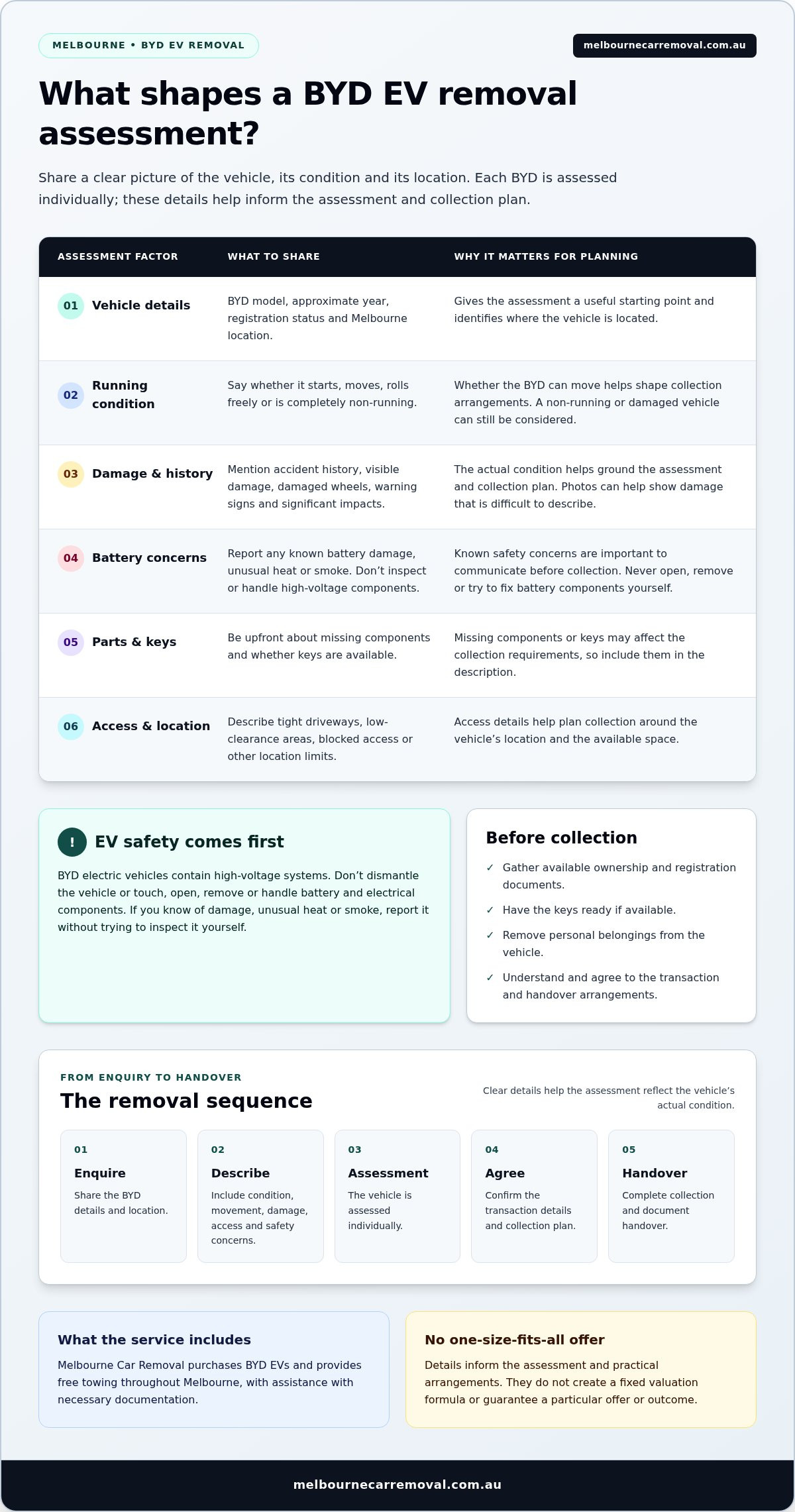
Preparing a few details can make a BYD handover easier to plan. Use this checklist to organise the practical information, then check current Victorian requirements for any registration or transfer steps that apply to your circumstances.
Don’t dismantle the BYD or disconnect, remove or handle its high-voltage battery. Before collection arrangements are made, mention any known collision, flood or battery damage, or unusual heat or smoke. Don’t approach or inspect a battery that may be damaged.
If there’s an immediate danger, move away from the vehicle and call emergency services. For non-urgent concerns, follow current Victorian safety guidance. Clear disclosure helps the collection plan account for the vehicle’s known condition without requiring you to investigate high-voltage components yourself.
Registration status and transaction circumstances can affect which Victorian transfer, disposal or registration steps apply. Check current VicRoads guidance for your situation rather than treating a general checklist as legal advice. Keep relevant records together and raise paperwork questions before the handover.
Melbourne Car Removal provides free towing and assistance with necessary documentation as part of its BYD EV removal service. This helps with the handover, while your specific VicRoads obligations should still be checked against current official guidance.
Once your documents, belongings, keys and access details are in order, you’ll be better prepared to arrange scrap BYD EV removal. Arrange BYD EV removal in Melbourne with the vehicle details and any known safety concerns ready to share.
Choosing a removal option comes down to the BYD’s condition, the details you can provide, a safe handover and the paperwork involved. Melbourne Car Removal purchases BYD electric vehicles in a range of conditions and provides removal throughout Melbourne. Free towing and assistance with necessary documentation are included.
An individual assessment helps establish the next steps for your vehicle. Share what you know, including any damage or access challenges, and discuss the transaction details before collection proceeds. You don’t need to dismantle the car or handle its high-voltage components.
Prepare a straightforward description of the vehicle. Include:
Accurate details help shape a vehicle-specific assessment and collection plan. If you’re unsure about something, explain that rather than guessing. Photos can help illustrate the vehicle’s condition, but they don’t guarantee an offer or a particular outcome.
Before handover, gather the ownership and registration records you have, remove personal belongings and explain any known safety concerns. Check current VicRoads guidance for transfer, disposal or registration steps that apply to your circumstances. Melbourne Car Removal can assist with necessary documentation, while your specific requirements may depend on the transaction and registration status.
That preparation gives your enquiry a clear starting point. Describe the vehicle as it is, discuss the proposed arrangements and decide whether to proceed. The service includes free towing, so you don’t need to organise separate transport for the BYD.
If scrap BYD EV removal is the practical next step for your unwanted, damaged or end-of-life vehicle, share its details to begin the assessment and arrange what happens next. Arrange your BYD EV removal enquiry.
Scrap BYD EV removal is easier to organise when you start with an accurate picture of the vehicle. Share its model, condition, whether it starts or moves, and any known damage or access concerns. Leave the high-voltage battery undisturbed, and gather the ownership and registration records you have.
Melbourne Car Removal purchases electric vehicles, including BYD models, and provides removal throughout Melbourne. Free towing and assistance with necessary documentation are included. Each vehicle is assessed individually, so discuss the transaction details before collection and check current VicRoads guidance for any transfer or registration steps that apply to your circumstances.
Ready to take the next step? Arrange your BYD EV removal enquiry and share the details that will help get the process underway. With the right information prepared, you can move towards a clear, practical handover.
Yes. Melbourne Car Removal purchases BYD EVs in a range of conditions, so you can enquire about a damaged or non-running vehicle. Share whether it starts or moves, describe visible damage and mention any known battery concerns. These details help with the vehicle assessment and collection plan. Each vehicle is considered individually, so its condition doesn’t guarantee a particular offer or collection arrangement.
The process starts with an enquiry and details about your BYD, including its model, approximate year, condition and location. The vehicle is assessed, then the proposed transaction and collection arrangements can be discussed. Agree on the details before collection proceeds. Melbourne Car Removal includes free towing and assistance with necessary documentation, so you don’t need to arrange separate transport.
No. Leave the battery in place and don’t open, disconnect, remove or handle high-voltage components. EV batteries can pose safety risks, particularly if damaged. Tell Melbourne Car Removal about any known battery damage, unusual heat, smoke or significant impact history before collection arrangements are made. If there’s an immediate danger, move away from the vehicle and contact emergency services.
The assessment is vehicle-specific. Helpful details include the BYD model, approximate year, overall condition, whether it starts or moves, and any accident history or missing components. Known battery concerns and access restrictions also help clarify collection planning. Photos can help describe visible damage, but they don’t guarantee an offer. Share accurate information so the vehicle can be assessed on its actual condition.
Gather proof of ownership and any registration records you have. The steps that apply can depend on the vehicle’s registration status and transaction circumstances, so check current VicRoads guidance for your situation. Melbourne Car Removal assists with necessary documentation as part of the service. If any records are missing, mention that early, and check the relevant requirements rather than assuming a particular paperwork outcome.
Yes. Free towing is included in Melbourne Car Removal’s BYD EV removal service throughout Melbourne. Share the vehicle’s location, whether it starts or rolls, and any access limits, such as a narrow driveway or blocked space. These details help plan collection. You don’t need to organise separate towing, and you should agree on the transaction and collection arrangements before the vehicle is collected.
You can enquire even if keys or some paperwork are missing. Be upfront about what you have, including available ownership and registration records, and explain whether the vehicle can be accessed or moved. Missing items may affect the handover arrangements, so raise them early. Melbourne Car Removal can assist with necessary documentation, but Victorian transfer or registration steps depend on your circumstances. Check current VicRoads guidance for your situation.