- Email: info@melbournecarremoval.com.au
- 25-27 Nicole Way,Dandenong South 3175
- Area of Operation: Melbourne-wide, VIC
22th October, 2026
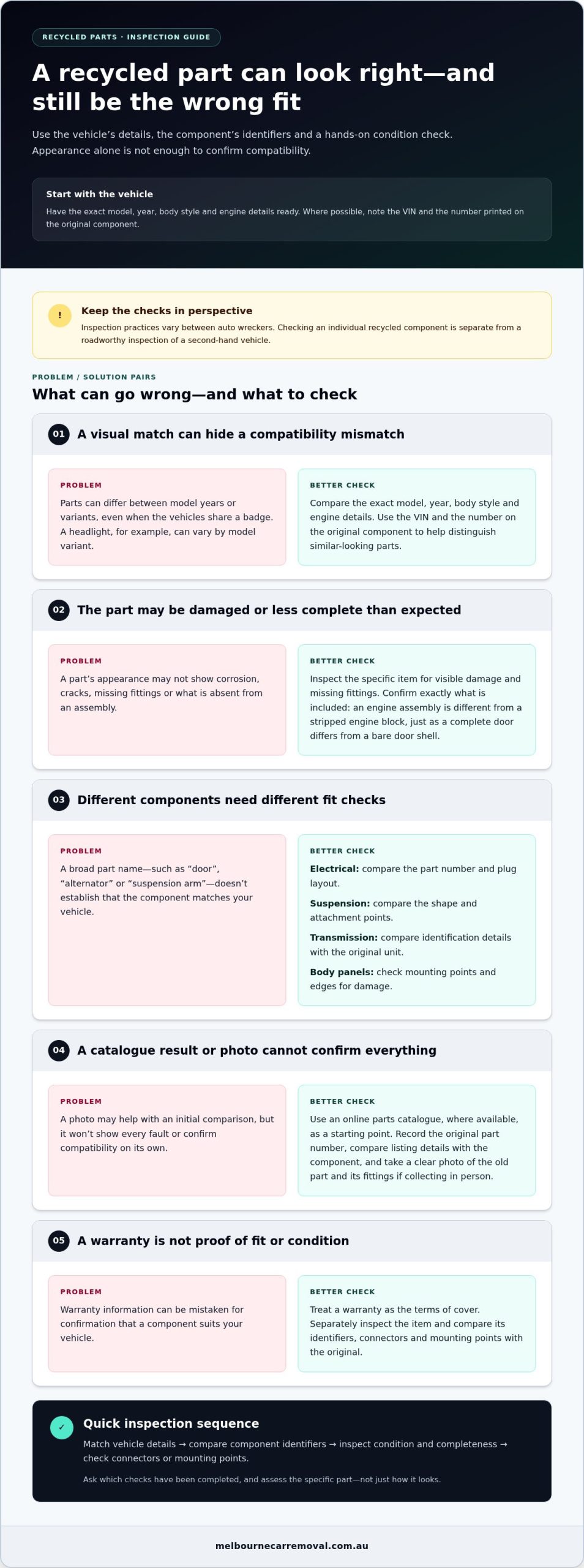
A recycled part can look right and still be the wrong fit. Inspection practices vary between auto wreckers in Melbourne, so ask which checks have been completed and match the part to your vehicle before buying. A roadworthy inspection of a second-hand vehicle is separate from checking an individual recycled component.
It’s sensible to want clear information about a part’s condition before buying. This guide explains what to inspect, which vehicles auto wreckers commonly buy and what components they may recover and sell.
You’ll also learn how vehicle condition and details such as make, model and age affect a valuation, and what to consider when arranging disposal. The final section explains how to find auto wreckers around Melbourne and Geelong, so you can understand your options and decide on a next step.
Auto wreckers in Melbourne may buy vehicles for dismantling, recycling or parts recovery, including cars damaged in a collision. A valuation typically takes the vehicle’s make, model, age and condition into account.
Accepted vehicles can include Japanese, European, Australian, Asian and American makes. Wreckers may consider both running and non-running vehicles, with or without registration. An accident-damaged vehicle can still have recoverable components, even if it can’t be driven or repaired economically.
Before arranging a valuation, note the make, model, age and visible damage. Describe any missing parts or mechanical faults, and say whether the vehicle starts. For example, a damaged European sedan and an older Australian ute may both be considered, but their make, model and condition affect the assessment differently. Describe the vehicle accurately so the valuation reflects what’s being collected.
A vehicle’s remaining warranty doesn’t, by itself, describe its current condition or determine its value. The assessment focuses on the vehicle and its usable components.
Vehicle assessments consider the make, model, age and condition you describe, as well as the vehicle’s actual state. Point out accident damage, whether it runs and any obvious missing components. This helps avoid a mismatch between your description and the vehicle presented for collection.
Free vehicle towing is available in Melbourne. Make sure the vehicle is accessible to the collection vehicle. A car in an undercover car park or behind a house may be inaccessible for collection, so explain its location and access conditions when arranging removal.
At collection, the team completes vehicle transfer paperwork on the spot. Have relevant vehicle details ready and read the paperwork before signing. Collection and registration cancellation are separate tasks, so arrange the registration step separately.
In Victoria, cancel the registration through VicRoads and return the number plates as directed in its cancellation process. Vehicle collection does not itself cancel registration, so treat deregistration as a separate step.
Keep the vehicle’s registration details handy when completing the cancellation process, and follow VicRoads’ instructions for returning the plates. If the vehicle has already been collected, still complete the registration task rather than assuming the transfer paperwork has done it for you. This keeps the disposal paperwork and registration record separate, so you can complete both parts of the process.
Melbourne wrecking yards sell used vehicle parts to the public, including components recovered from dismantled vehicles. Before choosing a part, check that it matches your vehicle and assess its condition, not just its appearance.
Part names can be broad. A door, alternator or suspension arm may differ between models, so vehicle details and component identifiers help narrow the search.
Used parts can cover a wide range of makes and models, depending on the vehicles dismantled and the parts retained. A part from one model year may not suit another, even when both vehicles share a badge. Check the exact model, year, body style and engine details against your vehicle before relying on a visual match.
For a more accurate match, note the VIN and any number printed on the original component. For example, a headlight can vary by model variant, while an electrical part may depend on the vehicle’s engine or wiring setup. These identifiers help distinguish similar-looking parts.
Recyclers may sell engines, transmissions, doors, bonnets, bumpers and mirrors, as well as electrical and suspension components. Check each item’s condition and completeness. An engine assembly and a stripped engine block are different purchases, just as a complete door differs from a bare door shell.
Inspect the part for visible damage, corrosion, cracks or missing fittings. For a transmission, compare its identification details with the original unit. For body panels, check the mounting points and edges for damage. A warranty describes the terms of cover; it doesn’t establish that a part fits your vehicle.
Inspection practices can vary. Look over the specific item and compare its identifiers, connectors and mounting points with the original. For electrical components, check the part number and plug layout. For suspension parts, compare the shape and attachment points. A photo can help with an initial comparison, but it won’t show every fault or confirm compatibility on its own.
An online parts catalogue, where available, can help you search by make, model, year or part number. Use the results as a starting point, then compare the listing details with the component you need. Record the original part number before searching. If you’re collecting a part in person, take a clear photo of the old part and its fittings to compare them at the counter.
For an electric vehicle that has reached end of life, cash for electric cars is a vehicle-disposal option rather than a used-parts purchase.
Wreckers may buy unwanted, accident-damaged and end-of-life vehicles for dismantling or recycling. A vehicle’s make, model, age and condition help shape its assessment.
A car doesn’t need to be roadworthy to be considered. Non-running vehicles and collision-damaged cars may still have components or materials that can be recovered. Describe the damage clearly, including whether the engine starts, which panels are affected and whether parts have already been removed.
For example, a vehicle with front-end damage may retain usable rear panels, while one with engine failure may have other recoverable components. Make, model, age and overall condition all influence the valuation. Give accurate details when arranging an assessment so your description reflects the vehicle being sold.
Selling a second-hand car for continued use differs from selling it for wrecking. A vehicle intended for reuse is assessed as a complete car, while a scrap vehicle is valued around its condition and recoverable materials. Be clear about whether the vehicle is complete or has already had parts removed.
A cash offer is the proposed amount for the vehicle, not a promise that payment will be handed over as notes. Ask for the offer and its terms in clear language. Check that the assessment uses the correct make, model and condition details.
Before accepting, establish what the offer covers, how collection is arranged and what paperwork will be completed. For example, disclose a missing catalytic converter or damaged transmission before agreeing. Keep a record of the agreed vehicle details and offer so you can compare them with the collection arrangements.
When comparing auto wreckers in Melbourne, look at how clearly they explain valuation, collection and paperwork. Compare written terms and business details, not just a headline offer. If a business describes itself as licensed, check its identifying details against an official Victorian register. Clear, consistent information makes the proposed transaction easier to understand.
Risks include a changed offer, unclear collection terms or incomplete paperwork. Before handing over the keys, confirm the agreed vehicle details and keep copies of the transaction documents. Remove personal belongings, toll tags and stored information from the car. These steps help protect your records and reduce avoidable misunderstandings.
Have the vehicle’s registration details, your identification and documents showing your right to sell it ready. The paperwork can depend on the ownership records, so make sure the seller’s name aligns with the vehicle documents. This clarifies who is authorising the sale.
At collection, read the transfer paperwork before signing and keep a copy. If someone is selling on the owner’s behalf, document their authority to act. Keep the sale record with your vehicle documents and handle registration cancellation separately. Auto wreckers around Melbourne can process a straightforward handover when the seller and vehicle details are clear.
Finding a suitable yard starts with matching its location and visiting arrangements to your task. Campbellfield, Melbourne, Kilsyth and Geelong are useful place names when comparing search results, but an area name alone doesn’t confirm an operating yard or its opening hours.
Use a current business listing to find the street address and trading hours for the specific yard you plan to visit. Check the suburb against your starting point, then map the route and consider traffic, parking and the size of any vehicle you’re bringing. A nearby address may still be inconvenient if access or opening hours don’t suit.
For Campbellfield, search the suburb alongside the service you need, such as vehicle disposal or recycled parts. Read the address carefully: search results may include nearby businesses rather than a yard located in Campbellfield itself. Use the listed trading hours to plan your visit, and distinguish counter hours from any separate collection arrangements.
“Melbourne” can refer to a broad search area rather than a specific yard address. Narrow results by suburb and compare the route from your home or workplace. If you’re collecting a part, keep its description and your vehicle details handy. If you’re arranging vehicle removal, focus on the pickup location and access rather than assuming you need to visit a yard.
Use the same approach for Kilsyth: confirm the exact street address, match the listing to the service you need and check the stated opening hours before travelling. Don’t rely on a suburb name alone when planning a trip. A map can help compare routes from surrounding suburbs and show whether the location suits your schedule.
For Geelong, decide whether you need a yard visit or vehicle collection. These are different arrangements. A parts buyer may need to travel to a counter, while a vehicle owner may arrange removal from a home or worksite. Record the relevant address, access details and planned arrival time before setting out.
Use this simple location checklist:
For commercial vehicles, consider turning space and access when planning a drop-off or collection. A mapped route should account for the vehicle’s size and the site entrance, not just distance. This makes finding an appropriate location more practical across Melbourne, Kilsyth, Campbellfield and Geelong.
Auto recycling can keep reusable components in circulation and reduce the amount of a vehicle sent for disposal. In Victoria, lawful handling also matters, particularly for written-off vehicles and their industrial waste.
From 1/7/21, Victoria’s EPA Protection Act 2017 placed obligations on owners of statutory and repairable written-off vehicles to dispose of their industrial waste at a lawful place. That rule makes responsible disposal a practical part of vehicle ownership, not just a recycling preference.
Reusing a serviceable door, mirror or alternator gives a component another use instead of sending it straight to waste. It can also reduce demand for newly manufactured replacement parts. A recycler assesses which parts can be recovered; damaged, worn or unsuitable items may not be reusable and need a different end-of-life pathway.
Metal recovery is another part of the process. Materials in a vehicle can be separated and directed into recycling streams rather than treated as one mixed item. For example, reusable components can be removed before the remaining vehicle materials are processed. This can conserve resources and reduce avoidable waste, although the outcome depends on the vehicle’s contents and how it is handled.
Choosing a recycler is useful when a vehicle can no longer be driven or repaired economically. Describe its condition accurately, including missing parts, collision damage and whether it is a statutory or repairable write-off. Those details help determine how the vehicle can be handled. Owners of written-off vehicles should ensure the disposal destination meets Victorian requirements.
Recycling doesn’t mean every part will be reused. A cracked light, damaged suspension component or contaminated material may be unsuitable for resale or recovery. The practical benefit comes from sorting the vehicle: reuse components when their condition allows, then direct other materials into appropriate recycling or disposal processes.
For a responsible disposal decision, focus on the vehicle’s condition and its lawful destination. Provide accurate details before collection, and keep the disposal paperwork with your vehicle records. If your unwanted vehicle needs a clear next step, arrange vehicle disposal through the available vehicle removal service.
Recycling is most useful when reusable parts are recovered and remaining materials are handled appropriately. This combination can extend the useful life of components and reduce waste from end-of-life vehicles in Victoria.
Melbourne Car Removal offers Cash for Cars for owners ready to dispose of an unwanted vehicle. It also buys 4WDs, SUVs and vans, including vehicles that are damaged or no longer running. A vehicle’s make, model, age and condition help determine its valuation.
Choose this option when selling the vehicle for parts or arranging repairs isn’t the outcome you need. Share accurate details about the vehicle and its condition to support an informed valuation and disposal arrangement. Melbourne Car Removal removes vehicles; it doesn’t sell used auto parts or provide vehicle repairs.
For a straightforward next step, visit Melbourne Car Removal.
Before contacting an auto wrecker in Melbourne, decide what outcome suits you best. If you want to sell the whole vehicle rather than source individual parts, gather its make, model and a clear description of its condition. That gives you a practical starting point for discussing disposal.
Melbourne Car Removal offers Cash for Cars, Cash for 4WDs and Cash for SUVs. These options suit owners considering disposal of a passenger vehicle or larger vehicle, rather than repairs or buying recycled parts. Choose the vehicle category that matches yours, then share its details when you get in touch.
A clear next step can make an unwanted vehicle easier to deal with. Contact Melbourne Car Removal today to discuss your vehicle and move forward with confidence.
Inspection practices vary, so assess the specific part rather than assuming every item receives identical checks. Compare its part number, connectors and mounting points with the component you’re replacing. Look for cracks, corrosion, missing fittings or visible damage. For example, a headlight casing may appear sound but have broken mounting tabs. A warranty’s protection depends on its stated terms and doesn’t confirm compatibility.
Vehicle valuations depend on the individual vehicle rather than a fixed price list. Make, model, age and condition all help shape an offer. For a useful assessment, describe whether the vehicle runs, has collision damage or is missing components. The offer depends on the vehicle and is provided after a quote request. Give accurate details so the valuation reflects the vehicle being considered.
Recycling can reduce waste by recovering suitable vehicle components and materials for another use. A reusable mirror, door or electrical component may serve a new purpose instead of being discarded with the vehicle. The environmental benefit depends on how the vehicle is dismantled and how remaining materials are handled. Melbourne Car Removal responsibly recycles vehicle components and reintegrates them into the Australian economy.
Services can include buying end-of-life vehicles for dismantling, recycling or parts recovery. Some wreckers also sell recovered parts, which is a separate service from vehicle purchasing. For auto wreckers in Melbourne, the specific offering matters: Melbourne Car Removal purchases cars, 4WDs, SUVs, vans, trucks and buses, including hybrid and electric vehicles. It focuses on vehicle removal, not repairs or used-parts sales.
There isn’t one standard offer for every scrap or unwanted vehicle. A valuation depends on details such as make, model, age and condition, including damage and missing components. Two vehicles of the same model may receive different assessments if one has substantial collision damage or has already had parts removed. Provide a clear description so the assessment reflects the actual vehicle.
Make, model, age and condition are key factors in a vehicle valuation. Describe whether the car starts, has accident damage or is missing components. When comparing auto wreckers in Melbourne, provide the same accurate vehicle details for each assessment. For instance, disclose a damaged transmission rather than describing the car only as “not running”; the specific fault gives a clearer picture of its condition.
Melbourne Car Removal provides free towing and removal throughout Melbourne and surrounding suburbs. This suits owners whose vehicles are damaged, unregistered or unable to run. When arranging collection, provide the vehicle’s location and explain access conditions, such as a narrow driveway or restricted entry. Clear details help the collection plan account for where the vehicle is parked.
Start by sharing the vehicle’s make, model and condition, including whether it runs and any visible damage. Have the ownership and registration details ready for the transaction. Once the vehicle is approved, Melbourne Car Removal arranges collection, pays instantly on the spot and handles the necessary paperwork. Read the documents before signing, keep a copy and manage registration cancellation separately.