- Email: info@melbournecarremoval.com.au
- 25-27 Nicole Way,Dandenong South 3175
- Area of Operation: Melbourne-wide, VIC
20th October, 2026
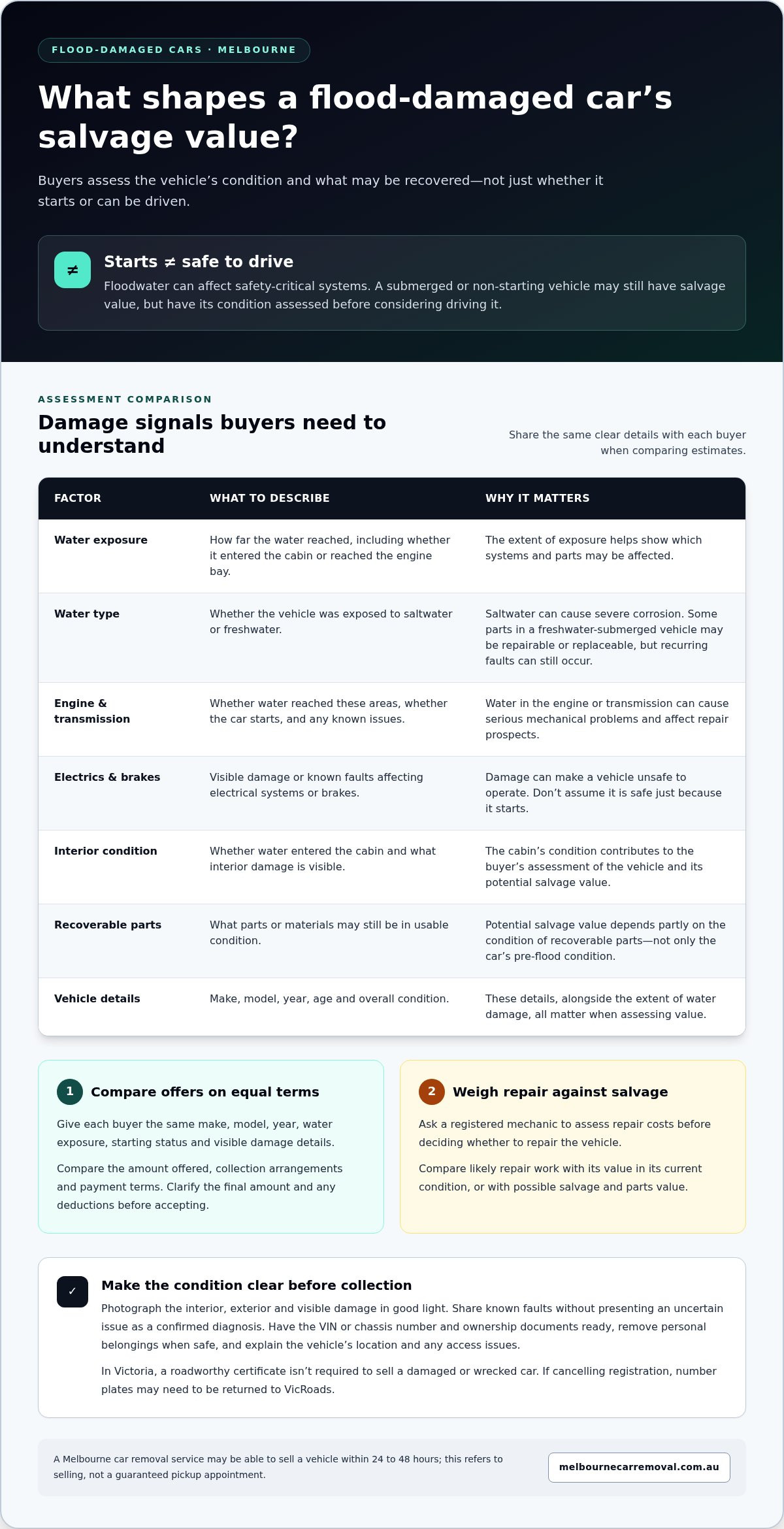
A flood-damaged car’s value in Melbourne depends on how far the water reached, which systems were affected and what parts or materials may be recovered. Flood damaged car buyers in Melbourne may assess submerged vehicles and cars that won’t start, but the extent of the damage shapes the offer. Saltwater can cause severe corrosion, and damage to the engine, electrics or interior can affect salvage value.
It’s understandable to want a clear figure before deciding what to do. There’s no single value for every flood-damaged car: the make, model, age, extent of water exposure and condition of recoverable parts all matter.
This article explains what affects a flood-damaged car’s value, what to consider if it may be unsafe to drive, and how selling to a car removal service works in Melbourne. You’ll also find practical steps to prepare for a sale and compare options for your vehicle’s condition.
If a flood-damaged vehicle is difficult to move or sell privately, car removal can bring assessment, collection and disposal together. It reduces the arrangements involved and offers a way to move a vehicle that may not be safe to drive.
Car removal services commonly offer free towing for flood-damaged vehicles. This can avoid arranging a separate tow, particularly when water damage has left the car unable to start. Before agreeing to collection, give an accurate location and describe access issues, such as a car parked in a tight garage. Confirm what the towing arrangement covers so there’s no confusion on pickup day.
Car removal companies may buy flood-damaged cars in varied conditions, including vehicles with extensive water damage. Their valuation can reflect the vehicle’s condition and potential salvage value, rather than its ability to pass as a roadworthy car. Share the make, model, year and known damage when seeking an estimate. “Instant cash” is an advertised phrase, not a promise of physical notes: from May 30, 2018, companies buying scrap metal and used cars could pay by electronic transfer or cheque instead.
Ask how the damaged vehicle will be handled after collection. Salvageable parts may be recovered, while the rest can be recycled. Fluids and other hazardous substances need proper disposal to reduce the risk of environmental harm. Responsible handling matters because damaged vehicles can contain materials that should not be left to leak into soil or drains.
A free estimate, where available, gives you an initial valuation before you commit to selling. Describe whether the car was submerged, whether it starts, and which areas show visible damage. These details help a buyer assess its condition and possible salvage value. In Melbourne, car removal services can usually sell a vehicle within 24 to 48 hours, but that timeframe refers to selling, not a guaranteed pickup appointment.
For collection, provide the vehicle’s location and make sure it is accessible to the tow truck. Remove personal belongings before handover, and have the vehicle identification details ready. If floodwater has made the vehicle unsafe to enter, don’t retrieve items until it’s safe to do so.
Be direct about flood exposure when discussing a sale. Explain whether water entered the cabin, reached the engine bay or affected electrical systems, and mention known issues such as a non-starting engine. Don’t present an uncertain fault as a confirmed diagnosis. Clear information helps assess the vehicle and plan collection.
Photos can support your description: capture the interior, exterior and visible damage in good light. Keep a record of what you’ve told buyers, including the vehicle’s flood history and any known repairs. Accurate disclosure helps make selling flood-damaged vehicles less difficult and allows a removal service to plan its valuation and pickup around the car’s actual condition.
A submerged car may still have salvage value, even if it won’t start or operate safely. In Melbourne, consider its damage, repair prospects and sale options before deciding what to do.
Water damage can affect a car’s electrics, engine, transmission, brakes and interior. Water in the engine or transmission can cause serious mechanical problems, while damaged electrical components may make the car unsafe to operate. Ask a registered mechanic to assess repair costs before deciding whether to repair it. Saltwater can be particularly corrosive, and extensive damage may make repairs uneconomical.
A vehicle submerged in freshwater may have parts that can be repaired or replaced, but recurring faults and breakdowns can make continued ownership difficult. Compare likely repair work with the car’s value in its current condition. If you can’t establish that it’s safe to drive, arrange transport rather than trying to start or move it.
To compare offers from Melbourne flood-damaged car buyers, give each buyer the same details: make, model, year, whether the car was submerged and whether it starts. Describe visible damage to the cabin, engine bay and electrical systems. Then compare the amount offered, collection arrangements and payment terms.
A higher quoted amount may not be the better option if the collection arrangements differ. Clarify the final amount and any deductions before accepting. You can also compare offers with the vehicle’s possible salvage or parts value, rather than judging it by its pre-flood condition.
Tell buyers about known water damage, including how far the water entered and which areas are affected. Don’t describe an untested vehicle as mechanically sound. Photograph the interior, exterior and damaged areas, and keep service records that help explain its history. Sellers should be transparent with buyers about a damaged vehicle’s condition.
Have the vehicle identification number or chassis number ready when arranging a sale. Gather ownership documents and relevant records, remove personal belongings, and document the handover. A roadworthy certificate isn’t required to sell a damaged or wrecked car in Victoria. If cancelling registration, number plates may need to be returned to VicRoads.
Driving a flood-damaged car can be risky because water may affect brakes, electrical systems or other safety-critical parts. Corrosion can also cause mechanical faults and breakdowns. Don’t assume a car is safe just because it starts. Have its condition assessed before considering driving it again.
To check for a write-off record, obtain a PPSR vehicle history report and look for a Written-Off Vehicle Register entry. Structurally damaged vehicles in Victoria are often recorded there. Repairable and statutory write-offs have different implications: statutory write-off vehicles can’t legally be repaired, while a damaged vehicle being registered again must meet roadworthy requirements. For a submerged car that can’t be driven, you can explore car removal options in Melbourne.
Melbourne Car Removal assesses flood-damaged vehicles for purchase, including cars whose engines won’t start. Share accurate details about the damage so the offer and towing arrangements reflect the car’s condition.
Melbourne Car Removal offers free towing for flood-damaged vehicles throughout Melbourne and surrounding suburbs, including cars that don’t run. Describe whether the car is in a garage, on a narrow street or blocked by other vehicles so collection can be planned.
Before accepting an offer, establish whether towing is included and what payment method applies. From May 30, 2018, companies buying scrap metal and used cars could not pay in cash, but could pay by electronic transfer or cheque. “Instant cash” shouldn’t be taken to mean physical notes.
Start with a clear description of the vehicle: its make, model, year, location and whether it starts. Explain whether floodwater entered the cabin or reached the engine and electrical systems. For example, a car with a flooded interior and a non-starting engine needs a different assessment from one with damp carpets and no known mechanical symptoms.
Share photos of the exterior, cabin and visible damage to support your description. Include details such as muddy waterlines, wet seats or warning lights that appeared after the flood. This information helps Melbourne Car Removal assess the vehicle’s condition and potential salvage value.
Removal can be a practical option when a private sale would involve arranging inspections, explaining the damage to prospective buyers and organising transport. It also provides a way to move a vehicle that shouldn’t be driven. Melbourne Car Removal handles the necessary paperwork, so have the vehicle identification number and ownership documents ready.
At collection, remove personal belongings and make the car accessible to the tow truck. Keep a record of the agreed amount, payment method and handover details. If the car is an electric vehicle, identify it as such and disclose its flood exposure, since water may affect electrical components differently from those in a conventional vehicle.
Options for a flood-damaged car include selling it for salvageable parts or scrap, using a car removal service, or considering a salvage auction. The vehicle’s condition and the likely value of recoverable components help determine which route makes practical sense.
A damaged car may retain value even if it can’t be driven. Buyers assess the extent of water damage and whether components can be recovered. A vehicle with damage to the engine, transmission or electrical systems may still have parts of interest, depending on their condition. Describe known damage accurately so the assessment reflects the car as it stands.
Scrap metal may also contribute to a vehicle’s value. A car can weigh about two tonnes, but that doesn’t determine how much a seller will receive. Overall condition, recoverable components and processing needs all affect its scrap value. Don’t assume an offer based on weight alone.
Salvage auctions are another option for damaged vehicles. Auction buyers may seek cars to repair or use for parts, so a flood-damaged vehicle could attract interest even if repairs are needed. The result depends on what buyers can see and assess. Clear photos and an honest description of water exposure help present the car accurately.
Before choosing an auction, consider the work involved in preparing and selling the car. Flood-damaged vehicles sold at auction may have no manufacturer warranty or a conditional one. This can affect buyers’ decisions about repair costs and future risks. As a seller, disclose known damage rather than relying on the listing to explain it.
If you’re considering buying a salvage vehicle, check its history and condition before committing. A PPSR history check can help identify recorded write-off information, while an inspection may reveal damage that photos don’t show. Look for flood indicators inside the cabin and signs of affected electrical or mechanical components.
Check what the listing says about the vehicle’s flood exposure, damage and write-off status. Compare that description with available records and inspection findings. A low auction price doesn’t prove repairs will be straightforward. Water damage can extend beyond visible marks, particularly when electrical or mechanical components are affected.
For sellers in Melbourne, compare the likely salvage outcome with a direct removal option. The right fit depends on the car’s condition, which parts remain usable and how much sale preparation you’re willing to handle.
Melbourne Car Removal buys flood-damaged vehicles, including cars that no longer start. The vehicle’s condition and potential salvage value inform the offer.
What Melbourne car removal companies accept flood-damaged or written-off vehicles? Melbourne Car Removal accepts vehicles in any condition, including submerged cars, non-starters and salvage vehicles. The offer depends on the vehicle’s condition and potential salvage value.
For Melbourne owners, car removal can simplify selling a damaged vehicle when private sale would mean repeated inspections, transport arrangements and explaining the flood damage. Melbourne Car Removal assesses the car as a whole, including the potential to recover parts or materials. This can be a practical option when engine or electrical damage means the vehicle shouldn’t be driven.
Compare offers using the same description of the car. Include its make, model, age, flood exposure and known faults. A “top cash” claim alone doesn’t show what the offer covers. Consider the stated amount alongside towing, payment arrangements and any deductions, then compare the complete terms.
Flood-damaged vehicles range from cars with wet carpets to fully submerged cars with engine or electrical damage. Melbourne Car Removal accepts vehicles in any condition. Describe the water exposure, whether the car starts and any visible damage, rather than relying on appearance alone.
A written-off vehicle may still have salvage value, but its status matters. Structurally damaged vehicles in Victoria are often recorded on the Written-Off Vehicle Register. Statutory write-offs can’t legally be repaired, while a damaged vehicle must meet roadworthy requirements before it can be registered again. A buyer’s willingness to purchase doesn’t make a vehicle suitable for road use.
Before arranging a sale, gather the vehicle identification number, ownership documents and any service records. Photograph the interior, exterior and visible flood damage. Clear information helps buyers assess the vehicle and avoid disagreements at handover.
If the vehicle is difficult to move, compare removal with a private sale or salvage auction. Car removal combines assessment and collection, while an auction presents the vehicle to interested salvage buyers. Choose based on the car’s condition and how much sale preparation you’re willing to handle.
To explore a removal option for your flood-damaged vehicle, request a Melbourne car removal quote.
Melbourne Car Removal offers Cash for Cars for owners ready to sell a flood-damaged vehicle. Whether your car is submerged, won’t start or has extensive water damage, describe its condition and known issues when requesting an offer. This helps ensure the flood history is considered in the assessment.
The business also offers Cash for 4WDs, Cash for SUVs and Cash for Vans. These options suit owners disposing of different vehicle types, including those affected by flooding. A clear description of the vehicle helps you take the next step without arranging repairs first.
Contact Melbourne Car Removal to discuss selling your vehicle.
Before deciding, set a practical priority: reducing disposal hassle, exploring possible repairs or understanding the vehicle’s salvage value. This helps you assess an offer against what matters to you, rather than focusing on a figure alone. Keep notes on the car’s condition handy so you can explain it consistently.
If you’re comparing flood-damaged car buyers in Melbourne, look for an option that fits your vehicle and the outcome you want. Melbourne Car Removal offers Cash for Cars, Cash for 4WDs and Cash for SUVs, giving owners a disposal option across these vehicle types.
Take the next step at your pace. Contact Melbourne Car Removal to discuss your vehicle and make a considered decision about what comes next.
Your damaged car’s value depends on its make, model, age, condition and salvage potential. For example, a vehicle with a damaged engine but intact body panels may be assessed differently from one with extensive cabin and electrical damage. Describe the damage accurately and provide clear photos when requesting an offer. Use the same details when comparing options.
Yes. You can sell a car that won’t start through Melbourne Car Removal’s Cash for Cars service. Explain whether the engine is unresponsive, whether the keys are available and where the car is parked. These details help with the assessment and removal plan. Don’t try to drive it if flood damage may have affected its brakes or electrical systems.
After a sale, a damaged vehicle may be assessed for recoverable components or recycling. Melbourne Car Removal responsibly recycles vehicle components for reintegration into the Australian economy. What can be recovered depends on the vehicle’s condition. Damage to electrical systems or the engine may limit reuse, while other components could remain suitable for recovery.
The best option depends on your priorities and the vehicle’s condition. A private sale may suit a car with identifiable value to a particular buyer, while a salvage auction can attract buyers seeking vehicles to repair or use for parts. Car removal is another option when arranging viewings or transport feels impractical. Compare the overall offer and collection arrangements.
Flood-damaged vehicles can be sold in Melbourne, Victoria, through private sales, salvage auctions or a removal service. Melbourne Car Removal offers Cash for Cars and accepts vehicles in any condition. Its assessment reflects the car’s damage and salvage potential. Disclose whether it was submerged, whether it starts and which systems appear affected.
There’s no single value for every flood-damaged car. An offer depends on the vehicle’s make, model, age, water exposure, mechanical and electrical condition, and recoverable parts. Saltwater exposure, for example, can cause severe corrosion and affect salvage prospects. Give a consistent description of known damage and whether the car runs when requesting an offer.
Buyers consider the vehicle’s identity, condition and potential salvage value. Share its make, model and year, whether it was submerged, whether it starts, and any known engine, electrical or interior damage. The type and extent of water exposure may also matter. Photos of waterlines, stained upholstery or damaged areas provide useful context, but don’t describe suspected faults as confirmed diagnoses.
Start by documenting the damage and gathering the vehicle identification number, ownership documents and service records. Disclose known flood exposure, remove personal belongings, and agree on the sale and collection arrangements. At handover, complete the ownership paperwork and keep a record of the transaction. If cancelling registration, number plates may need to be returned to VicRoads. A damaged or wrecked car sale doesn’t require a roadworthy certificate in Victoria.