- Email: info@melbournecarremoval.com.au
- 25-27 Nicole Way,Dandenong South 3175
- Area of Operation: Melbourne-wide, VIC
15th October, 2026
Can an older or damaged electric car still be worth selling? Its make, model, age, kilometres, condition and battery information all help shape its value. If you’re considering cash for electric cars Melbourne, start by gathering clear details about the vehicle, even if you’re unsure about its battery or damage.
Selling an EV can raise practical questions: what information should you provide, which paperwork should you gather, and how will the car be collected? Melbourne Car Removal buys electric and hybrid vehicles, including Tesla and BYD models, in a range of conditions. Free towing and assistance with transaction documentation help make the process more straightforward.
This guide explains what can influence an EV valuation and what to share when arranging a sale. You’ll also find steps for preparing the vehicle and its documents for collection, so you can plan your next move with confidence.
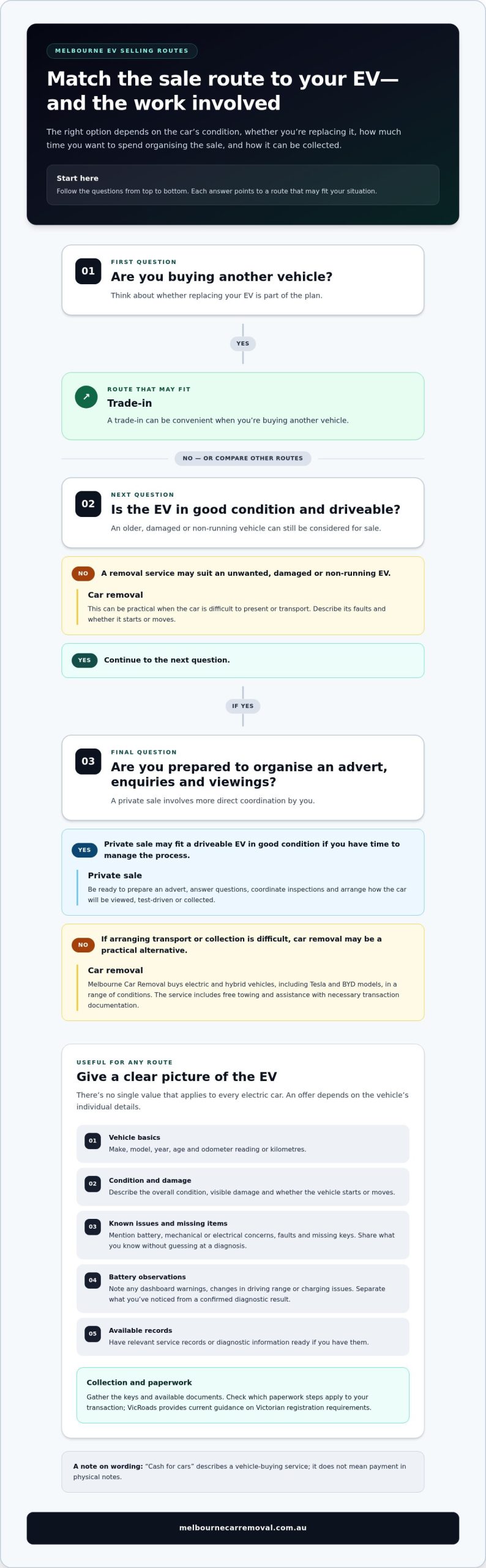
Choosing how to sell an EV depends on its condition and how much time you want to spend organising the sale. Consider whether the car can be driven to an inspection, whether you want to manage enquiries and viewings, and what paperwork you have ready.
A private sale may suit a car in good condition if you’re prepared to advertise it, answer questions and arrange viewings. A trade-in can be convenient when you’re buying another vehicle. Removal is a practical option for an unwanted, damaged or non-running EV, particularly when arranging transport would be difficult.
Melbourne Car Removal buys electric and hybrid vehicles, including Tesla and BYD models, in a range of conditions. The service includes free towing and assistance with necessary transaction documentation. “Cash for cars” describes a vehicle-buying service, not payment in physical notes.
You might sell an older EV, a damaged vehicle or a car that no longer suits your needs. A vehicle that won’t start or can’t be driven can also be sold through a removal service. Describe what has happened and the car’s current condition when arranging a valuation.
Fully electric cars run on electric power, while hybrids combine an electric motor with another type of engine. Both may suit owners looking to sell. For a general overview of EV types and components, see the electric vehicle page on Wikipedia.
A private sale usually involves preparing an advert, answering enquiries and coordinating inspections. You’ll also need to organise how the car will be viewed, test-driven or collected. That may be manageable for a driveable EV when you have time, but less convenient if the car is damaged or won’t move.
A removal service can simplify transport planning. Melbourne Car Removal provides free towing, which is useful when you can’t drive the vehicle to a buyer. When requesting a valuation, describe the car accurately, including any faults and whether it starts or moves. This gives a clear starting point for discussing the vehicle and its collection.
Paperwork matters whichever sale route you choose. Gather the documents you have and check which steps apply to the transaction. Melbourne Car Removal can assist with necessary documentation, while VicRoads provides current guidance on Victorian registration requirements. A private sale gives you more direct involvement in the process. Removal can suit an EV that is difficult to present or transport.
There’s no single figure that applies to every electric car. Its make, model, age, odometer reading and overall condition all help describe what you’re selling. Damage, missing items and known mechanical or electrical issues are relevant too. Battery information can also help, but you don’t need to guess at a technical diagnosis to give a useful account of the car.
An EV’s value is vehicle-specific, shaped by its make, model, age, kilometres, condition, damage and the information available about its battery. Use these factors to prepare details for an initial valuation. Be clear about what you know and what you’ve observed, rather than presenting a guess as a confirmed fault.
When seeking cash for electric cars Melbourne, an accurate description helps the buyer understand the vehicle before discussing an offer. It also reduces the chance of confusion if the car’s condition differs from the initial description.
Share any battery warnings displayed in the car, noticeable changes in driving range or charging issues you’ve experienced. Explain what happened and when, if you know. Distinguish your observations from a diagnostic result or information supplied by the manufacturer. For example, say the range seems lower than before instead of claiming a specific battery fault without a report to support it.
If you have relevant service records or diagnostic information, have them ready. If you don’t, say so. A battery concern doesn’t automatically mean the whole vehicle has no value, so give an honest account rather than making assumptions.
Put the basics together before requesting a valuation. Note the make, model, year and odometer reading, then summarise the vehicle’s condition in plain language. Mention visible damage, missing keys and known mechanical or electrical issues. If photos are requested, clear images of the exterior, interior and any damage can help illustrate your description.
These details build a clearer picture of the vehicle, but the offer will depend on its individual characteristics. To discuss a sale, request an EV valuation from Melbourne Car Removal and share what you know about the car. Clear information makes it easier to discuss the vehicle and plan the next step.
There’s no single best way to sell an electric car. Your choice depends on the EV’s condition, how much time you want to spend organising the sale, whether you’re replacing it and how it can be collected. A battery warning or a change in range doesn’t automatically make a vehicle impossible to sell. Share what you know, then compare the options with your priorities.
| Selling route | Effort | Condition and collection | Paperwork |
|---|---|---|---|
| Private sale | Advertise, respond to enquiries and arrange inspections. | Often suits a vehicle you can present to prospective buyers. Plan collection with the buyer. | You coordinate the sale documents and ownership steps. |
| Trade-in | Discuss the vehicle as part of buying another car, where available. | Collection or handover is arranged around the vehicle purchase. | Confirm the paperwork involved in the trade and new purchase. |
| Vehicle removal | Share vehicle details and arrange removal. | Can suit unwanted, damaged or non-running vehicles. Towing helps with collection. | You remain responsible for your requirements, with documentation assistance available from Melbourne Car Removal. |
If you’re considering Melbourne Car Removal’s EV buying service, compare removal with a private sale based on the car’s condition and how it can be collected.
A private sale may suit you if the EV is presentable, you’re comfortable handling enquiries and you can make time for inspections. You’ll be more directly involved, including coordinating how a buyer views and collects the car. A trade-in may be convenient if you’re already purchasing another vehicle and the seller accepts your EV as part of the transaction. Neither route guarantees a particular return.
Removal may be practical if the EV is unwanted, damaged or not running, or if organising transport is an obstacle. Melbourne Car Removal provides free towing, which can help when the car can’t be driven. Tell the buyer about the vehicle’s condition, including any known battery concerns, so the valuation reflects the information you provide.
Describe battery issues rather than assuming what they mean. Note warning messages, charging problems or changes in driving range, and distinguish your observations from a formal diagnosis. A concern may affect how the vehicle is assessed, but it doesn’t establish that the whole car is unsellable. The same applies to damage or a non-running condition: explain what you know so the vehicle can be considered on its details.
Choose the route that matches your priorities. If you want direct involvement and can arrange viewings, a private sale may suit. If you’re replacing your car, consider a trade-in. If moving the EV is the main challenge, removal and towing can simplify the logistics.
A little preparation makes it easier to describe your EV and organise a sale. Gather the information you have, note anything a buyer should know and check Victorian requirements before handover. You don’t need to guess at a fault or arrange repairs just to explain the vehicle’s condition.
Accurate vehicle details and organised paperwork help make the sale process clearer for everyone involved. Use this checklist to gather the essentials before arranging a sale or removal.
Collect the details and items available to you. If you don’t have every document or accessory, make a straightforward note of what is missing. When seeking cash for electric cars Melbourne, a clear summary helps explain the car and its collection needs without overstating its condition.
Before handing over the EV, check current VicRoads guidance for the steps that apply to your registration, including transfer or cancellation requirements and what to do with number plates. Requirements can change, so use current official information. Melbourne Car Removal can assist with transaction paperwork, but you should still check the Victorian requirements that apply to you.
Do a final sweep of the cabin, boot and storage areas for personal belongings. Remove personal information from the vehicle’s infotainment system, including saved addresses and paired devices. If the vehicle is connected to an app or online account, remove it from your account and follow the manufacturer’s instructions for disconnecting access or clearing stored personal data.
Keep a record of the agreed transaction and the documents you hand over. Note the date and retain copies or other records available to you. This gives you a reference after the vehicle has left your possession.
Once your details and items are ready, share your EV details for a valuation with Melbourne Car Removal. Free towing is included in the vehicle removal service, and the team can assist with necessary transaction documentation.
Selling an EV doesn’t have to involve private inspections or finding a way to move a car that won’t drive. With Melbourne Car Removal, start by sharing the vehicle details, then discuss a valuation and removal arrangements. Be clear about the car’s condition, including known battery or charging concerns. This gives the valuation conversation a practical starting point based on the information you provide.
First, provide the details of your electric car. Melbourne Car Removal uses this information to discuss a vehicle-specific valuation. If you decide to proceed and agree on the offer and details, arrange removal. Free towing is included, and assistance with necessary transaction documentation is available. Confirm the agreed transaction details before handover.
The offer is based on the individual vehicle, so no general description can replace a valuation. If a detail is uncertain, say so rather than presenting an assumption as a confirmed fault. This keeps the discussion grounded in the vehicle’s actual condition.
Gather the basics before making an enquiry. These details make it easier to explain what you’re selling and where it is. You don’t need a technical battery report to begin, but mention any warnings, charging problems or accident damage you know about. Accurate information helps set clear expectations for the valuation discussion and removal planning.
If you’re unsure about Victorian registration steps, check current VicRoads guidance. Melbourne Car Removal can assist with necessary transaction documentation, but that support doesn’t replace checking the requirements that apply to you. Keep a record of the agreed transaction and any documents provided.
Ready to discuss your EV? Request an electric car valuation from Melbourne Car Removal and share the details you’ve prepared. Review the valuation and decide whether to arrange removal.
The right time to sell is when keeping the vehicle no longer makes sense for your plans. You don’t need to have every answer before starting. A clear account of what you know about the EV can help you move from uncertainty to a practical decision.
Melbourne Car Removal buys electric and hybrid vehicles, including Tesla and BYD models. Free towing is included in the removal service, and assistance with transaction documentation is available. If you’re considering cash for electric cars Melbourne, start by sharing the vehicle details and reviewing the valuation before deciding whether to proceed.
Gather the basics, note any known issues and choose the sale route that suits your situation. Get started with your Melbourne EV valuation by sharing your vehicle details with Melbourne Car Removal.
Yes. Melbourne Car Removal buys electric vehicles in a range of conditions, including damaged and non-running cars. Describe whether it starts, can roll and has collision damage, and mention any missing parts. For example, a car that powers on but won’t move is different from one with extensive damage. Clear details help plan the valuation and removal.
Battery condition can influence how an electric car is valued, but a concern doesn’t automatically make the vehicle worthless. If a warning appears, note its exact wording and when you saw it. Don’t treat reduced range as a confirmed battery fault unless you have diagnostic information to support that conclusion. For cash for electric cars Melbourne, sharing what you’ve observed helps explain the EV without guessing at a technical diagnosis.
Whether a roadworthy certificate is needed depends on the type of sale and the applicable Victorian requirements. For a sale that requires one, Victoria’s EV testing category has applied to licensed vehicle testers issuing certificates for electric and hybrid vehicles since 1 September 2026. Don’t assume the same requirement applies to every removal transaction. Check current VicRoads guidance for your circumstances before agreeing to a sale or transfer.
Gather the registration and ownership documents you have, along with service records and information about any remaining warranty coverage. These can help answer questions about the vehicle’s history. If there’s finance associated with the car, raise this before ownership is transferred and clarify the steps needed to resolve it. Keep a record of the transaction and documents provided, and check VicRoads for current requirements that apply to your sale.
Yes. Melbourne Car Removal buys Tesla and BYD electric vehicles in Melbourne. Share the model, year and an honest description of its condition, including any damage or known faults. A valuation is specific to the vehicle, so the make alone doesn’t establish an offer. If the car isn’t running, include that detail in your description.
No. “Cash for electric cars” describes a vehicle-buying service, not payment in physical notes. Don’t assume a payment method from the service name. Before proceeding, make sure the transaction terms are clear and understood by both parties. This distinction can help avoid confusion when comparing options or discussing the sale of your EV.
Yes. Free towing is included as part of Melbourne Car Removal’s vehicle removal service. This can help if your EV can’t be driven or you don’t have a practical way to transport it. When discussing removal, share where the vehicle is located and describe its condition, including whether it moves. That information helps plan collection.