- Email: info@melbournecarremoval.com.au
- 25-27 Nicole Way,Dandenong South 3175
- Area of Operation: Melbourne-wide, VIC
26th September, 2026
Could a buyer’s “payment confirmation” leave you without your car or your money? A secure car sale process melbourne sellers can follow starts with checking who they’re dealing with and confirming the terms before handing over the keys. It also means knowing which Victorian paperwork applies to the sale.
It’s reasonable to feel cautious. A buyer might try to change the agreed price or ask you to trust a payment screenshot. Registration transfer steps can also feel unclear, especially if your vehicle is unregistered, damaged or difficult to sell privately.
This guide explains how to verify a buyer, agree on payment and collection details, and document the handover. You’ll also learn about the Victorian Notice of Disposal, the buyer’s registration transfer responsibilities and when a roadworthy certificate may apply. If a private sale or arranging transport isn’t practical, vehicle removal may be another option. Melbourne Car Removal buys vehicles in a range of conditions, including cars, 4WDs, SUVs, vans, trucks, buses, hybrids and electric vehicles. Its removal service includes free towing and assistance with necessary documentation. Confirm payment arrangements and paperwork responsibilities before collection so you can choose a sale route with confidence.
A secure sale is more than agreeing on a price. You need to know who’s buying, put the terms in writing, confirm payment has cleared and record when the vehicle changes hands. These checks matter whether you’re selling through a private listing, dealing with a vehicle buyer or arranging removal.
For a secure car sale process melbourne sellers can rely on, match the steps to your circumstances. A registered car, an unregistered vehicle and a damaged vehicle may involve different paperwork or collection needs. Check VicRoads for current Victorian requirements rather than assuming the same transfer process applies to every sale. Keep copies of the agreed terms and completed documents.
Write down the vehicle’s identifying details, the agreed amount, collection arrangements and any known condition issues you’ve disclosed. Confirm who will complete each transfer step and which documents each party needs to provide. Clear details help prevent disputes if a buyer later questions the condition, price or pickup plan.
Verify the buyer’s identity. For a business, check its name and contact details independently. Before handing over the keys, check your bank account or payment provider directly. A screenshot, message or verbal assurance isn’t proof that funds have cleared. Don’t release the vehicle if the payment method or terms have changed unexpectedly.
Private private party sales give you direct control over advertising, negotiation and your choice of buyer. They can also mean handling more enquiries, inspections and collection arrangements yourself. A dealer or vehicle-buying service may offer a more direct process, but check the buyer’s identity, the written offer and who handles each document.
Removal may suit an unwanted, damaged or unregistered vehicle, particularly if arranging transport is difficult. Melbourne Car Removal buys cars, 4WDs, SUVs, vans, trucks, buses, hybrids and electric vehicles in various conditions. Free towing is included in its stated removal service, along with assistance with necessary documentation. Confirm the payment method, timing, collection details and paperwork responsibilities before agreeing to handover.
No route always pays more. The right fit depends on the vehicle’s condition, your time, collection needs and how much control you want over negotiations. Compare the complete terms, not just the proposed amount. Whatever option you choose, keep the agreement clear and check current Victorian requirements before the vehicle leaves.
Keep the order simple: verify the buyer, confirm every sale term in writing, check payment through your bank or payment provider, then hand over the vehicle. This sequence gives you a chance to pause if someone changes the arrangement or asks you to act before the agreed conditions are met. Consumer Affairs Victoria also provides guidance on a secure car sale, including selling privately and trading in.
For a private buyer, make sure their name and contact details are consistent across messages and sale documents. For a business, independently check its trading identity and contact details rather than relying only on information in a message. The person collecting the car should match the arrangement you’ve confirmed.
Be cautious if a buyer pressures you to hand over the keys, documents or vehicle before payment and other agreed conditions are met. For an in-person private sale, choose a sensible meeting place and let someone know when and where you’re meeting. If anything changes, pause and confirm the change directly with the buyer using contact details you’ve already checked.
Before accepting a collection booking, agree in writing on the amount, payment method, expected timing and collection details. Ask the payer or provider how to verify that payment is complete. Don’t rely on a screenshot, email or text message as proof that funds have cleared. If a buyer overpays and asks you to return the difference, don’t send money until your bank has confirmed the original payment is genuine and available.
Keep the written agreement, relevant messages, payment record and a note of when the vehicle and keys were handed over. If someone proposes a payment service you don’t recognise, verify it independently before proceeding. Payment processes vary, so don’t assume a transfer is final based on the sender’s confirmation alone.
Melbourne Car Removal doesn’t offer physical cash payments. Before arranging collection, ask the business directly about its current payment method and timing, and confirm the agreed amount and any paperwork responsibilities. If removal suits your situation, you can review vehicle removal options and clarify these details before booking.
The right sale route depends on the vehicle and how much of the process you want to manage. A private sale gives you direct control over advertising and negotiations, while a dealer or vehicle-buying service may offer a different purchase and collection arrangement. Removal can be practical if the car is unwanted or difficult to move. No option always pays more, and offers depend on the vehicle and sale circumstances.
| Option | Seller effort and buyer contact | Collection and paperwork |
|---|---|---|
| Private sale | You manage the listing, enquiries, inspections and negotiation with individual buyers. | Agree how the vehicle will be collected and check which Victorian documents and transfer steps apply. |
| Dealer or vehicle-buying service | Deal directly with a business. Check its identity, written terms and purchase conditions. | Confirm whether collection and paperwork assistance are included, and what remains your responsibility. |
| Vehicle removal | May suit an unwanted or damaged vehicle, or one that’s inconvenient to drive. | Ask about collection arrangements, vehicle eligibility and documentation before booking. |
Choose a private sale if you’re comfortable creating an advert, answering enquiries, arranging viewings and negotiating directly. That extra control also means more steps to coordinate. Before proceeding, check current Victorian requirements for your vehicle and sale circumstances. Record known condition issues, the agreed terms, payment arrangements, and the date and time the vehicle is handed over.
Removal may be worth considering if your vehicle is unwanted, damaged, unregistered or inconvenient to drive. These details can affect whether a buyer can accept it and how collection must be arranged, so confirm eligibility before making plans.
Melbourne Car Removal buys cars, 4WDs, SUVs, vans, trucks, buses, hybrids and electric vehicles in various conditions. Its stated service includes free towing and assistance with necessary documentation. Before booking, confirm the agreed terms, current payment method, collection plan and which paperwork the business assists with. The secure car sale process melbourne sellers choose should fit the vehicle and leave no uncertainty about who handles each step.
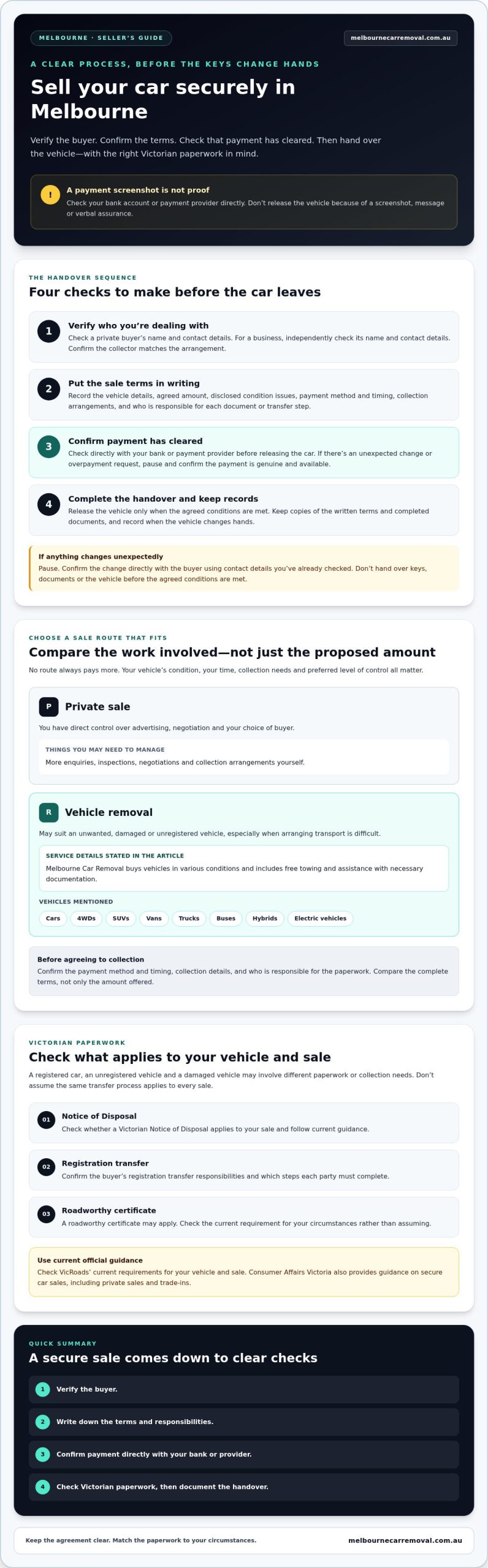
Paperwork depends on the vehicle’s registration status and how you’re selling it. Before handover, check the current guidance on the VicRoads website. Don’t assume that a private sale, sale to a licensed motor car trader and sale of an unregistered vehicle follow the same steps.
For a private sale of a registered vehicle, Victorian guidance requires the seller to provide a valid Certificate of Roadworthiness, with exceptions including sales to a licensed motor car trader, unregistered vehicles and vehicles sold for scrap. Check VicRoads for the rule that applies to your specific sale, including any requirements for the vehicle type.
For a sale where registration is transferred, the seller must notify VicRoads of the sale within 14 days, and the buyer must transfer the registration within 14 days. Confirm what you need to do before transferring or cancelling registration, particularly if the vehicle is unregistered or being removed rather than driven away. Don’t rely on the buyer or collection service to complete your responsibilities unless you’ve checked and agreed who is handling each step.
Make a clear record when the vehicle leaves. Note the collection date, odometer reading and vehicle condition, and list any keys, documents or other items handed over. Take photos showing the vehicle’s condition and keep a copy of any signed receipt or collection record. Before it goes, remove personal belongings and clear stored personal information, paired phones, navigation history and access to connected apps.
Keep a copy of the signed transfer form where applicable, roadworthy certificate if required, proof-of-ownership or registration records, receipt or bill of sale with the buyer, seller, vehicle, date and amount, payment confirmation, condition photos, collection details and any messages documenting changes to the agreement. For applicable private transfers, both parties complete and sign the Vehicle Transfer Form. Check the current VicRoads document list for your situation.
A secure car sale process melbourne sellers can follow ends with both the handover record and your own VicRoads responsibilities accounted for. Melbourne Car Removal states that it provides assistance with necessary documentation, but confirm which documents it assists with and what you still need to complete. If removal suits your vehicle, discuss vehicle collection and paperwork before arranging handover.
A little preparation makes the next steps easier to manage. Gather the vehicle details, request an assessment, review the terms and confirm collection arrangements before committing. If anything is unclear, ask before booking. A secure car sale process melbourne sellers can follow should leave you knowing what’s been agreed, how payment will be made and which documents you’re responsible for.
Have the make, model, year, approximate condition, location and registration status ready, if known. Be upfront about damage and say whether the vehicle can be driven or accessed. This helps the buyer consider the vehicle and plan for collection. For a hybrid or electric vehicle, include its exact model and any relevant condition details.
Its stated service includes free towing. Eligibility and arrangements depend on the vehicle and circumstances, so share accurate details and confirm what can be accepted before making plans.
Before collection, get the agreed offer and terms confirmed in writing. Check that the collection location is accessible and discuss access limits, keys or other practical details. Confirm towing arrangements, payment method and expected timing directly with the business. Melbourne Car Removal doesn’t offer physical cash payments, so ask which payment method currently applies.
Also check which identification or ownership documents are needed for your transaction, what documentation assistance is included and what you must complete yourself. Don’t assume collection means every transfer or registration task is taken care of. Confirm your responsibilities and keep a record of the arrangements.
For an assessment, request a Melbourne car removal assessment, then review the offer, payment and paperwork details before arranging collection.
A secure car sale process melbourne sellers can follow comes down to checking who you’re dealing with, confirming the terms and payment before handover, and keeping a clear transaction record. Check current VicRoads guidance for the requirements that apply to your vehicle and sale arrangement. If private selling or organising transport feels impractical, vehicle removal may be another option.
Melbourne Car Removal purchases cars, 4WDs, SUVs, vans, trucks, buses, hybrids and electric vehicles. Its stated removal service includes free towing and assistance with necessary documentation. Before proceeding, confirm the offer, payment method and timing, collection arrangements, and which paperwork you or the business will handle.
Ready to discuss your vehicle? Request a Melbourne car removal assessment and clarify the details before agreeing to collection. With the terms settled and responsibilities understood, you can move ahead with greater confidence.
Verify the buyer, record the agreed terms and confirm the payment method before arranging handover. Check that funds meet the agreed payment conditions through your own bank or payment provider, rather than relying on a screenshot. Keep copies of the agreement and collection record. For a secure car sale process in Melbourne, also check current VicRoads guidance for the registration transfer steps that apply to your vehicle and circumstances.
Neither option is automatically safer. Security depends on checking who you’re dealing with, agreeing on clear terms, confirming payment and keeping records. A private sale can involve more enquiries, inspections and negotiation. A removal service may suit an unwanted or difficult-to-move vehicle, but verify its identity and confirm the payment process, towing arrangements and paperwork responsibilities before agreeing to collection.
The documents and transfer steps depend on your vehicle’s registration status, type and sale circumstances. Check VicRoads’ current guidance for requirements that may apply, including transfer documents, roadworthy certification and notifying VicRoads of the sale. Keep copies of the written agreement, payment record and handover details. If your vehicle has unusual circumstances, such as being unregistered, don’t rely on a general checklist alone.
You may be able to sell an unregistered or damaged car, but disclose its condition and registration status before agreeing to a sale. Don’t assume it can be driven away or collected like a registered, roadworthy vehicle. Confirm how it will be moved, record the agreed terms in writing and check which Victorian requirements apply. If it’s difficult to move, ask the buyer about suitable collection arrangements.
Check the payment through your own bank or payment provider. Don’t treat a screenshot, email or message from the buyer as proof that funds are available. Agree on the payment method and timing before collection, then ask the buyer or service how you can verify the transaction. Hand over the vehicle only after the agreed payment conditions have been met, and keep a record of the payment.
No. Melbourne Car Removal doesn’t offer physical cash payments. Before arranging collection in Melbourne, contact the business to confirm its current payment method and timing. Make sure those details match the terms you’ve agreed to, and keep the confirmation with your transaction records. Also clarify which documents the business can assist with and which steps you remain responsible for completing.
Free towing is included in Melbourne Car Removal’s stated vehicle removal service. Before booking, confirm that the service suits your vehicle and location, then discuss access, collection arrangements and any special handling needs. Check the agreed terms and payment method as well. Clarifying these details in advance helps you plan for collection and avoid uncertainty when the vehicle leaves.
Remove personal belongings, toll tags, parking permits and documents from the cabin, glovebox, boot and storage compartments. If the car has connected services, remove personal profiles and paired devices where possible. Take photographs of the vehicle and retain your sale, payment and collection records. Before handing over the keys or access devices, check carefully for anything you may need later, including items stored out of sight.