- Email: info@melbournecarremoval.com.au
- 25-27 Nicole Way,Dandenong South 3175
- Area of Operation: Melbourne-wide, VIC
19th November, 2026
A truck’s value depends on more than its badge. If you want to sell your truck in Reservoir, its condition, use and the details you provide all help shape the offer.
Getting a quote doesn’t commit you to selling. A valuation gives you a chance to consider your options before deciding what to do next.
This guide explains what can affect a truck’s value, including service history, kilometres and condition. You’ll also learn what to include when requesting a valuation and how Melbourne Car Removal’s Cash for Trucks service can simplify selling in Reservoir.
A useful truck quote starts with accurate vehicle details, then considers condition, market demand and sale logistics. Share any faults or access limits early so the inspection and proposed arrangements reflect the truck you’re selling.
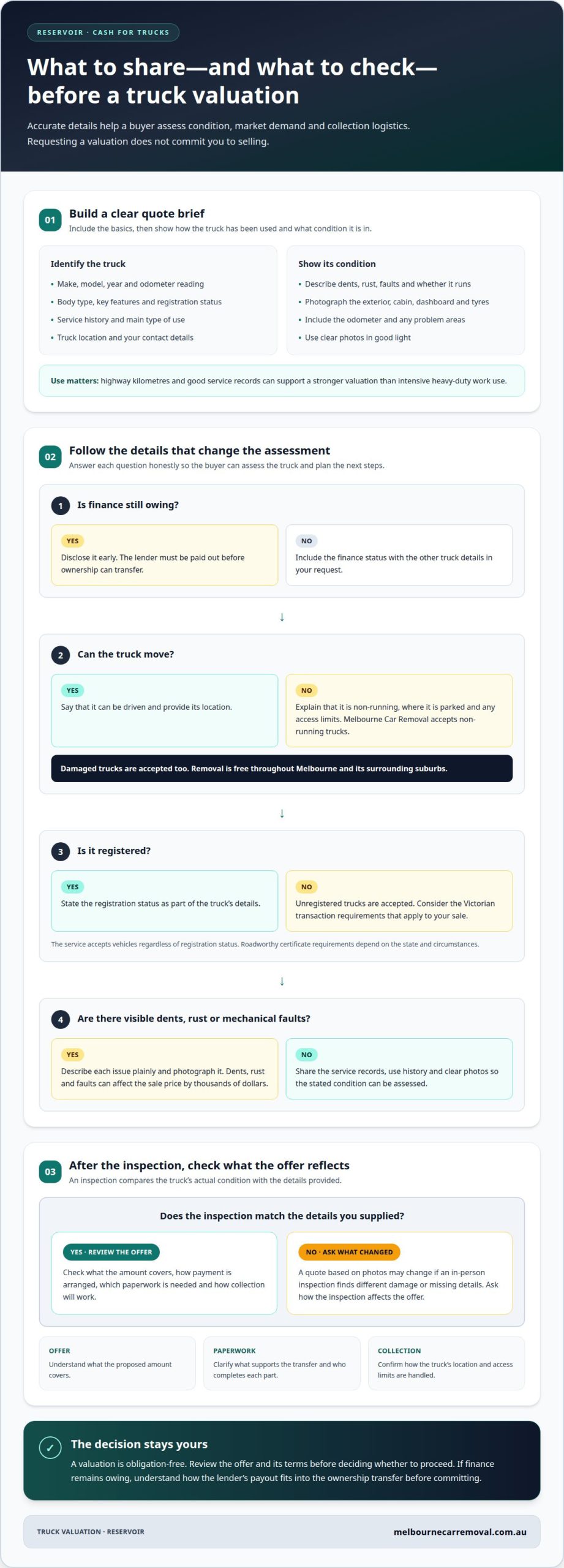
Provide the make, model, year, registration status and odometer reading. Include the truck’s body type, key features, service history and whether it has been used mainly for highway driving or heavy-duty work. Highway kilometres and good service records can support a stronger valuation than intensive work use.
Describe visible damage and mechanical issues plainly. Dents, rust and faults can affect a truck’s sale price by thousands of dollars. Photos of the exterior, cabin, odometer and problem areas can help explain its condition before inspection. If finance remains owing, disclose it early: the lender must be paid out before ownership can transfer.
An inspection lets a buyer compare the truck’s stated condition with its actual state. The inspector can assess wear, damage, mechanical faults and features that may affect demand. A market-based offer weighs those details alongside the truck’s age, use and service records, rather than relying on the registration or model alone.
Ask how the inspection affects the offer and what paperwork is needed to proceed. A quote based on photos may need adjustment if an in-person inspection finds different damage or missing details. This is why clear photos and an honest description help reduce surprises.
Can you sell an unregistered, damaged or non-running truck near Reservoir? Yes. Melbourne Car Removal accepts trucks in any condition, including damaged and non-running vehicles, and regardless of registration status. Explain whether the truck can move, where it is parked and any access limits so collection can be planned. Removal is free throughout Melbourne and its surrounding suburbs.
Do you need a roadworthy certificate to sell a truck in Reservoir? Melbourne Car Removal accepts vehicles regardless of registration status, and no repairs are needed before sale. Victorian transaction requirements can vary with the circumstances, so consider which requirements apply to your sale.
NSW motor vehicle duty and transfer requirements are separate from a Victorian sale. For a vehicle sold in NSW, registration should be transferred within 14 days to avoid late fees, according to Service NSW. That period does not set the transfer deadline for a Reservoir transaction. Keep the vehicle’s location in view when preparing paperwork, and use the applicable state process.
A NSW vehicle seller should research the vehicle’s market value to help negotiate its sale price. That research can inform price discussions alongside the truck’s use and service history: a truck with highway kilometres and good service records is likely to command more than one used for heavy-duty work.
Roadworthy certificate requirements when selling a truck depend on the state and circumstances of the sale. For a Reservoir sale, consider the applicable Victorian requirements.
Start by requesting a valuation and clearly identifying the truck and your preferred next step. You can review the offer before deciding whether to proceed with the sale.
Describe the truck consistently when requesting a quote. Include its registration status, Reservoir location, finance arrangements and any access limits. For example, say if it’s parked in a confined yard or can’t be driven. These details help plan the assessment and collection.
Before sending a request, organise the essentials:
Use clear photos in good light, showing the cabin, dashboard, tyres and any visible damage. An odometer photo can support the details you provide. Be upfront about faults and whether the truck runs. Accurate information helps the assessment reflect the vehicle’s actual condition.
Ask how the valuation is formed and what happens after inspection. A trusted buyer should explain which details affect the offer, whether the truck needs an in-person assessment, and how collection arrangements are handled. This makes it easier to understand the steps before agreeing to a sale, rather than discovering new requirements later.
Read the offer terms before accepting. Confirm what the proposed amount covers, how payment is arranged and what paperwork supports the transfer. If a dealer is involved, clarify who completes each part of the sale documentation. For a truck with finance, understand how the lender’s payout fits into the ownership transfer before committing.
Keep the choice yours. Requesting a valuation creates no obligation to sell; you can review the offer and decide whether it suits your needs. If the quote depends on an inspection, ask what could change it, such as a difference between the stated condition and the vehicle’s actual condition. That conversation can reduce hassle and stress during the sale.
For a straightforward next step, request an obligation-free truck valuation with the relevant details and photos. A clear request helps the buyer assess the vehicle and discuss inspection, paperwork and collection in Australia.
Near Reservoir, start by identifying the type of buyer that suits your truck. A franchised truck dealership, an independent commercial vehicle dealer and a vehicle buyer may assess different trucks for different reasons. The right fit depends on the truck’s condition, age, intended use and whether you want a dealer to consider it for resale or a broader vehicle buyer to assess it.
A franchised dealership may focus on makes and models connected to its business. An independent commercial vehicle dealer may consider a wider mix, such as a tipper, tray truck or prime mover. In either case, the truck’s history, specification and condition help determine whether it suits the buyer’s stock or customer demand. A specialist buyer may also assess trucks that need work or aren’t running.
When requesting a valuation, describe the type and condition of your truck. A refrigerated truck, for example, has different equipment from a flatbed. Include its body type, use, registration status and known faults in your enquiry so the assessment can reflect the vehicle.
Compare the sale process, not just the initial offer. Ask whether the buyer requires an inspection, how collection is arranged and which paperwork is needed to complete the transfer. For a truck parked in a tight Reservoir driveway, access can affect collection planning. If it’s located at a worksite, tell the buyer about entry conditions before agreeing on arrangements.
Use these points to assess whether a buyer matches your situation:
For a private sale, you’ll manage enquiries, inspections and buyer discussions yourself. A dealership or professional vehicle buyer can provide a direct assessment, which may better suit sellers who want fewer separate steps. The option that works best depends on your priorities, including how quickly you want to move on and how much involvement you’re comfortable handling.
If you want a direct assessment rather than organising separate private viewings, request a truck valuation and outline your vehicle’s type, condition and location.
In NSW, a vehicle seller should provide the buyer with proof of sale, such as a receipt or invoice, and keep a copy. A NSW vehicle seller who sells to a dealership should include the dealer’s licence number and registered business name in the proof of sale.
In Australia, a truck seller needs to provide the buyer with registration papers and proof of sale that includes the VIN, odometer reading and agreed price. In NSW, a seller who includes special number plates in a vehicle sale should tell the buyer about the transfer fee, ongoing fees and applicable conditions.
Melbourne Car Removal offers Cash for Trucks, giving Reservoir truck owners a direct option when they’re ready to sell. It can suit sellers who prefer a buyer assessment over arranging private viewings, including when a truck is damaged or no longer running.
For a useful valuation, provide the truck’s make, model, condition, location and access details. Be clear about faults, registration status and any finance owing. This gives the assessment a practical starting point and helps establish what needs to happen next.
Melbourne Car Removal also offers Cash for Cars, 4WDs and SUVs. If you’re considering selling your truck, contact Melbourne Car Removal to discuss a valuation.
Decide what matters most before moving ahead, whether that’s a clear valuation, a practical collection plan or less time managing enquiries. If you’re ready to sell your truck in Reservoir, use the details you’ve gathered to request an offer from Melbourne Car Removal. Payment is instant and on the spot at collection, and removal is free throughout Melbourne and its surrounding suburbs.
Melbourne Car Removal also offers Cash for Cars, Cash for 4WDs and Cash for SUVs. That gives you another option if the vehicle you’re selling changes or you’re arranging the sale of a different vehicle instead.
Take the next step when it suits you. Contact Melbourne Car Removal today to discuss your truck valuation. A clear starting point can make the decision easier, and you can move forward at your own pace.
Melbourne Car Removal offers Cash for Trucks for Reservoir owners, purchasing vehicles from light pickups to heavy-duty trucks. Include the truck’s type and where it’s parked when making an enquiry. For example, mention if it’s at a business depot so collection access can be planned. Removal is free throughout Melbourne and its surrounding suburbs.