- Email: info@melbournecarremoval.com.au
- 25-27 Nicole Way,Dandenong South 3175
- Area of Operation: Melbourne-wide, VIC
26th October, 2026
For fleet vehicle disposal in Melbourne, collection can cover passenger vehicles, 4WDs, vans, trucks and buses, including vehicles that are damaged or no longer running. Once you accept a quote, handover and payment may be completed in less than 24 hours. In Victoria, payments for scrap metal and vehicle parts must be made by bank transfer rather than cash.
Clearing fleet vehicles shouldn’t mean juggling separate arrangements for every vehicle or guessing when payment will arrive. This guide explains what can be collected across Melbourne and regional Victoria, how cash offers are assessed and what affects the timing of payment. You’ll also find the practical steps to prepare vehicles for collection and understand the disposal process, so you can plan the next move with less hassle.
Plan each vehicle’s removal around its condition, location and disposal needs. A clear inventory helps organise collection from a Melbourne business or depot.
Share the depot address, vehicle list and access details to help coordinate collection, including gate access, keys and loading space. Melbourne Car Removal provides free towing throughout Melbourne and surrounding suburbs, including for non-running, damaged and unregistered vehicles.
For vehicles at several sites, group them by location and condition. Note which vehicles need towing and any access details that could affect safe collection.
After a quote is accepted, handover and payment may be completed in less than 24 hours. Same-day collection depends on the agreed arrangement, vehicle access and the towing required. Share site opening hours and any access restrictions early, especially when vehicles are held at different depots.
To arrange disposal, prepare an inventory, provide each vehicle’s details, accept an offer and coordinate collection. Keep keys and relevant documents ready for handover.
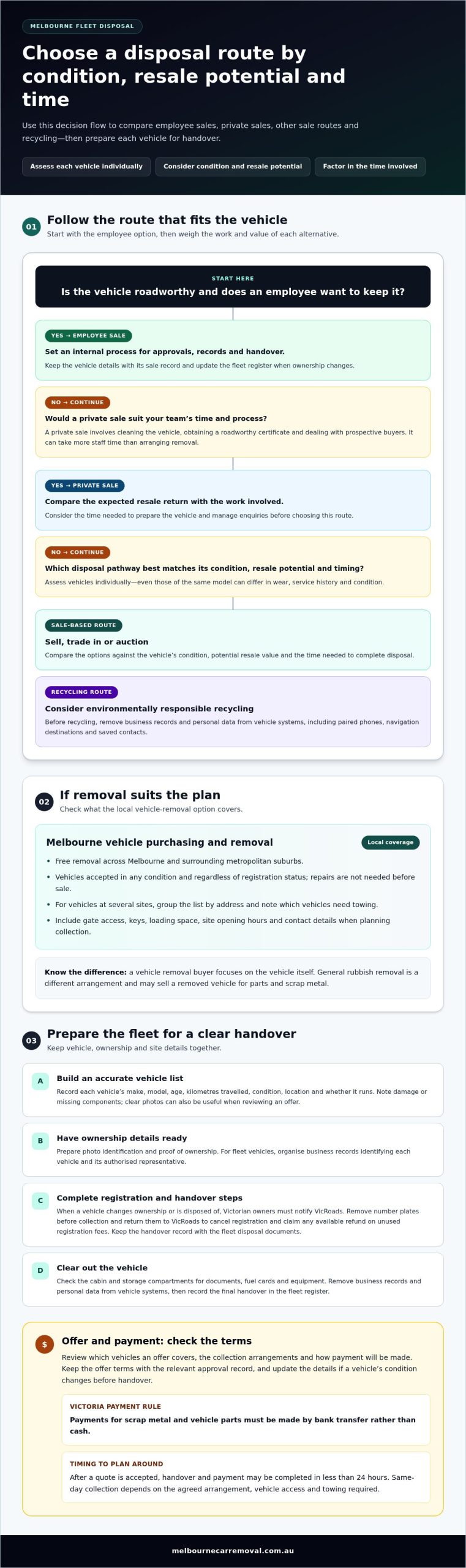
Have photo identification and proof of ownership ready when arranging disposal in Melbourne. For fleet vehicles, also organise the business records that identify each vehicle and its authorised representative. When a vehicle changes ownership or is disposed of, Victorian owners must notify VicRoads.
Remove number plates before collection and return them to VicRoads to cancel registration and claim any available refund on unused registration fees. Keep the handover record with the fleet’s disposal documents.
Fleet vehicles can be sold, traded in, auctioned or recycled. Choose based on condition, resale potential and the time needed to complete the disposal. The Australian Securities and Investments Commission (Moneysmart) notes that a vehicle’s age affects its resale value.
Before environmentally responsible recycling, remove business records and personal data from vehicle systems, including paired phones, navigation destinations and saved contacts. Check the cabin and storage compartments for documents, fuel cards and equipment. Record the vehicle’s final handover in the fleet register.
Melbourne Car Removal provides vehicle purchasing and free removal across Melbourne and surrounding metropolitan suburbs. Businesses can organise collection from a depot or other site within this local service area. The service accepts vehicles in any condition and regardless of registration status, with no repairs needed before sale.
For vehicles held at several Melbourne sites, organise the fleet list by address. Mark which vehicles can move under their own power and which need towing. Arrange access for vehicles behind locked gates, and include site opening hours, loading areas and contact details to help coordinate collection.
If employees can buy former fleet vehicles, set an internal process for approvals, records and handover. Keep each vehicle’s details with its sale record, then update the fleet register when ownership changes. This can suit a roadworthy vehicle an employee wants to keep, while a central disposal plan can help manage vehicles being retired across Melbourne sites.
A private sale involves cleaning the vehicle, obtaining a roadworthy certificate and dealing with prospective buyers. It can take more staff time than arranging removal. Compare the expected resale return with the work of preparing the vehicle and managing enquiries before choosing a route.
Vehicle removal and general rubbish removal are different arrangements. A rubbish removal service may sell a removed vehicle for its parts and scrap metal. A vehicle removal buyer focuses on the vehicle itself. For a damaged van or unwanted work car in Melbourne, choose the route that fits its condition and your organisation’s disposal process.
To keep a Melbourne fleet moving, consolidate vehicle details, site addresses and access instructions before arranging collection. If a removal-based option suits your disposal plan, explore vehicle removal options for fleet vehicle disposal melbourne as a practical next step.
For fleet vehicle disposal in Melbourne, an accurate vehicle list helps make cash offers easier to assess and compare. Include each vehicle’s details and condition so the offer reflects the fleet being considered.
For each vehicle, provide its make, model, age, kilometres travelled and condition. Note damage, missing components and whether it runs. These details help distinguish a roadworthy vehicle from one suited to dismantling or recycling. The Australian Securities and Investments Commission (Moneysmart) notes that a vehicle’s age affects its resale value.
Assess fleet vehicles individually, even when they share a model. Wear, service history and condition can differ. Include accurate details and clear photos where useful, then compare the offer with the vehicle’s disposal needs and likely resale potential. This gives fleet managers a practical basis for reviewing the proposed value.
A cash offer gives the business a proposed amount for the vehicle or fleet, based on the details supplied. Review which vehicles the offer covers, any collection arrangements and how payment will be made. For fleet vehicle disposal in Melbourne, keep the offer terms with the relevant approval record.
Offer validity should be clear in those terms. Keep the vehicle’s condition and collection details consistent with the information used for assessment. If a vehicle’s state changes before handover, update the details so the offer reflects the vehicle being collected.
Response time starts with a complete request. Send the vehicle list, locations, condition notes and ownership details together. This gives the assessor the information needed to prepare an offer without follow-up for basic fleet details. For several vehicles, identify each one separately rather than combining them into a single description.
Before accepting, compare offers using the same vehicle information and disposal scope. Check whether each offer accounts for the same vehicles and collection requirements. In Victoria, payments for scrap metal and vehicle parts must be made by bank transfer rather than cash, a requirement in force since 2018.
A fleet can include passenger cars, 4x4s, SUVs, vans and trucks, each with different condition and resale prospects. Sort vehicles by type and condition first. This makes it easier to decide which may be sold, traded in, auctioned or recycled, and to arrange collection around the fleet’s needs.
For a truck, record its make, model, age, kilometres travelled, operating condition and visible damage. For a van or SUV, note missing components and whether it starts and moves. Accurate details help assess the vehicle and plan its disposal route. A Cash for Trucks offer is one option for an unwanted commercial vehicle.
Before handover, remove number plates before the tow truck leaves, then return them to VicRoads to cancel registration and claim any available refund on unused registration fees. Victorian vehicle owners must notify VicRoads when ownership changes or a vehicle is disposed of. Keep a record of the handover and update the organisation’s fleet register.
A vehicle removal buyer may handle the legal ownership transfer and notify VicRoads that the vehicle was sold for dismantling. Confirm the disposal route in the handover records. If the vehicle is being recycled for scrap metal or parts, payment in Victoria must be made by bank transfer rather than cash. This requirement has applied since 2018.
Government fleet disposal follows a separate process. The Victorian Government contract covers collection, de-registration, plate removal, inspection, detailing, remediation or repair, advertising and sale. Its reference is SS-01-2014, and the Department of Government Services is the lead agency. This end-to-end remarketing arrangement is distinct from disposing of a private business fleet.
For an unwanted work truck, prepare its vehicle details and ownership records before requesting an offer. Request a truck cash offer when that route suits your disposal plan.
Melbourne Car Removal can help when you’re ready to dispose of unwanted passenger vehicles, 4WDs, SUVs or vans. Its Cash for Cars, Cash for 4WDs, Cash for SUVs and Cash for Vans offerings provide a straightforward next step for vehicles you no longer need. Share each vehicle’s make, model, age and condition to support a clear valuation. For fleet disposals, organise the vehicle details and ownership records before arranging the handover. A cash offer refers to the amount offered for a vehicle, not a promise of physical cash payment. Choose this route when you want to move eligible vehicles out of your fleet without managing separate private-sale enquiries. Contact Melbourne Car Removal to discuss your vehicles and disposal needs.
A considered fleet vehicle disposal plan in Melbourne can help your business manage a clean operational handover. Decide which vehicles should remain in service, which could suit employee purchase and which are ready to leave the fleet. Assign one person to coordinate approvals and keep each vehicle’s disposal record together. For unwanted vehicles, Melbourne Car Removal provides cash offers, free towing and paperwork assistance.
For vehicles ready to go, Melbourne Car Removal offers Cash for Cars, Cash for 4WDs and Cash for SUVs. These options may suit businesses looking to move on unwanted passenger vehicles or 4WDs. Share the vehicle details and discuss the disposal route that fits your fleet. Contact Melbourne Car Removal to take the next step and get your fleet transition underway with a clear plan.
After you accept a quote, vehicle handover and payment may be completed in less than 24 hours. The timing depends on arranging access and collection for the vehicles. In Victoria, payments for scrap metal and vehicle parts must be made by bank transfer, not cash. Confirm the agreed payment method and handover details before the vehicle leaves your site.
For a car you no longer need, arranging collection after accepting an offer can reduce the work involved in finding a buyer. Gather the vehicle’s details, proof of ownership and photo identification, then make the car accessible for handover. Remove personal belongings and business equipment first. If the car is part of a fleet, update its internal records when disposal is complete.
Melbourne vehicle purchasing options include cars, 4WDs, SUVs, vans, trucks and buses. Options also cover electric and hybrid vehicles, including Tesla and BYD models. For a mixed fleet, list each vehicle separately by type and condition. That makes it easier to identify which vehicles fit a purchasing option and keep the disposal record clear for each one.
Individual sales let a business handle each vehicle separately, while a fleet approach can bring vehicle details and disposal decisions into one coordinated process. Separate sales may suit vehicles with different buyers or timelines. A grouped plan can help managers schedule retirements around operational needs and keep approval records together. Consider whether staff time or vehicle-by-vehicle control matters more for your fleet.