- Email: info@melbournecarremoval.com.au
- 25-27 Nicole Way,Dandenong South 3175
- Area of Operation: Melbourne-wide, VIC
24th October, 2026
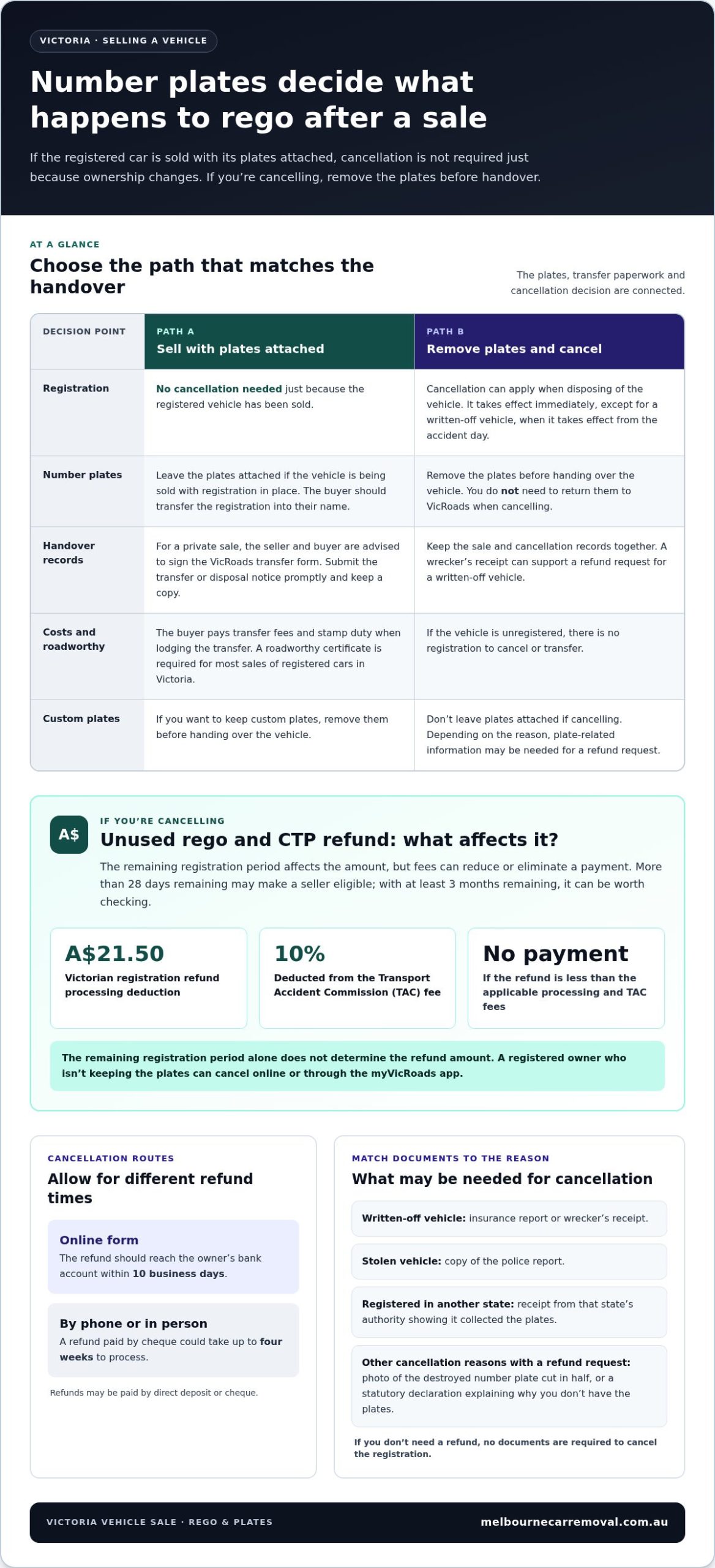
Selling a car to a wrecker doesn’t automatically cancel its registration. To cancel car registration in Victoria after selling, the registered owner can cancel online or through the myVicRoads app if they’re not keeping the number plates. If the plates stay attached to the vehicle, you don’t need to cancel the registration just because it has been sold.
It’s easy to assume rego ends when the vehicle leaves your driveway, but what happens to the plates and vehicle matters. If the car is being disposed of, cancelling the registration can help close off your responsibilities and may make you eligible for a refund of unused registration.
This guide explains what happens to rego after a sale, when cancellation makes sense, and how to handle the process when selling to a wrecker or car removal company. It also covers what to do with the number plates, which details affect a possible refund, and what records to keep to document the handover.
To transfer a vehicle after a sale in Victoria, the seller and buyer should sign the VicRoads transfer form. The buyer should transfer the registration into their name and pay the transfer fees and stamp duty when lodging it. Most sales of registered cars require a roadworthy certificate.
Check the time left before registration expires. A seller may be eligible for a refund when more than 28 days remain. It can be worth checking the refund when at least 3 months remain. The remaining period affects the amount, while fees can reduce or eliminate the payment.
For other cancellation reasons where you’re seeking a refund, provide a photo of the destroyed number plate cut in half, or a statutory declaration explaining why you don’t have the plates. If you don’t need a refund, no documents are required to cancel the registration.
VicRoads deducts A$21.50 to process a Victorian registration refund. It also deducts 10% of the Transport Accident Commission (TAC) fee. If the refund is less than the applicable processing and TAC fees, no refund is paid. These deductions mean the remaining registration period alone doesn’t determine the payment.
Keep the cancellation details and any refund documents with your sale records. A wrecker’s receipt can also support a refund request for a written-off vehicle. Before submitting your request, make sure your documents match the cancellation reason.
If you sell the registered car with its plates attached, you don’t need to cancel its registration. Submit the transfer or disposal notice promptly after handover, and keep a copy of the completed paperwork.
Use these steps to decide what happens to the plates and document the sale clearly.
Keep your own copy of the signed form. It records the handover and helps show that you sold the vehicle. The buyer pays the transfer fees and stamp duty when lodging the transfer with VicRoads. Don’t assume attached plates alone complete the transfer or update your records.
A roadworthy certificate is required for most sales of registered cars in Victoria. Make the transfer paperwork part of the handover, alongside the sale record. If the vehicle is unregistered, there is no registration to transfer or cancel.
If you’re cancelling registration, remove the plates before handing over the vehicle. You don’t need to return number plates to VicRoads when cancelling registration. If you plan to cancel, don’t leave the plates with the buyer.
If you’re seeking a refund for another cancellation reason, provide a photo of the destroyed plate cut in half, or a statutory declaration explaining why you don’t have the plates. Keep the sale and cancellation records together.
As the registered owner, you can cancel online or through the myVicRoads app if you aren’t keeping the plates. The rule is different when you sell a vehicle with its plates attached: cancellation isn’t required just because ownership has changed.
Remove custom plates before handing over the vehicle if you want to keep them. If you’re cancelling registration, don’t leave the plates attached, as they would go to the buyer with the car.
Decide what to do with the plates before handover. If you leave them attached and sell the registered vehicle, you don’t need to cancel its registration. If you remove and keep them, organise the registration paperwork to match the actual handover.
Keep the plates secure after removal. Depending on the cancellation reason, the cancellation process and any refund request may require plate-related information.
Submit the transfer or disposal notice promptly after handover instead of relying on the buyer to complete every step. Keep a copy of the signed VicRoads transfer form with your sale records.
Act as soon as the sale is complete, and keep paperwork showing the vehicle, buyer and handover details. This gives you a record if a registration notice or toll bill later arrives in your name.
Before finishing, check that the plates were handled as agreed and that the form reflects the sale or disposal. Remove the sold vehicle from your toll account and take out any toll tag before handing over the car.
For example, a roadworthy car sold for continued use follows a different process from a written-off vehicle sold for disposal. Don’t cancel registration simply because ownership changes. If the vehicle is sold with its number plates attached, the seller doesn’t need to cancel its registration.
Keep the signed transfer form and bill of sale with your records. If a notice arrives later, those documents help show when the vehicle changed hands. They also give you clear details to refer to, rather than relying on your memory of the sale date or buyer.
Cancellation may also let you seek a refund for unused registration and CTP insurance. The remaining registration period and applicable processing and TAC fees affect whether a refund is payable. If the refund is less than those fees, no refund is paid.
Keep copies of the bill of sale and registration cancellation form. For a private sale, retain the signed VicRoads transfer form too. These records help distinguish a completed disposal from a vehicle still recorded under your details.
Before you finish, check the plates, toll account and sale documents. This final review helps ensure the paperwork matches whether the car is being driven, dismantled or written off.
If the vehicle is unregistered, there is no registration to cancel. If it remains registered, decide whether you’re keeping the plates before starting cancellation. That choice affects which cancellation method is available and what you do with the plates.
Use the cancellation process that suits your situation. As the registered owner, you can cancel online or through the myVicRoads app if you aren’t keeping the number plates. Cancellation takes effect immediately, except for a written-off car, when it takes effect from the accident day.
No documents are required to cancel registration if you don’t need a refund. Still, keep the receipt and cancellation record. They help link the vehicle’s disposal to the paperwork if questions arise later.
It may be worth checking potential refund eligibility when at least 3 months of registration remain. More than 28 days remaining may also meet the stated eligibility threshold. These are useful points to assess, not a promise of a particular refund amount.
Remove the vehicle from your toll account and take out the toll tag before handover. Alongside the wrecker’s receipt, this final account step helps distinguish the completed disposal from any later vehicle or toll notices.
Write down the handover date and vehicle details. Keep the sale record with your cancellation paperwork. This helps show whether the vehicle was transferred for continued use or handed over for disposal.
Keep a copy of the receipt and any completed cancellation form. These records can help explain the vehicle’s status if a toll bill or registration renewal notice later arrives in your name.
For a vehicle being written off, cancellation takes effect from the accident day. For other reasons, cancellation takes effect immediately. This distinction matters when recording the vehicle’s final status.
More than 28 days remaining may meet the stated eligibility threshold. Checking is particularly useful when at least 3 months remain. The remaining period and deductions determine whether any refund is payable.
If you’re preparing a vehicle for disposal, you can arrange car removal and handle the registration paperwork as a separate step. This keeps the vehicle handover and VicRoads cancellation clear in your records.
Melbourne Car Removal can help when your car is ready to leave your hands for disposal. It offers Cash for Cars, Cash for 4WDs, Cash for SUVs and Cash for Vans, giving owners a vehicle sale option alongside their registration wrap-up.
Keep the paperwork steps separate. Agree the vehicle handover, retain a sale record, and handle registration cancellation or transfer as the registered owner. If you’re disposing of a car, 4WD, SUV or van, this gives you a clear sequence: arrange the sale, record the handover, then complete the relevant VicRoads steps.
Contact Melbourne Car Removal to discuss selling your vehicle.
Once you’ve decided what happens to the vehicle, keep its sale paperwork and registration tasks together. This makes it easier to follow through when arranging disposal and handling the car’s records at the same time.
If you’re ready to cancel your car registration in Victoria after selling, keep the handover and cancellation details clear. For a vehicle that’s no longer needed, Melbourne Car Removal offers Cash for Cars, Cash for 4WDs and Cash for SUVs. You can arrange the vehicle sale and manage the registration process as separate parts of your next step.
Contact Melbourne Car Removal to discuss selling your vehicle. Take the next step when you’re ready, with the paperwork and handover in view.
Registration doesn’t automatically end when you sell a Victorian vehicle. If the registered car is sold with its number plates attached, you don’t need to cancel its registration. A buyer who plans to keep driving it should transfer the registration into their name. If you’re disposing of the vehicle instead, consider cancellation and any refund eligibility. The next step depends on whether the car will be driven or disposed of.
If a wrecker has already taken the vehicle, gather your sale record and any receipt, then decide whether registration cancellation is needed. A wrecker’s receipt or an insurance report can support a refund request for a written-off vehicle. Keep copies of the disposal paperwork and cancellation documents together. If the vehicle was sold with its plates attached, the sale alone doesn’t require cancellation.
To cancel car registration in Victoria after selling, use the online cancellation process or myVicRoads app if you’re the registered owner and aren’t keeping the plates. If you want a refund, prepare documents that match the cancellation reason. For example, a written-off vehicle requires an insurance report or wrecker’s receipt. Keep the completed cancellation record with your sale paperwork.
The registered owner cancels the registration when cancellation is appropriate, such as when disposing of a vehicle. If the buyer plans to keep using a registered car, they should transfer the registration into their name. In a private sale, both parties are advised to sign the VicRoads transfer form. Make sure the sale documents show whether the car is staying on the road or being disposed of.
For a private sale, have the buyer and seller sign the VicRoads transfer form, then keep a copy for your records. The buyer lodges the transfer with VicRoads and pays the transfer fees and stamp duty. Also remove the vehicle from your toll account and take out its toll tag. Keeping the signed form and bill of sale together gives you a clear handover record.
You may be eligible for a refund of unused registration and CTP insurance when cancelling registration. More than 28 days remaining may meet the stated eligibility threshold, but deductions affect whether a payment is due. For a written-off vehicle, include an insurance report or wrecker’s receipt. A refund isn’t paid if it’s less than the applicable processing and Transport Accident Commission fees.
There isn’t one fixed refund amount: it depends on the unused registration period and applicable deductions. VicRoads deducts A$21.50 to process a Victorian vehicle registration refund and 10% of the Transport Accident Commission fee. No refund is paid if the amount falls below the processing and TAC fees. The refund can be paid by cheque or direct deposit.
If the buyer doesn’t transfer the registration, toll fines or registration renewal notices may still arrive in your name. Keep the signed transfer form and bill of sale as evidence of the handover. Remove the vehicle from your toll account and take out the toll tag before sale. If a notice arrives later, your records can help show that you no longer had the vehicle.