- Email: info@melbournecarremoval.com.au
- 25-27 Nicole Way,Dandenong South 3175
- Area of Operation: Melbourne-wide, VIC
23th October, 2026
The handover isn’t the final step. Knowing what to do after selling your car to a wrecker means clearing out your belongings, sorting out the number plates and paperwork, and dealing with registration and insurance. Keep proof of sale so you have a record of the transaction.
It is easy to focus on collection and overlook the administration that follows. A few practical steps can help you wrap up the sale without leaving personal items, toll tags or paperwork behind. Registration and disposal requirements vary by state, so follow the rules that apply where the vehicle was registered.
This guide explains what to do next, from checking the vehicle and gathering documents to handling plates, notices and insurance. Follow the steps in order after the wrecker collects the car.
If you are working out what to do after selling your car to a wrecker, start with its registration. Contact the transport authority in the state where the vehicle was registered to find out whether to cancel the registration or record the disposal.
Follow the registered state’s process to cancel registration or record the disposal. Do not assume registration ends automatically when a wrecker collects the car. If it was damaged in an accident, explain that it is being disposed of and ask which registration step applies.
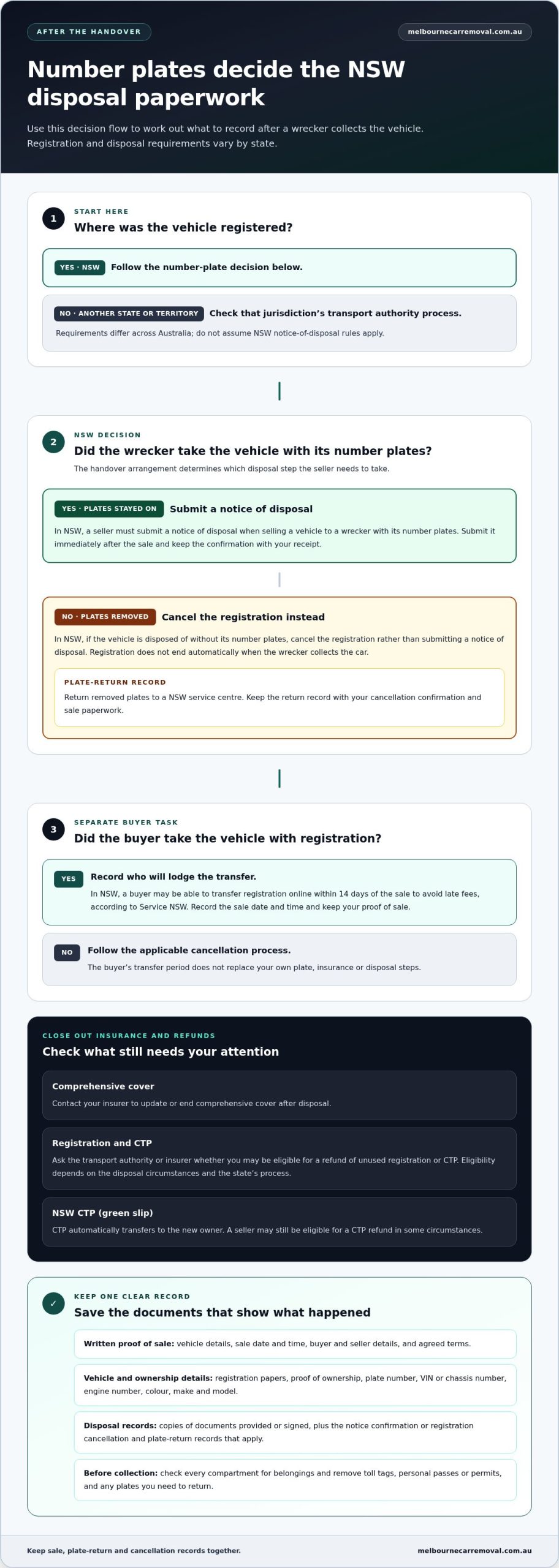
Keep the sale details and cancellation confirmation with your records. They document when you took action and may help if registration notices arrive later. In NSW, if a seller disposes of a vehicle without its number plates, they must cancel the registration rather than submit a notice of disposal.
Remove the registration plates before handing over a written-off vehicle, then return them to the transport authority in the state where it was registered. In NSW, removed plates must be returned to a service centre. Keep the return record with your paperwork, and do not leave the plates with the wrecker if you need them to cancel registration or apply for a refund.
Ask the transport authority whether you can claim a refund for unused registration. Eligibility depends on the unused registration and the state’s process. Keep the plate-return record and cancellation confirmation together to support an application and document the vehicle’s disposal.
If the buyer takes the vehicle with registration, record who will lodge the transfer and keep your proof of sale. In NSW, a buyer may be able to transfer a vehicle’s registration online within 14 days of the sale to avoid late fees, according to Service NSW.
The transfer period applies to the buyer’s task. It does not replace your own plate, insurance or disposal steps. Record the sale date and time rather than relying on an expected transfer. If the wrecker takes the car without plates, follow the applicable registration cancellation process.
Ask whether cancelling registration makes you eligible for a refund of unused registration or compulsory third-party insurance. Eligibility depends on the disposal circumstances and the state’s process. Keep your cancellation details and plate-return record for any application.
In NSW, CTP insurance, also called a green slip, automatically transfers to the new owner. A seller may still be eligible for a CTP refund in some circumstances. Contact your insurer to update or end comprehensive cover after disposal. Knowing what to do after selling your car to a wrecker includes closing out insurance, not just registration.
Record the sale and follow the disposal process for the state or territory where the vehicle was registered. The paperwork may depend on whether the wrecker takes the car with its number plates.
Gather the registration papers, vehicle details and proof of ownership before the handover. Note the plate number, VIN or chassis number, engine number, colour, make and model. These details help identify the vehicle in the sale record and disposal paperwork.
Keep a copy of every document you sign or provide. The buyer may ask for photo identification, such as a driver’s licence or passport. Do not hand over your only copy of a receipt or written agreement.
Check the disposal process for the state or territory where the vehicle is registered. Requirements differ across Australia, so do not assume another state’s notice of disposal rules apply to your sale. In NSW, a seller must submit a notice of disposal when selling a vehicle to a wrecker with its number plates.
If you are concerned about an unlicensed wrecker, practical risks include unclear sale records, difficulty proving the handover and disputes about the vehicle’s later use. Keep the buyer’s details and written proof of sale, and use the relevant state or territory process to check whether a vehicle has been recorded as written off.
Give the wrecker accurate details about the make, model, year and condition so the vehicle can be assessed. Mention accident damage, missing parts and whether the car is complete. The condition of major components and demand for usable parts can affect the assessment.
Get a written receipt or bill of sale showing the vehicle details, sale date and time, buyer and seller details, and agreed terms. Keep a copy. If the wrecker does not provide proof of sale, ask for a written record and keep your messages and collection details.
Submit a notice promptly if the vehicle is sold with its number plates and your state requires one. In NSW, sellers should submit it immediately after the sale. Keep the confirmation with your receipt. If the wrecker takes the car without plates in NSW, cancel the registration instead of lodging a notice of disposal.
Before the vehicle leaves, agree on the collection arrangements and record the expected handover. If it isn’t removed as arranged, contact the buyer in writing and keep a record of the follow-up. Once collection is complete, check that the space is clear and retain the sale documents. You can also review options for selling an unwanted vehicle.
Before the wrecker takes the vehicle, clear out your personal items and decide what to do with its plates. Check every compartment for anything linked to your identity, travel or vehicle records.
Remove the registration plates if the disposal process requires you to return them, then take them to the relevant transport authority. In NSW, removed vehicle number plates must be returned to a service centre. Keep the return record with your sale paperwork, and do not leave the plates with the wrecker if you need them for cancellation or a refund application.
Check the rules for the state where the vehicle is registered. Plate handling can affect the disposal paperwork, so record whether the car left with plates attached or without them. That detail helps you complete the correct registration steps after collection.
Decide whether personalised plates are included in the sale or will be handled separately. In NSW, if special number plates are included in a vehicle sale, tell the buyer about the plate transfer fee, any ongoing fees and applicable conditions. Put the arrangement in writing so the buyer understands how the plates affect the handover.
If you are keeping personalised plates, follow the relevant transport authority’s process for retaining or transferring them. Do not assume the wrecker will accept the plates or arrange a transfer. Record the plate details before the vehicle leaves.
Before handing your car to a wrecker in Australia, remove your personal belongings. Check every compartment, including the glove box and boot, rather than relying on a quick glance. This final search helps ensure nothing personal is left in the vehicle.
Remove the registration plates before the car goes to the wrecker, as they may be needed to apply for a registration refund. If you want to keep or sell cosmetic parts separately, remove them first, such as a CD player or woofer. To remove an e-tag, grip it and its holder, then twist until the adhesive loosens.
Knowing what to do after selling your car to a wrecker starts with gathering documents that identify you and the vehicle. Prepare them before the handover so you can complete the sale record accurately and keep a copy for your files.
If a document shows an old address, use your current details in the sale record. Do not alter an official certificate.
If someone else is arranging collection for you, make sure they have the sale paperwork and know which details to record. Check that the seller’s and buyer’s names are accurate.
Describe the vehicle’s condition and disclose known accident damage or missing components. This gives the handover record useful context if questions arise about the engine or other parts after collection.
Check the handover date and time carefully. An accurate record helps distinguish the sale from any later event involving the vehicle.
An important part of what to do after selling your car to a wrecker is keeping the completed receipt, buyer details and collection record together. These papers help you track the disposal and complete any applicable registration steps.
Melbourne Car Removal provides free towing for unwanted, damaged and unroadworthy vehicles throughout Melbourne and surrounding suburbs. Arrange the collection details and paperwork together so the handover is straightforward.
Confirm in writing whether towing is included in the agreed arrangement. Keep that message with your sale records. If the vehicle is damaged or unroadworthy, tell the wrecker beforehand so the collection can be planned around its condition.
Remove your belongings and toll tags before collection. Keep the registration papers and sale receipt with you, not inside the car. This keeps personal documents separate from the vehicle during transport.
If someone else is meeting the driver, give them clear instructions about which documents to sign and keep. They should know where the keys are and how to contact you if the vehicle details or sale terms differ from the written agreement.
After collection, note any remaining registration tasks and complete them with the relevant transport authority or insurer. Towing does not itself cancel registration or insurance, so handle those administrative steps separately from the vehicle’s removal.
Keep the driver’s handover record and your sale documents after the car is gone. A clear record trail can help if a disposal notice, registration question or refund application comes up later.
Before collection, gather proof of identity, vehicle registration papers and a disposal form if required in Victoria. A car wrecker in Melbourne generally requires proof of ownership, such as vehicle title or registration papers, before buying a car. In Victoria, vehicle registration papers can help establish the vehicle’s details and support the transfer or cancellation of registration with VicRoads when selling to a wrecker. Keep these documents ready for the handover.
Melbourne Car Removal offers Cash for Cars when you’re ready to sell an unwanted vehicle. It also offers Cash for 4WDs, Cash for SUVs and Cash for Vans, giving you options for different vehicle types.
Share accurate details about the vehicle’s make, model and condition when arranging a sale. Keep your paperwork, remove personal belongings, and follow the registration and plate steps that apply to your situation. These tasks help you complete the handover and manage the administration that follows.
For an unwanted car, 4WD, SUV or van, contact Melbourne Car Removal or visit melbournecarremoval.com.au.
Once you have handled what to do after selling your car to a wrecker, you can turn to what comes next. If another unwanted vehicle is taking up space, decide whether you are ready to sell it or need more time to consider your options. A clear next step can make the process easier to manage.
Melbourne Car Removal offers Cash for Cars, Cash for 4WDs and Cash for SUVs. Choose the vehicle type that fits your situation, then get in touch to discuss the next step. There’s no need to rush your decision.
Contact Melbourne Car Removal today to discuss selling your vehicle. You’ve already worked through the disposal details. Now you can move forward at your own pace.
Selling your car to a wrecker means transferring an unwanted or damaged vehicle for dismantling and disposal. The wrecker assesses its condition, make and model, then may recover usable components and recyclable metal. For example, a vehicle with a failed engine may still have useful parts. The sale transfers the vehicle, but you still need to complete any applicable registration and insurance steps.
After collection, the vehicle is dismantled so reusable components and materials can be recovered. The process can include draining fluids such as fuel, oil, coolant and brake fluid for recycling or disposal. Usable parts may be cleaned, tested and catalogued, while remaining metal is sent for recycling to help reduce landfill. What can be recovered depends on the vehicle’s condition and which components remain intact.