- Email: info@melbournecarremoval.com.au
- 25-27 Nicole Way,Dandenong South 3175
- Area of Operation: Melbourne-wide, VIC
01th October, 2026
Can a car that won’t start still be collected? Yes. A non-running car collection vic enquiry can start with the vehicle where it is, so you don’t need to drive it to a buyer or dismantler. It’s understandable to have questions about towing, access and paperwork when the car can’t move under its own power. Free towing is included for Melbourne-area vehicles, but confirm service availability for your Victorian postcode before arranging pickup.
A clear description helps the team assess the vehicle and plan collection. Share its make, model, condition, what prevents it from running and any access issues, such as a tight driveway or blocked wheels. This article explains how to prepare the car, what can affect its assessment and which ownership or registration details to have ready. You’ll also learn what to confirm about towing and documentation before accepting an offer, so you can organise removal with less guesswork. Melbourne Car Removal can assist with necessary transaction documentation, but check which documents apply to your situation.
Yes, you can request an assessment even if your car won’t start or can’t be driven safely. The team can review the details you provide, so there’s no need to get the vehicle running first. Whether collection can be arranged depends on the car’s condition, how easily it can be accessed and whether the service covers your location. Free towing is included for Melbourne-area vehicles, but confirm availability for your Victorian postcode and discuss access challenges before agreeing to collection.
A non-runner is a car that won’t start, can’t move safely or isn’t reliable enough to drive. That could be due to a failed engine, flat battery, serious mechanical fault or unsafe brakes or steering. You don’t need to diagnose the problem. Describe what you’ve noticed and what happens when you try to start or move the car.
Non-running doesn’t automatically mean written-off, and a damaged vehicle isn’t necessarily a non-runner. These describe different aspects of a car’s status and condition. Share any known damage or insurance information, but don’t assume the car has a particular status unless it’s been confirmed.
A car doesn’t need to be roadworthy for you to request an assessment. Towing arrangements depend on details such as whether it can roll, whether its wheels are accessible and where it’s parked. Mention steep driveways, tight spaces, locked gates or other obstacles early. This helps the team understand what collection may involve, but an assessment doesn’t guarantee acceptance or collection.
For a useful assessment, share the car’s make, model, year, known faults, damage, location and access conditions, and say whether it starts, rolls and has keys.
If you’re comparing options for non-running car collection vic, look for clear answers about condition, towing and service coverage rather than broad promises. Ask what arrangements apply to your vehicle and pickup location before accepting an offer. If the car is recycled, the vehicle recycling process can involve dismantling and recovering materials. Be upfront about what’s present or missing, and leave the assessment to the collection team.
A clear enquiry helps the team assess your vehicle and work out what collection may involve. For non-running car collection vic, share what you know, including any faults and how the car is positioned. You don’t need to diagnose the problem or get the vehicle started before requesting an assessment.
Give the car’s make, model and year, then describe its condition in plain language. Mention major damage, missing parts, whether it rolls and whether keys are available. Include the suburb and exact pickup location, such as a driveway, garage or street, and flag tight access, gates or other obstacles. Photos may help with an initial assessment, but check whether the business needs them and what views to send.
Be upfront if the car is stuck behind another vehicle, has a flat tyre or is difficult to reach. Accurate details help the team consider suitable collection arrangements and reduce the chance of surprises at pickup. Don’t assume an enquiry guarantees acceptance, a fixed offer or a particular collection time. Ask for the assessment and arrangements to be clear before you agree.
Melbourne Car Removal purchases cars and other vehicles in a range of conditions across the Melbourne region. If you’re in Melbourne, you can request a vehicle assessment and confirm the details for your car and pickup location.
A car’s condition and the effort needed to access it are separate considerations. Make, model, age, damage and completeness may inform an assessment, while the car’s position and ability to roll help the team plan collection. No single detail guarantees a particular outcome, so give an honest account rather than relying on “non-runner” as the full description.
| Factor | Details to share | Why it matters |
|---|---|---|
| Vehicle condition | Make, model, age, engine or transmission faults, collision damage and rust. | These details help build a clearer picture of the car beyond the fact that it won’t run. |
| Components and completeness | Say whether key components, such as the engine or transmission, are present, or if parts have been removed. | Completeness may inform the assessment. Don’t guess what components are worth; simply describe what’s there or missing. |
| Pickup access | Explain whether the car rolls and if it’s in a garage, behind another vehicle or on a narrow driveway. | Access, clearance and loading space help determine what collection arrangements need to be confirmed. |
“It doesn’t start” leaves important questions unanswered. Mention whether the fault is known, such as an engine problem or transmission issue, and describe visible collision damage, significant rust or missing parts. You don’t need to diagnose the car. A non-running description alone can’t determine an assessment, and the team may need to review the details before confirming next steps.
Also identify a hybrid or electric powertrain, and disclose any known battery damage. Don’t attempt to inspect or move a damaged battery yourself. Clear information helps the team understand the vehicle being assessed.
A car that rolls and is parked in an open driveway may need different arrangements from one jammed in a garage or blocked by another vehicle. Flag steep access, low clearance, a narrow driveway or restricted loading space before agreeing to a pickup. These practical details can affect whether the location is suitable for the planned collection.
For non-running car collection vic, confirm the service covers your postcode and ask the team to check the towing plan for your vehicle and location. Melbourne Car Removal includes free towing in its service, but the arrangements still need to be confirmed for the pickup. Accurate details help avoid surprises and make the assessment more useful.
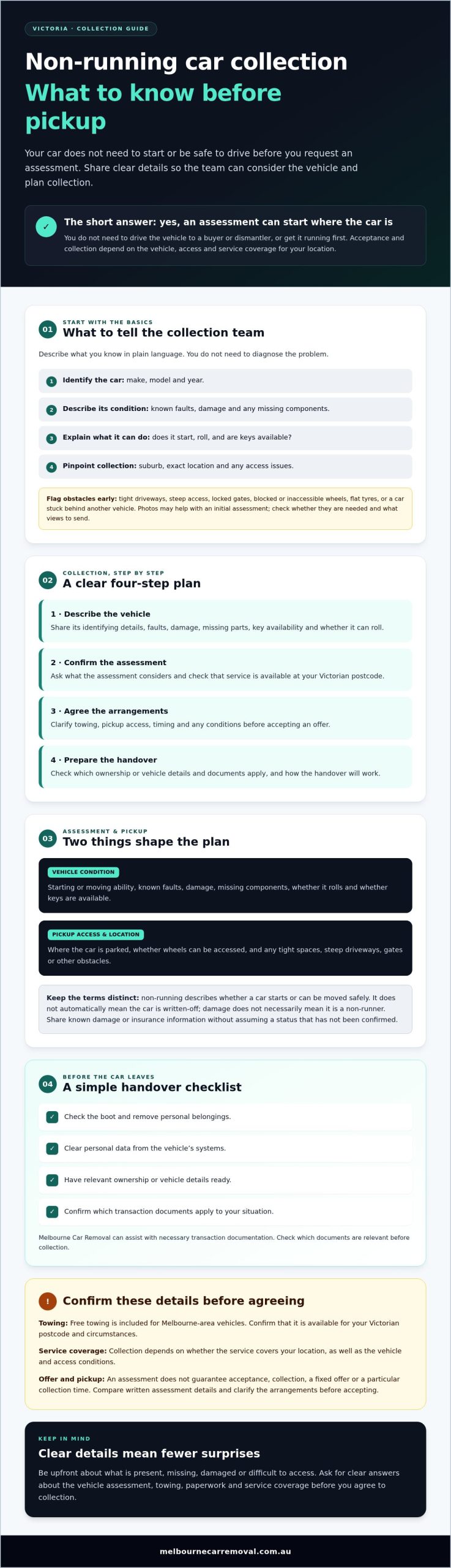
A short check before pickup can help protect your belongings and keep the handover organised. For non-running car collection vic, prepare the vehicle and gather any documents you have, but don’t assume every record is required. Confirm the paperwork with the business and check current Victorian requirements with VicRoads.
Work through this checklist before collection:
Don’t put yourself at risk trying to move a car that’s unsafe or difficult to access. Let the collection team know about hazards or restrictions ahead of time.
Gather any available ownership and vehicle records, such as registration details or documents relating to the car. The exact requirements can depend on the vehicle and its registration status, so check current VicRoads guidance for applicable registration and number-plate steps. Don’t rely on a general checklist as legal advice.
Before handover, ask which documents the business will handle and what you need to provide or complete yourself. Melbourne Car Removal assists with necessary transaction documentation, but confirm what applies to your circumstances. Keep copies of the records and any agreed handover details for your own reference.
Do a final walk-through before the vehicle is loaded. Check the glovebox, sun visors and any storage compartments you don’t use often. If the car has electronic settings or connected devices, make sure you’ve removed personal information you don’t want to leave behind.
Once you’ve checked your belongings and clarified the paperwork, you can request a Melbourne vehicle assessment and confirm the handover details for your collection.
A clear arrangement is more useful than a broad promise. Before agreeing to a collection, check what the assessment is based on, what towing covers and which handover steps are included. For non-running car collection vic, confirm that the service can attend your specific postcode. Coverage for Melbourne doesn’t automatically mean every Victorian location is included.
Use this checklist to compare services and make sure the details match your vehicle and pickup location:
Get clarity before you commit. If the assessment or towing plan changes after the team reviews the car’s condition or access, ask what that means for the arrangement. Check the payment method and timing directly as well, rather than assuming they’re the same across services.
Melbourne Car Removal purchases unwanted cars and other vehicles in a range of conditions across the Melbourne region. Free towing is included, and the business assists with necessary transaction documentation. Confirm service availability for your postcode, the towing arrangements for your car and which documents apply before agreeing to collection.
To get started, share the vehicle’s make, model, year, known condition and exact location. Include whether it rolls, if keys are available and any access restrictions. Then review the assessment, confirm the arrangements and prepare the handover. Melbourne-area owners can request a non-running car assessment without assuming acceptance or a particular outcome.
A car doesn’t need to start for you to request an assessment. Share its make, model, condition and location, and be upfront about damage, missing parts and access. These details help the team assess the vehicle and consider suitable pickup arrangements.
For non-running car collection vic, confirm service coverage for your postcode, towing arrangements and handover documents before accepting an offer. Melbourne Car Removal includes free towing in its service and assists with necessary transaction documentation. Check which details and paperwork apply to your situation.
Ready to discuss your vehicle? Request an assessment for your non-running car and provide clear information about the car and pickup location. With the key details prepared, you can take the next steps with greater confidence.
Yes, you can request an assessment for a car that won’t start or can’t be driven safely. Melbourne Car Removal purchases vehicles in a range of conditions and includes free towing in its service. Collection availability depends on your location, the vehicle’s condition and access, so confirm your Victorian postcode and pickup details with the business before making arrangements.
You can enquire about an assessment whether the car is registered or not. Registration status may affect what you need to do before or after handover, so don’t assume the same steps apply to every vehicle. Tell the business the car’s status, then check current VicRoads guidance and confirm which arrangements apply to your situation before collection.
Share the car’s make, model, year, location and a clear description of its condition. Mention known faults, collision damage, missing components, whether it rolls and whether keys are available. Include access details, such as a narrow driveway or a car parked behind another vehicle. Photos may help with an initial assessment, but check with the business about its requirements.
Free towing is included in Melbourne Car Removal’s service. Confirm that service is available for your specific postcode and ask how the towing arrangement applies to your vehicle’s condition and pickup access. For example, let the team know if the car won’t roll, is in a garage or has restricted loading space. Clarify the agreed arrangements before accepting an offer.
Remove personal belongings from the cabin, glovebox, door pockets, centre console and boot, including any storage compartments beneath the boot floor. Take out toll tags and clear personal information from the car’s system, such as saved addresses or paired phones. If you have the keys, make them available as agreed. Do a final check before handover so nothing important is left behind.
Check current VicRoads guidance before removing or returning number plates. The steps can depend on the vehicle and its registration status, so avoid relying on general advice for your specific situation. Ask the collection business which transaction documents it handles, but verify registration and plate requirements directly with VicRoads. Keep a record of the arrangements you agree on for the handover.
You can request an assessment for a damaged or accident-affected car, but collection and any offer depend on the vehicle details and pickup arrangements. Describe the damage clearly, including whether the engine, wheels or other components are affected or missing. Don’t assume the car is written off unless that status has been confirmed. Melbourne-area owners can share these details to help the business assess the vehicle.